A poet in public life
Milton grew up in London and studied at Christ’s College, Cambridge. Years of private study and travel followed, including a visit to Italy where he met Galileo. His early poems included Comus and Lycidas. As conflict intensified in England, he turned much of his energy to arguments about church government, divorce and the freedom to publish.
He defended the execution of Charles I and served the Commonwealth as a secretary for foreign languages. By 1652 he was completely blind and depended on readers and amanuenses. The restoration of the monarchy ended his official career and put him in danger. His later years produced Paradise Lost, Paradise Regained and Samson Agonistes.
A poem spoken before it was printed
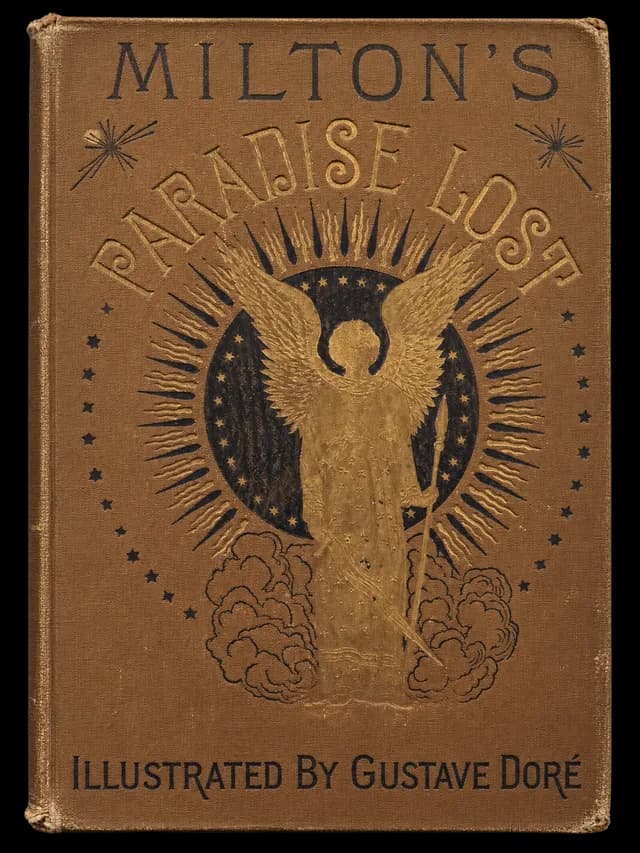
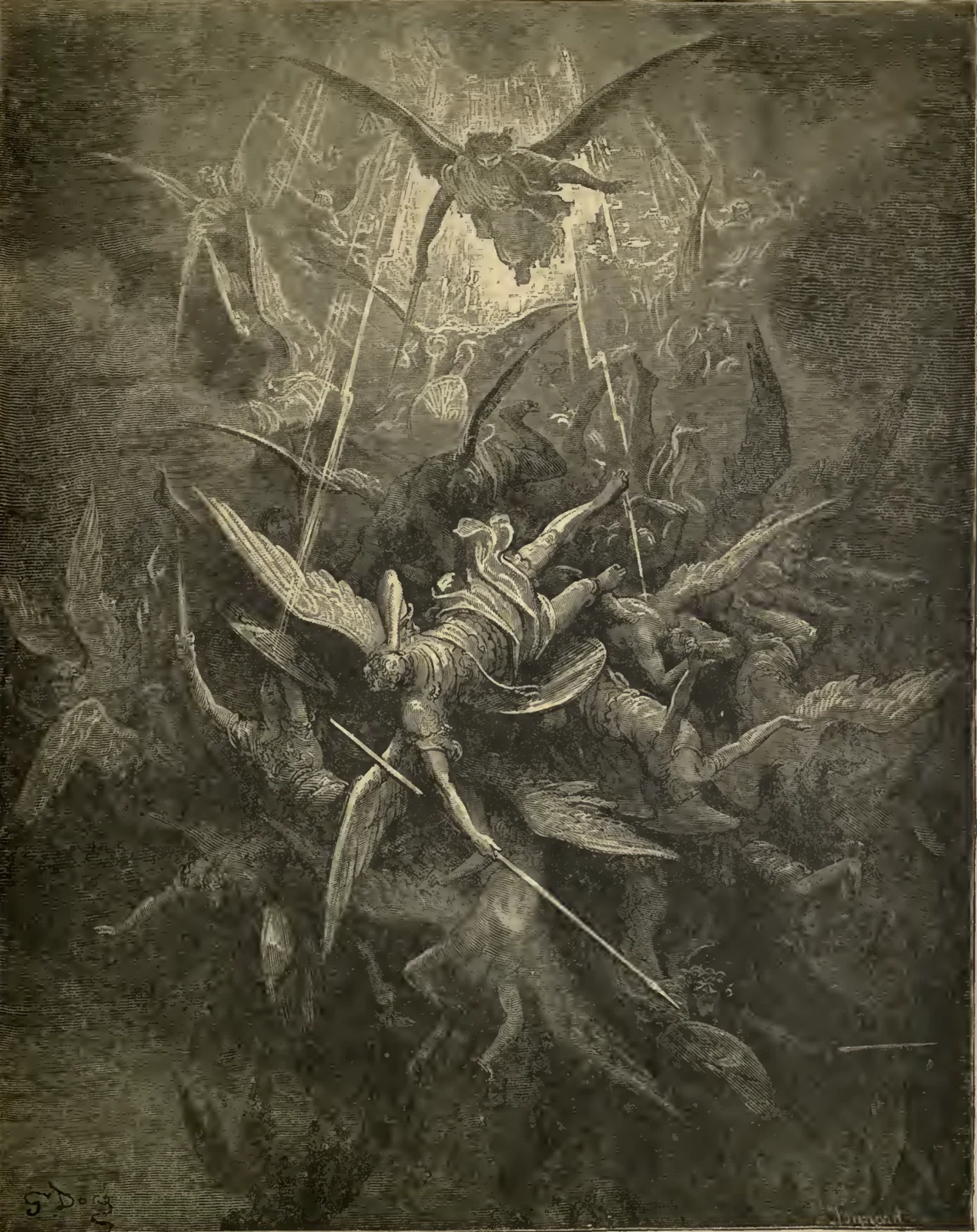
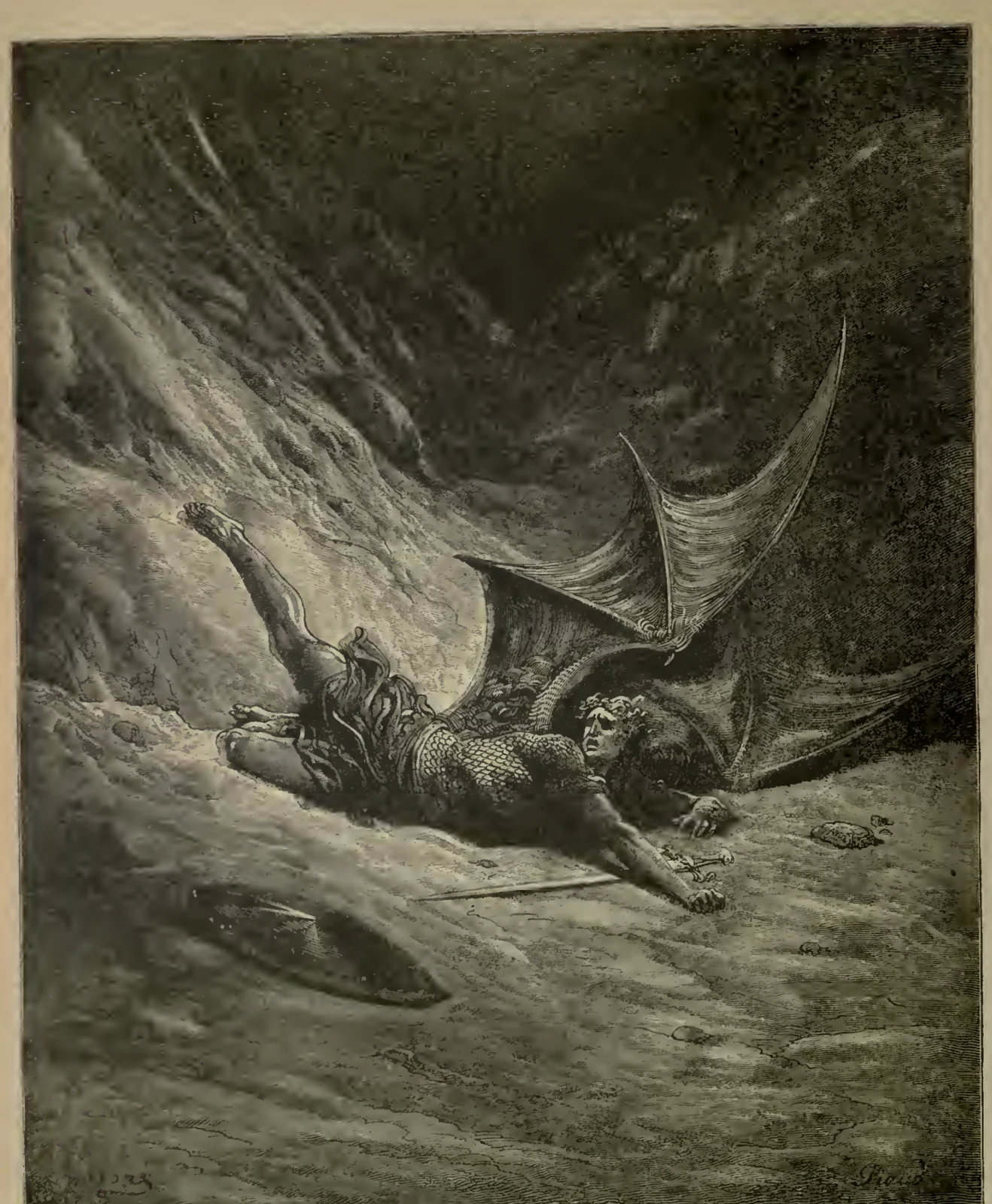
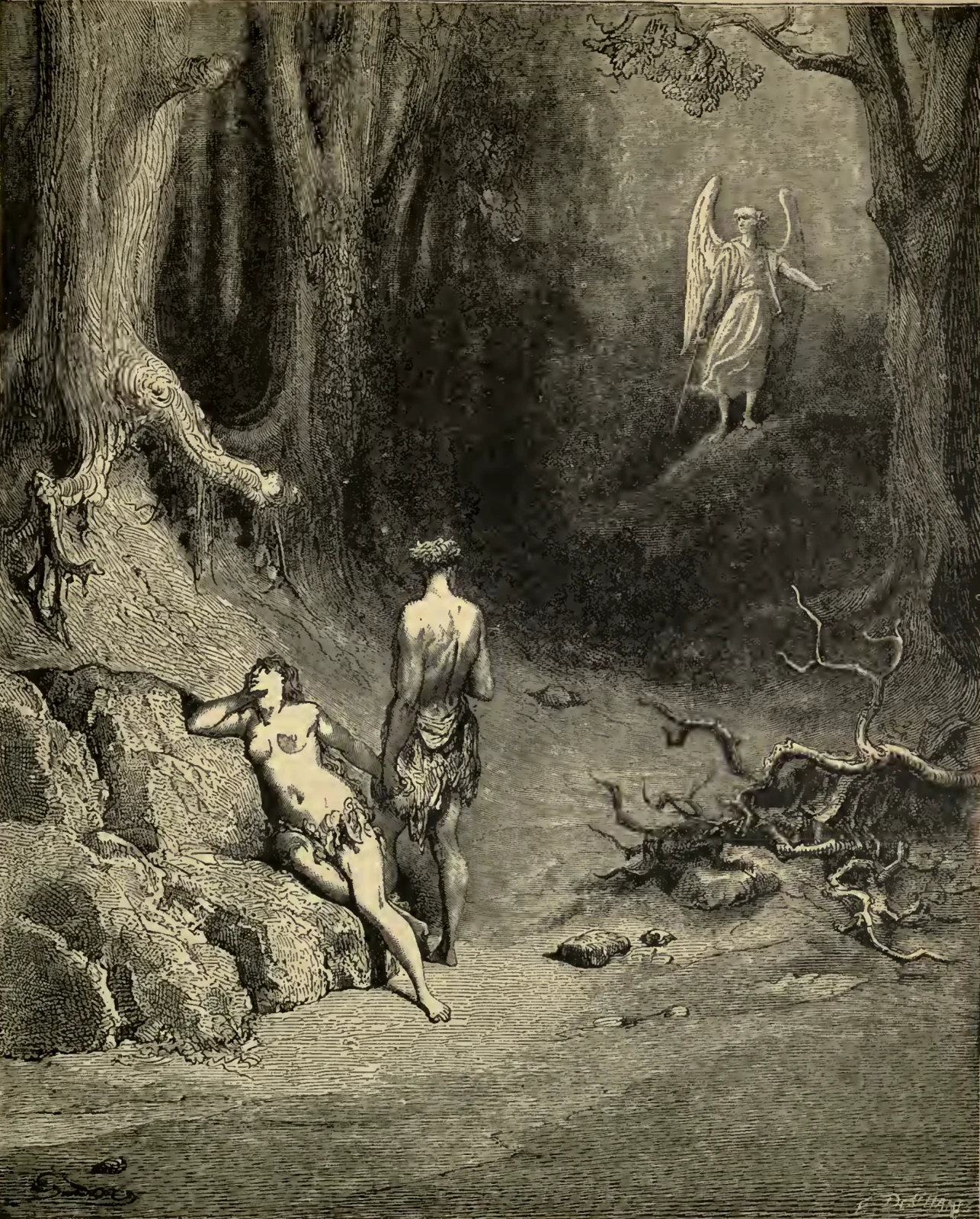
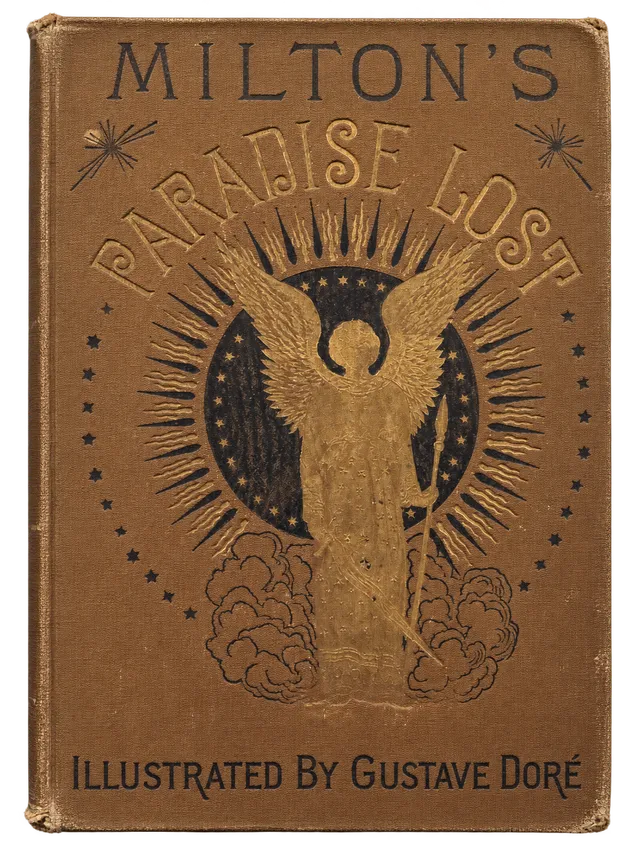
Milton dictated Paradise Lost and revised passages as they were read back to him. The surviving manuscript of Book I preserves a professional scribe’s copy prepared for the printer. The poem appeared in ten books in 1667 and was reorganised into twelve in 1674. Its long sentences carry the reader through the rebellion of Satan and the loss of Eden. Lumitheca’s illustrated volume belongs to the poem’s later history, with editing by Henry C. Walsh and designs by Gustave Doré. The date of that particular John W. Lovell printing remains uncertain.
The opening sentence postpones its request to the Muse until it has named the forbidden fruit and the loss of Eden. Following its syntax across the line endings gives the verse an audible momentum, carrying the reader from a single act towards its consequences for humankind.