Between illustration and the exhibition gallery
Bacon was born in London into an artistic household: his father, John Cardanall Bacon, was a lithographer. He showed an early aptitude for drawing and worked as an illustrator while still young. His training included Westminster School of Art, where Fred Brown taught him, and the Royal Academy Schools. He won the Creswick Prize for landscape painting in 1888 and began exhibiting regularly at the Royal Academy the following year.
After marrying in 1894, he lived at Harwell before returning to London in 1899. Alongside paintings, he supplied drawings for The Girl’s Own Paper and Black & White, illustrated fiction and contributed to illustrated editions of Dickens. The Royal Academy elected him an associate in 1903. Portraits and ceremonial subjects became a major part of his later career; the National Portrait Gallery holds his Homage-Giving at Westminster Abbey and his portrait of the critic Marion Spielmann. Bacon died in London in January 1914.
The pictures in Pharos, the Egyptian
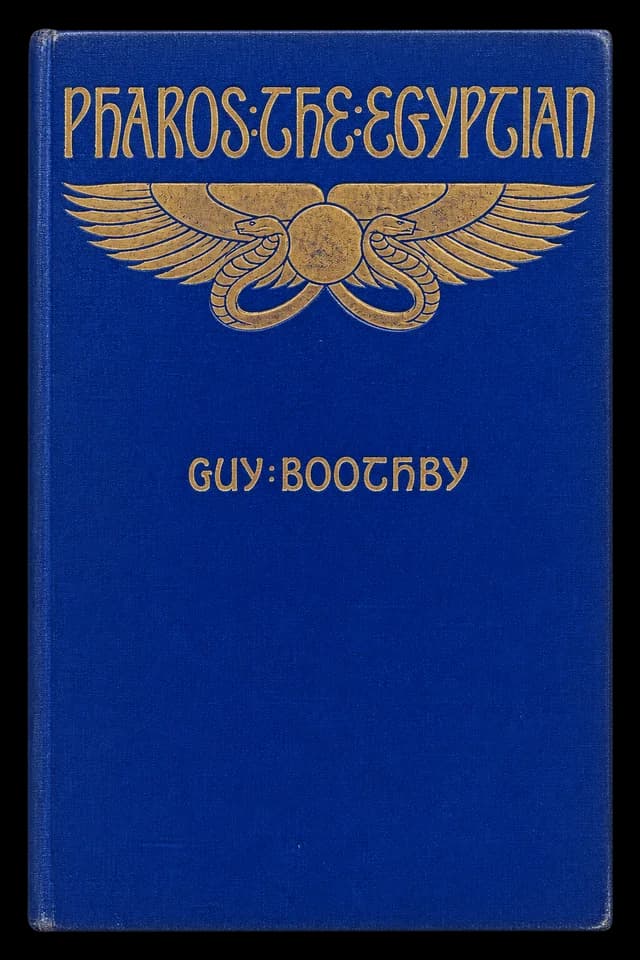
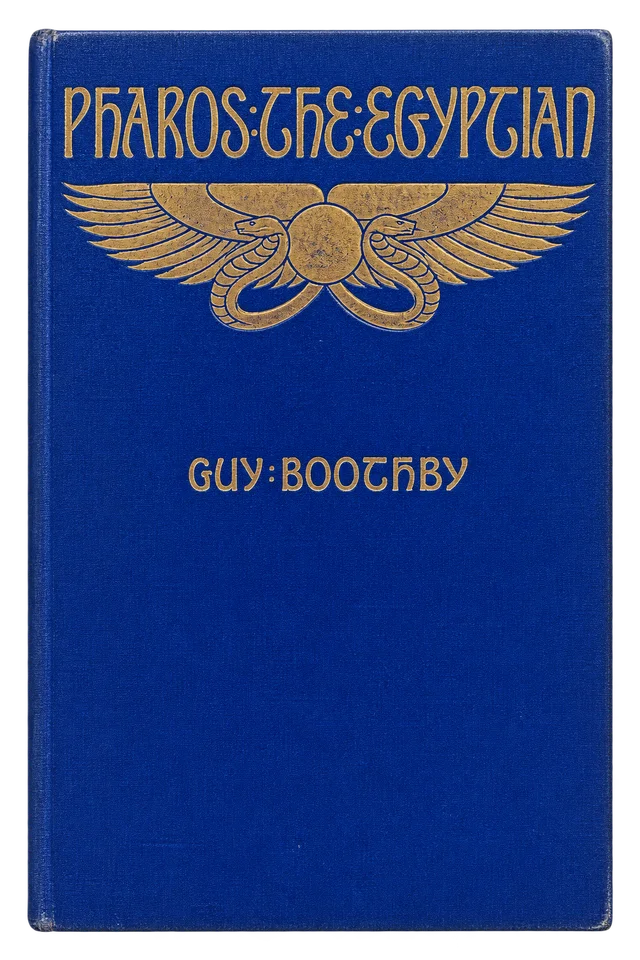
The held 1899 edition, published by Ward, Lock in London, names Guy Boothby as author and John H. Bacon as illustrator. Its list of illustrations contains twelve subjects. The frontispiece shows the encounter captioned The polite crowd drew away from him; later pictures mark moments of terror, the violinist’s flight, a command to drink and a crowd struggling into the water. The captions connect the images to specific incidents in Boothby’s narrative.
In the frontispiece, an elderly man advances with a stick while formally dressed onlookers draw back or turn to watch him. Bacon gives the encounter its tension through posture and the space opening around the central figure. Other scenes in the twelve-picture sequence likewise select confrontations and reversals from Boothby’s story. The supernatural plot belongs to Boothby; Bacon’s contribution is the visual staging of its incidents.