A life documented chiefly through publications
Richardson’s personal life is sparsely documented in the sources available here. Princeton Theological Seminary records his dates as 1853–1935 and identifies him as the author of The Great Message. The books provide firmer evidence for his public work than for his childhood or private circumstances.
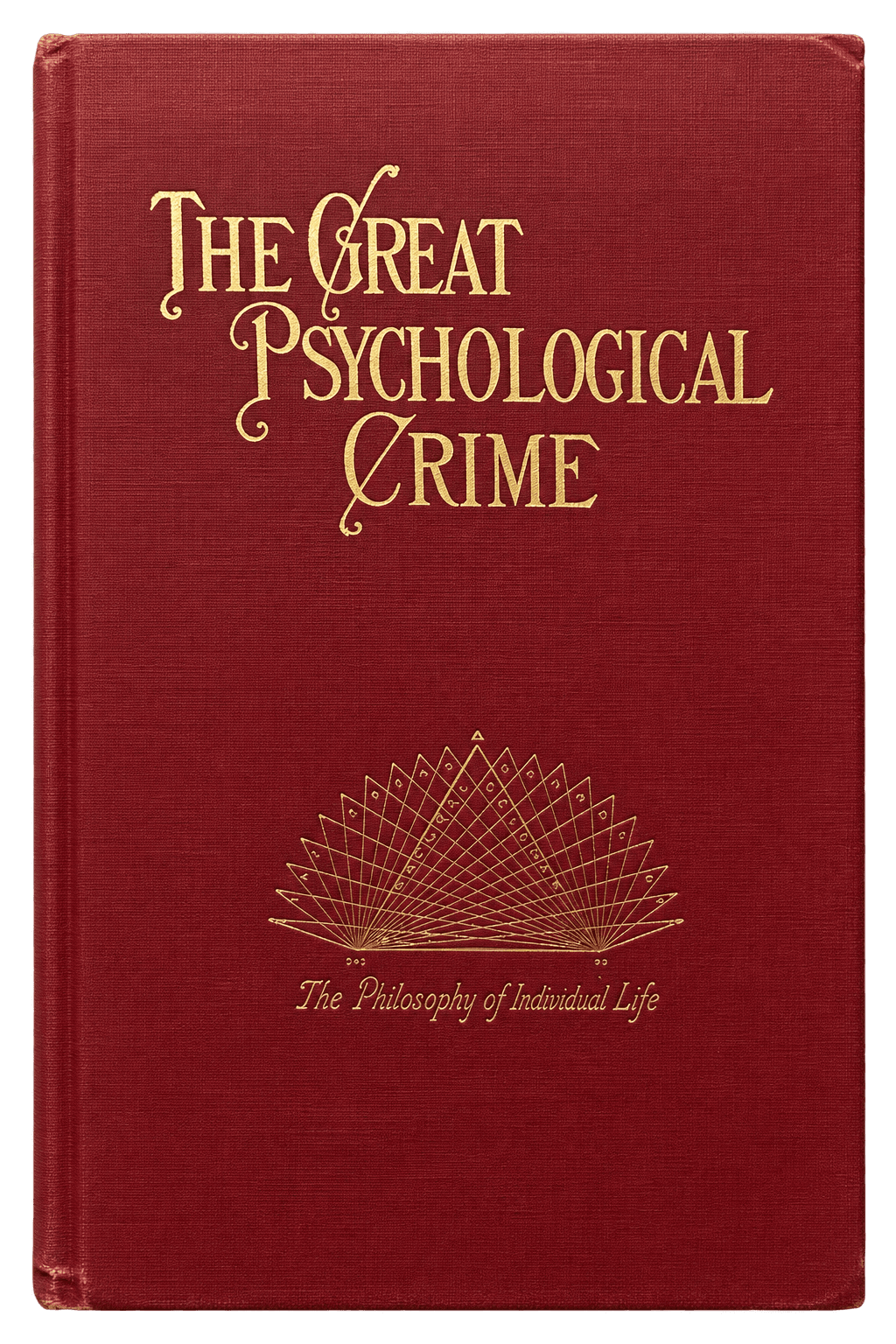
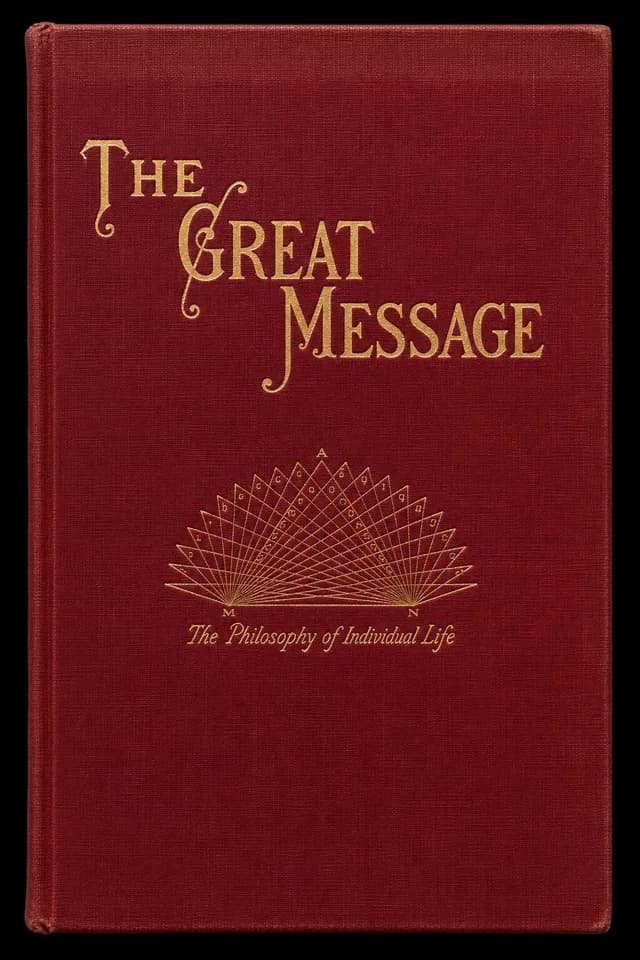
The Great Psychological Crime appeared in 1903 as Volume II of the Harmonic Series, with Huntley named as editor. The Great Message followed as Volume V in 1927, published by the Great School of Natural Science in Hollywood. These credits place his writing within a continuing programme of instruction, involving an author, an editor and a publishing institution.
Self-control and a claimed school of masters
The Great Psychological Crime argues that hypnotism and spiritual mediumship can surrender a person’s will to destructive influences. Richardson develops this belief through discussions of suggestion, morality and responsibility. The Great Message makes the school behind the teaching more explicit. It describes masters and compares telepathic communication with radio, using a familiar technology to explain the power it claims. Together the books show how his account of individual conduct depended on a larger claim to spiritual authority.