From clerical work to a national research collection
Born in Denmark in 1873, Andersen arrived in New Zealand with his family in 1874 and grew up in Christchurch. A Lands and Survey clerkship supported wide literary interests. He married Catherine McHaffie in 1900 and published Songs Unsung in 1903. His studies ranged from the forms of verse to birdsong recorded in musical notation.
A move to Wellington in 1915 preceded his appointment as the first Alexander Turnbull librarian in 1919. Over eighteen years he helped turn a private collection into a research institution. Museum expeditions between 1919 and 1923 brought direct contact with Māori communities, including recordings of music on wax cylinders. His writing and editorial work nevertheless defended historical theories associated with Elsdon Best and S. Percy Smith against later challenges.
Narratives, names and the compiler’s categories
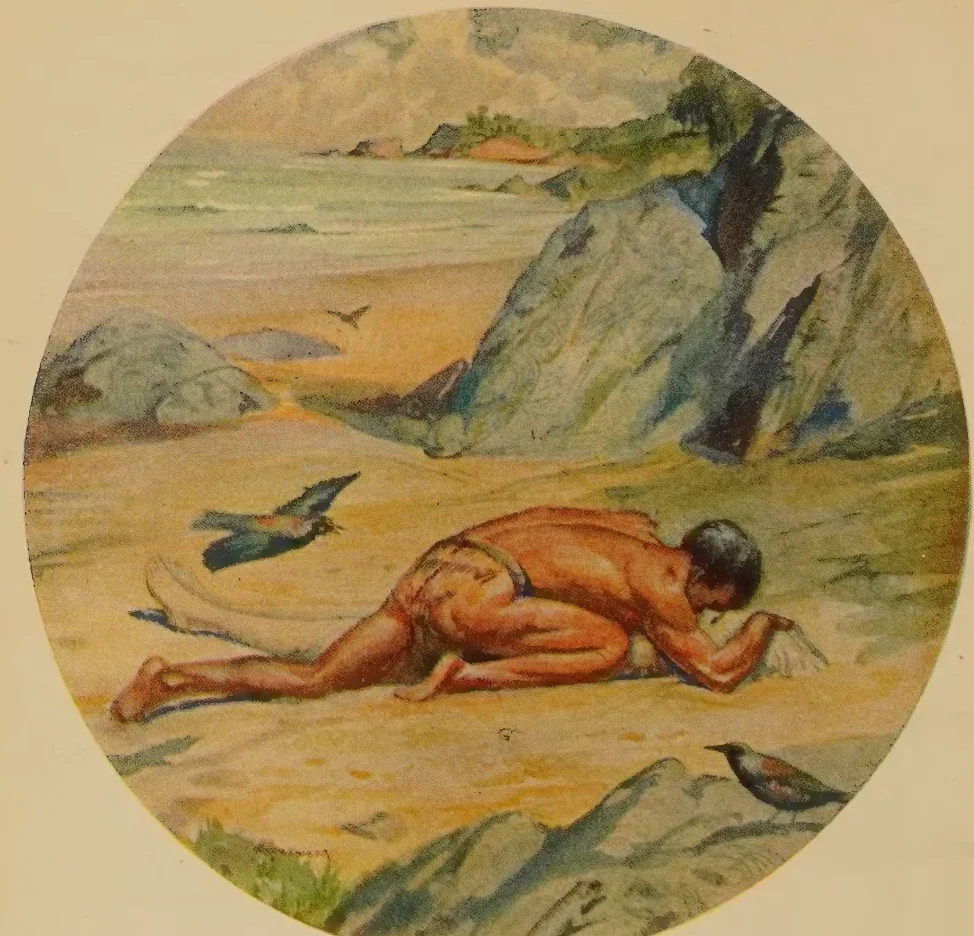
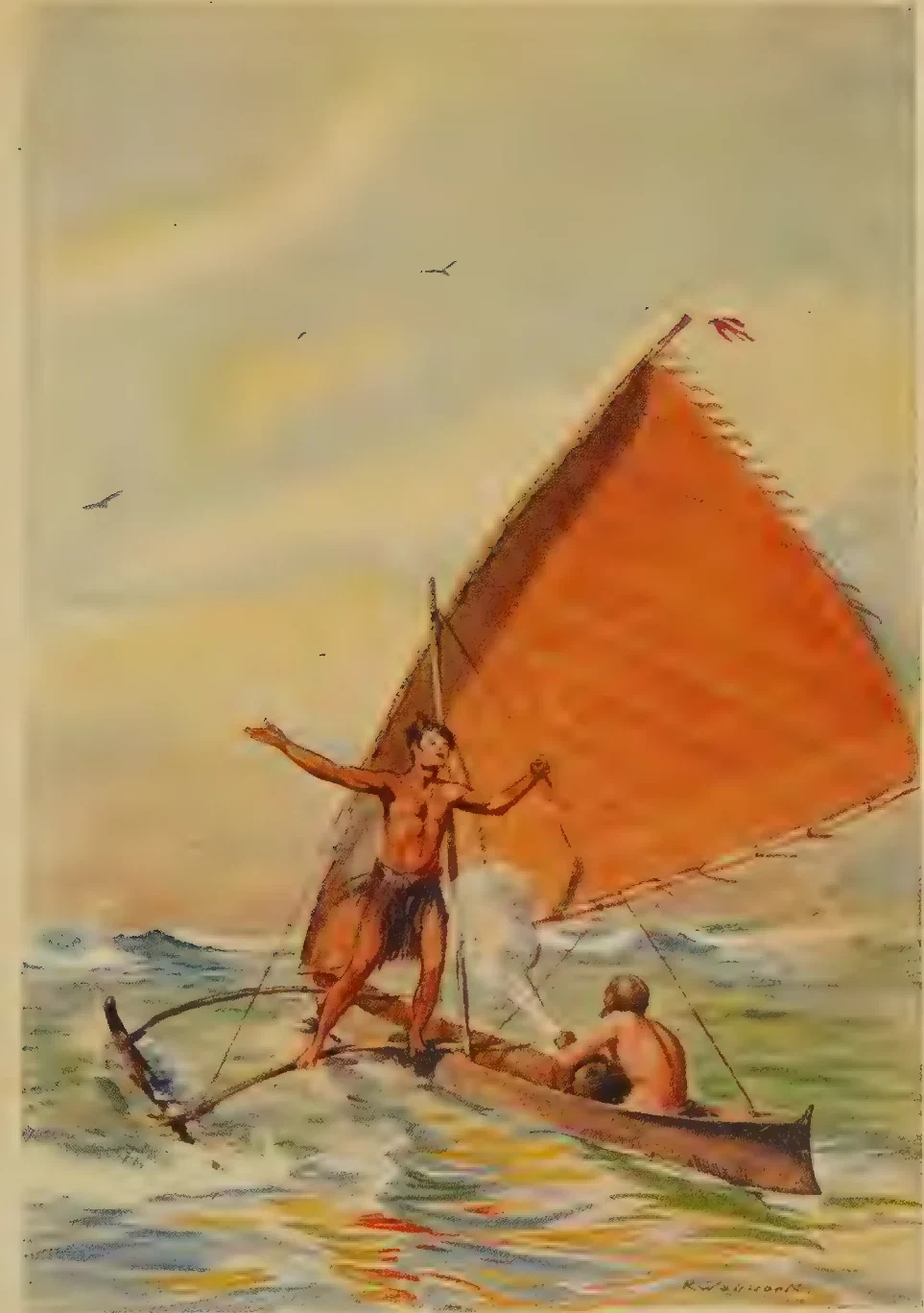
Myths and Legends of the Polynesians, published by Harrap, separately credits sixteen colour plates to Richard Wallwork. Andersen compiles and compares the narratives; Wallwork’s paintings offer another act of interpretation alongside documentary images and historical objects.
The note on proper names preserves dialect differences and warns that apparent word components can mislead. That attention to variation sits beside sweeping racial and moral generalisations in the opening historical discussion. The contrast shows both the care and limits of Andersen’s method. His arrangement invites comparison across islands, but its proposed histories remain his own interpretations. The local source, wording and setting of a narrative matter alongside any resemblance the collection draws between traditions.