Literature, government and science in Weimar
Goethe was born in Frankfurt in 1749. The success of his early writing preceded Duke Carl August’s invitation to Weimar in 1775. Government service gave him responsibility for finance, roads and efforts to revive mining at Ilmenau. His departure for Italy in 1786 interrupted this demanding public life and renewed his engagement with art.
After returning, he continued work across literature and science, studying botany, geology and colour. His friendship and collaboration with Friedrich Schiller became central to Weimar Classicism. He directed the court theatre and, from 1797, the ducal library. Novels, autobiography and the long development of Faust belonged to the same career of inquiry. Weimar remained his home until his death in 1832.
A drama of competing desires
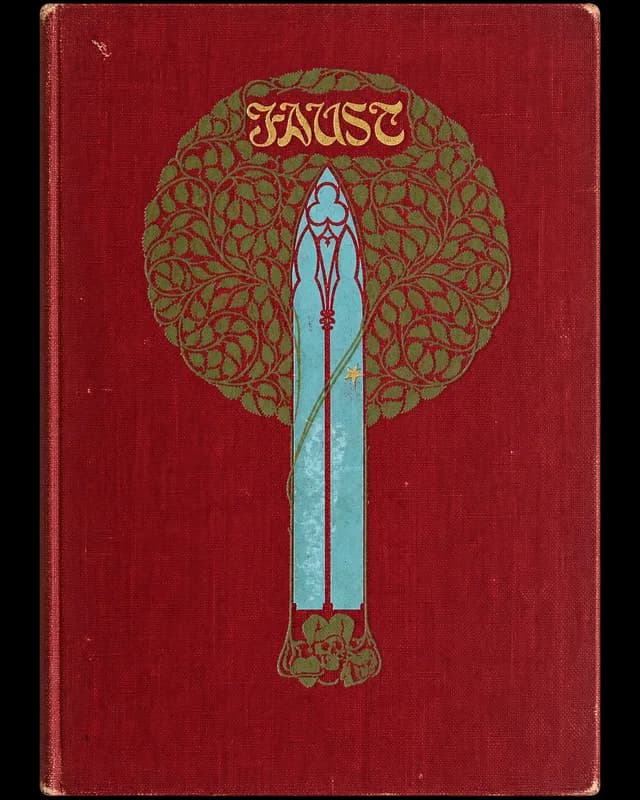
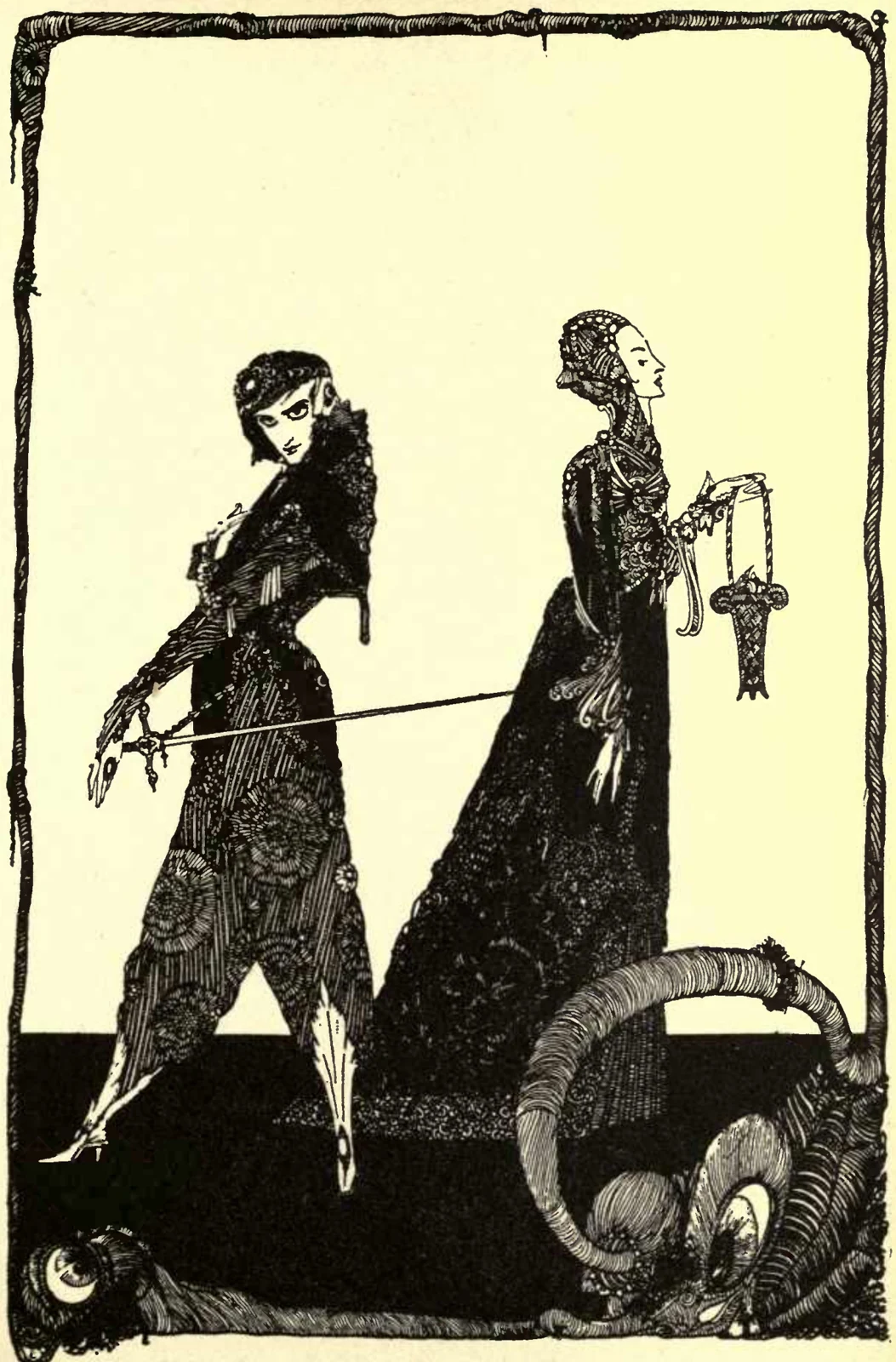
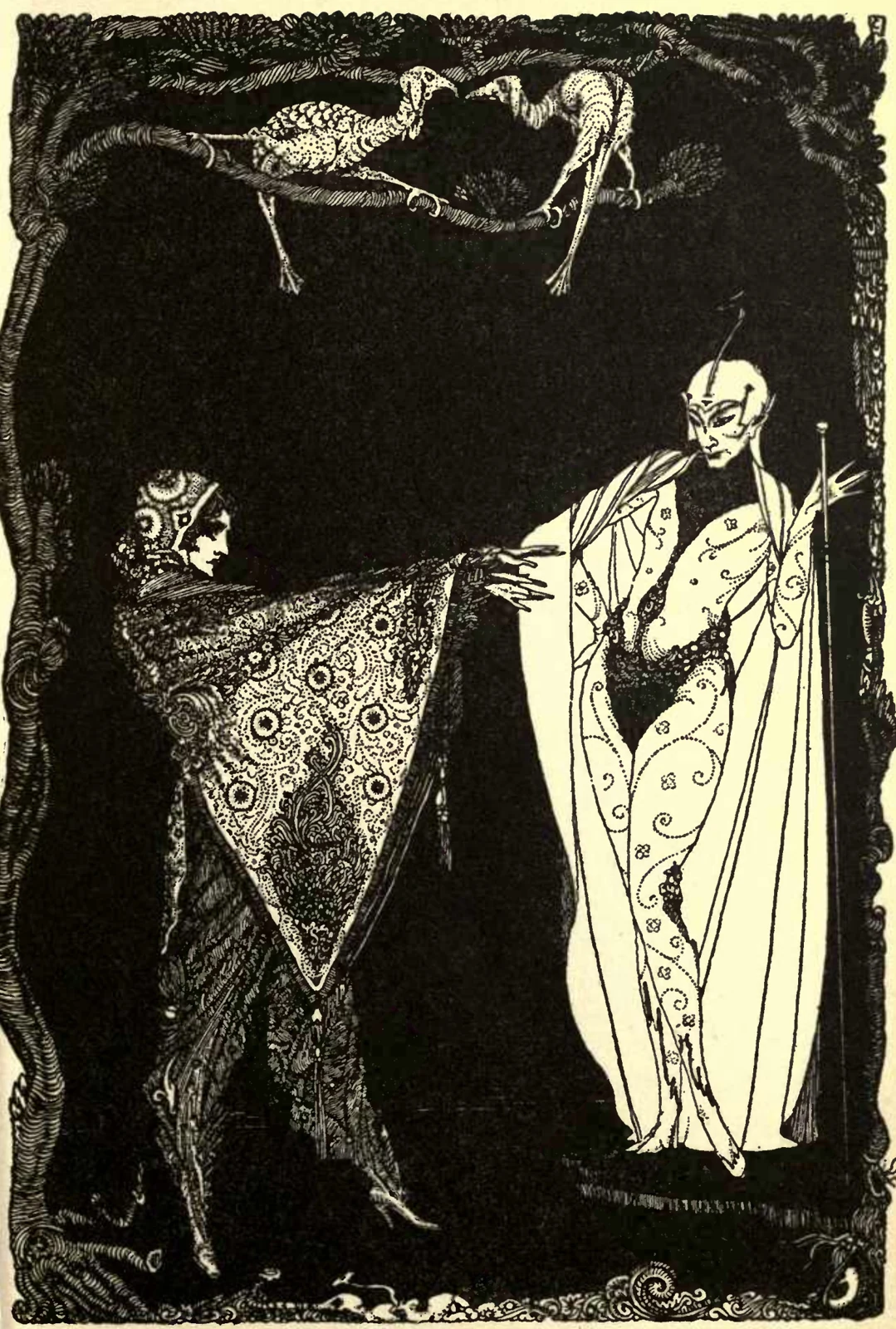
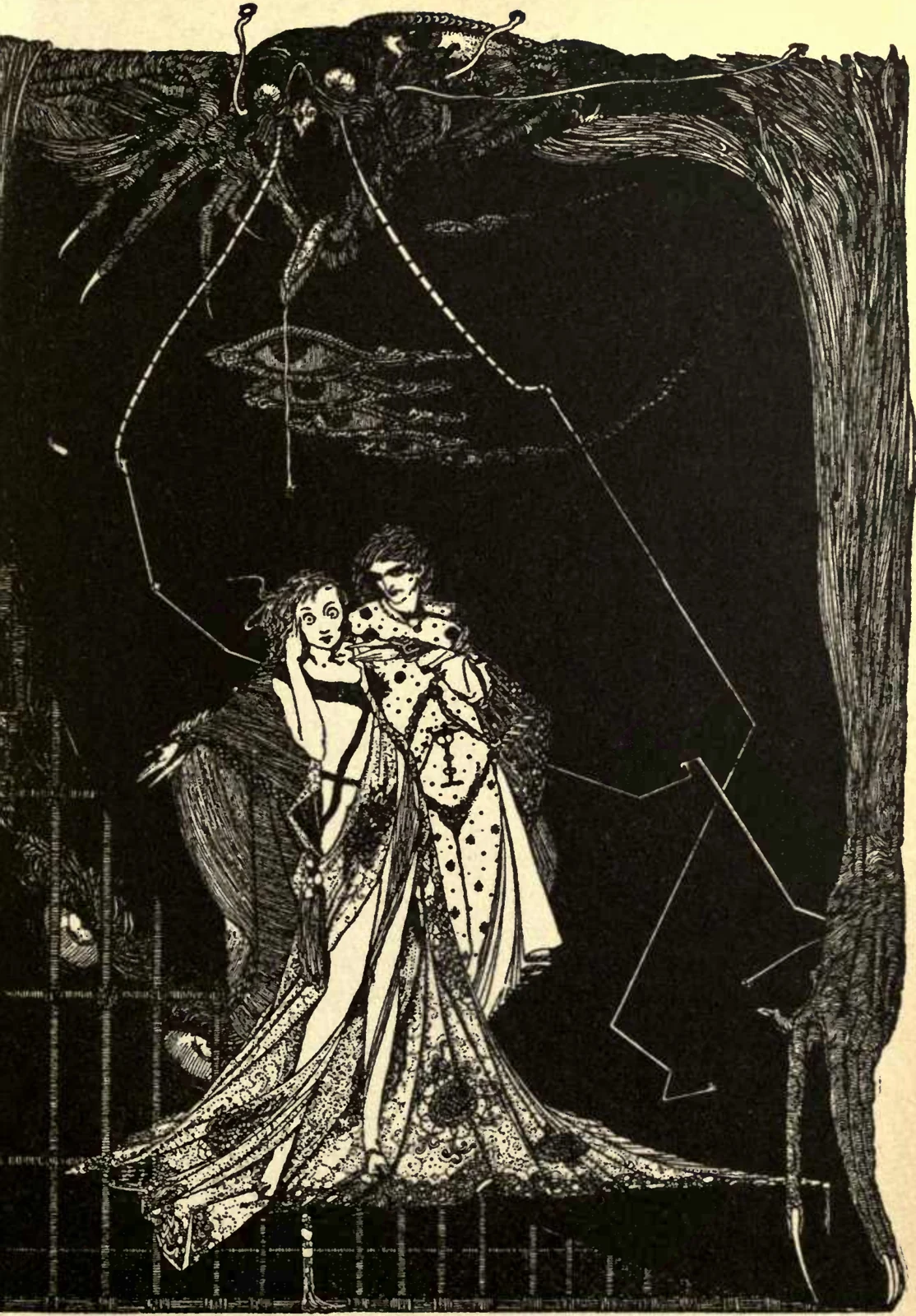
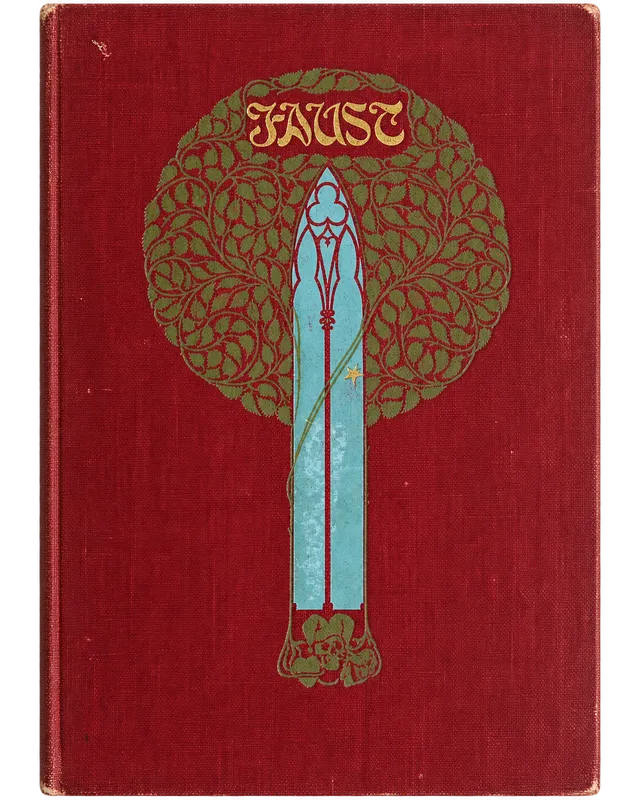
The held Arden Book Company volume contains Faust Part One in Bayard Taylor’s English verse translation, with illustrations by Harry Clarke. Its title page is undated. These credits identify three distinct contributions across different periods: the drama, its English poetic form and its visual interpretation.
The theatrical prelude starts the argument before Faust enters. Manager, poet and comic performer disagree about what an audience should receive. Taylor’s prefatory attention to metre likewise treats form as part of meaning. The scholar’s dissatisfied pursuit of experience then moves beyond the study into encounters whose costs fall on others, especially Gretchen. Clarke’s images add their own emphases to the bargain, seduction and imprisonment, rather than settling the play’s questions of responsibility.