Dublin hardship and literary discovery
Stephens’s birth remains uncertain: the Dictionary of Irish Biography identifies a probable Dublin birth in 1880, while he claimed 1882. After childhood in an industrial school, he worked in poorly paid clerical jobs. Contributions to Arthur Griffith’s journal and encouragement from George Russell, known as AE, opened a place in Dublin literary circles.
His poetry collection Insurrections appeared in 1909. He co-founded the Irish Review and published The Crock of Gold in 1912, combining comic fable with spiritual concerns influenced by Blake and theosophy. He lived in Paris before returning to Dublin during the First World War. Employment at the National Gallery of Ireland gave him a vantage point on the 1916 Rising, which he described in The Insurrection in Dublin. He moved to London in 1925.
An old memory behind a barred door
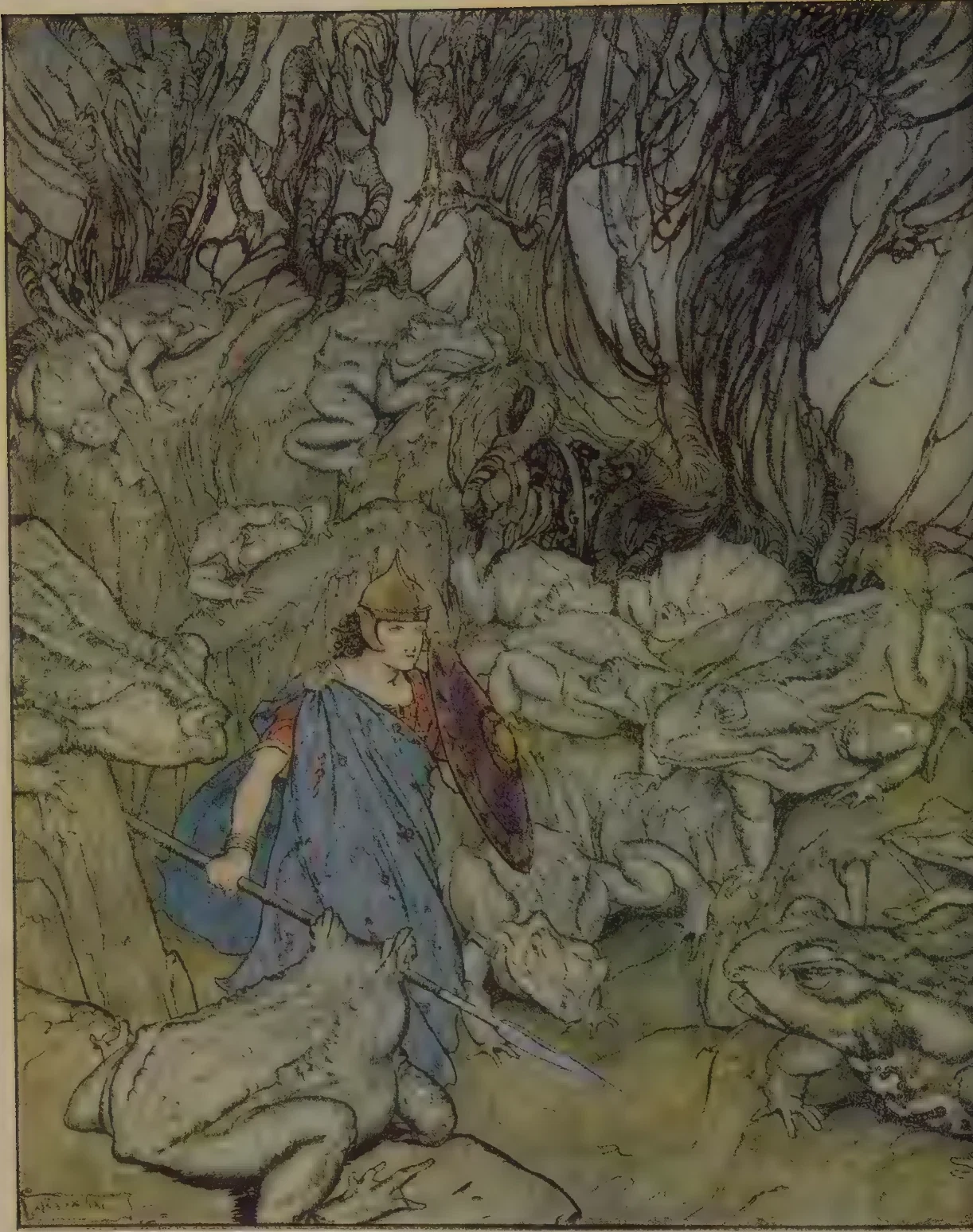
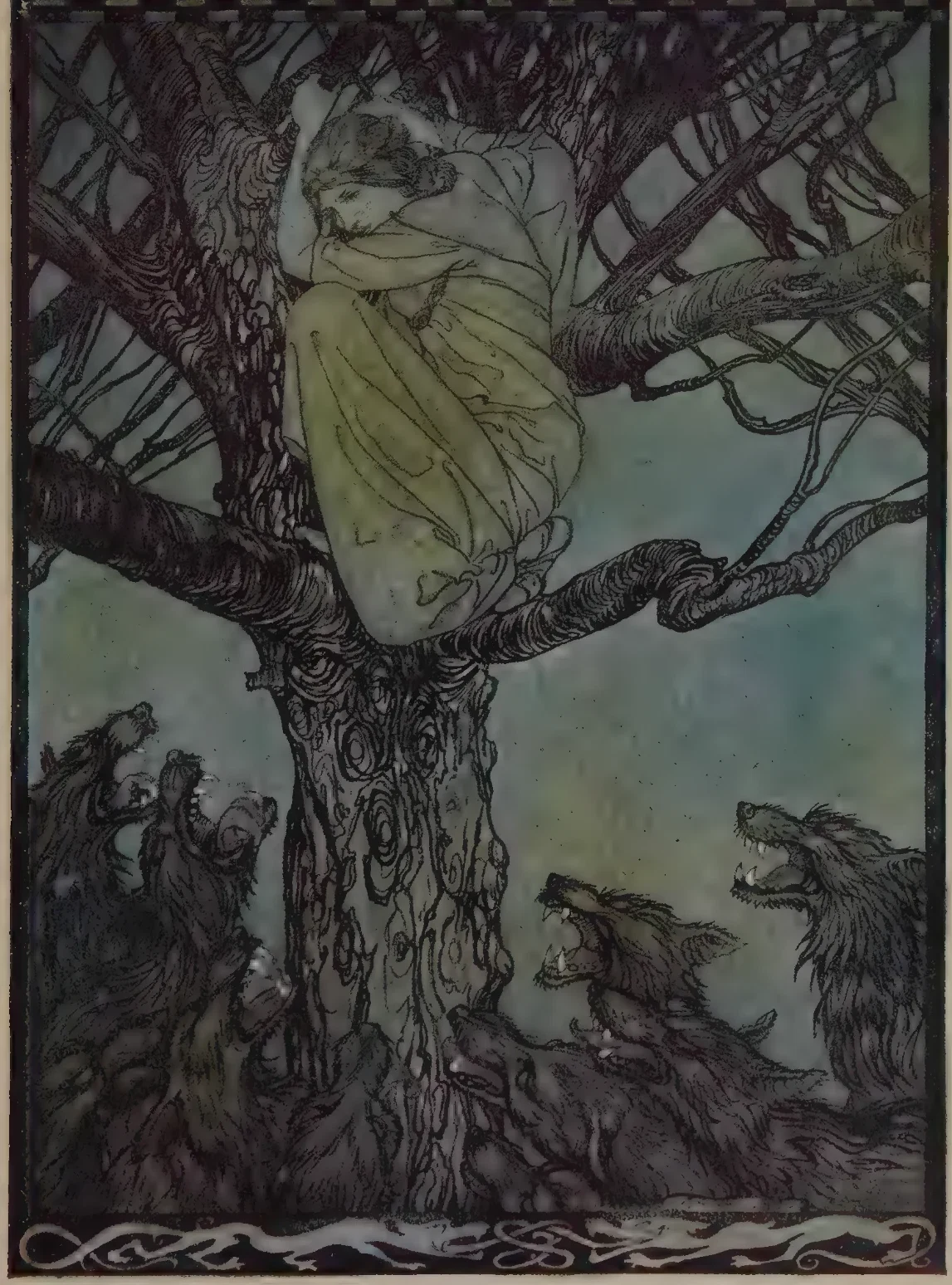
Irish Fairy Tales appeared in 1920. Its narratives adapt heroic Irish literary traditions, while Rackham supplies a separately credited visual interpretation. The title can suggest a more comfortable collection than the stories themselves provide.
In The Story of Tuan Mac Cairill, Finnian’s attempt to confront an older faith becomes a struggle over admission to a household. Tuan bars the door; the abbot’s fasting presses hospitality into the contest. Servants watch and argue before the account expands into an extraordinary memory of peoples and transformations. Stephens gives the encounter the briskness of conversation, while Rackham’s watching trees and twisting branches hold another rhythm, making familiar landscape appear alive and uneasy.