From newspaper work to an imaginary province
Cabell grew up in a prominent Richmond family. At fourteen he entered William and Mary, studying classics and literature and teaching French and Greek while still an undergraduate. After leaving in 1898 he worked for the New York Herald, then returned to Richmond to report for the Richmond News. Magazine fiction led to his first book, The Eagle’s Shadow, in 1904.
In 1913 he married Rebecca Priscilla Bradley Shepherd and moved to Dumbarton Grange. His fiction developed the invented province of Poictesme through interrelated stories, myths and revisions. Jurgen’s printing plates were seized in 1920 during an obscenity prosecution that ended in acquittal in 1922. The controversy brought a much wider public to a writer already engaged in a sustained literary project.
The sincerity of an unjust judgment
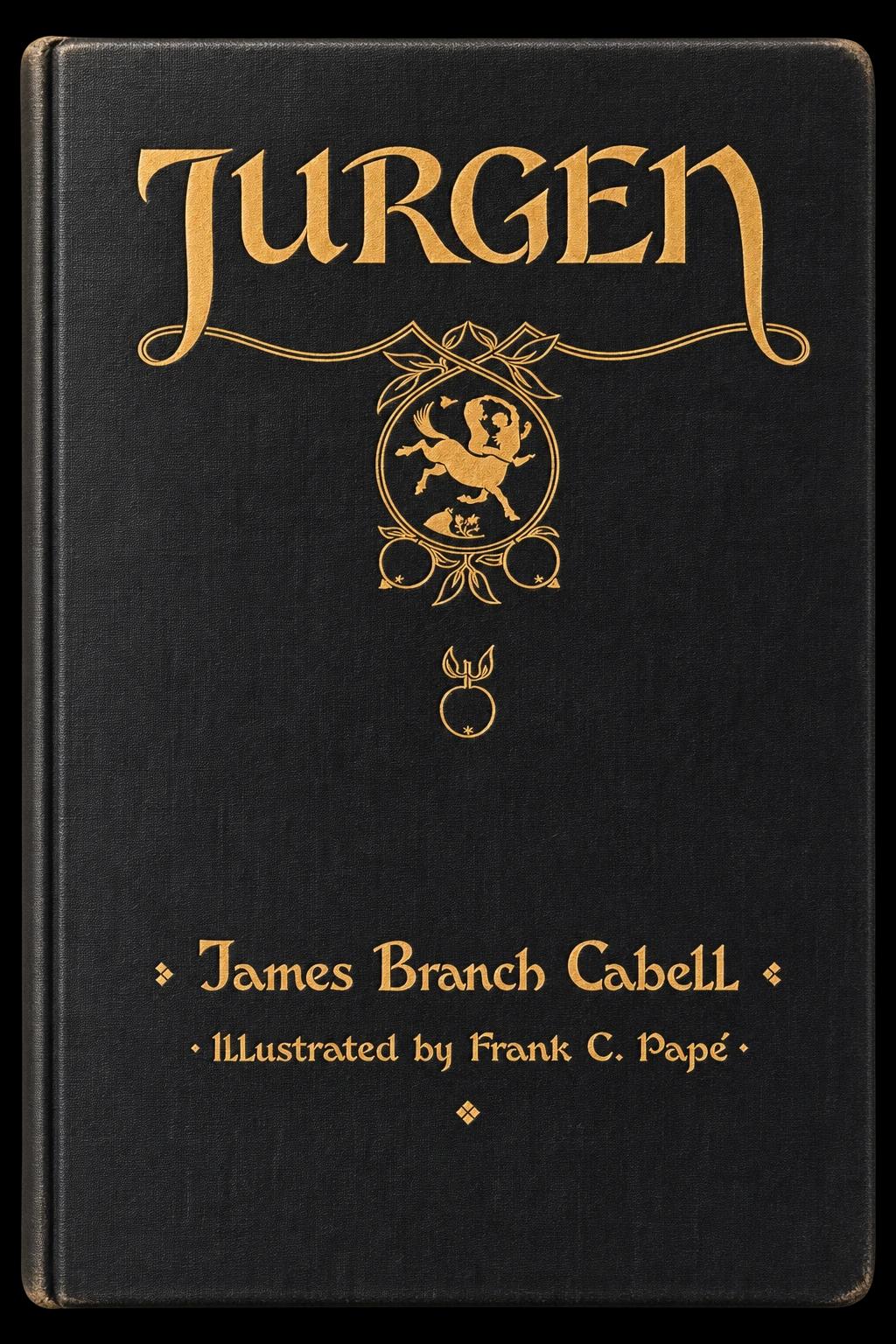
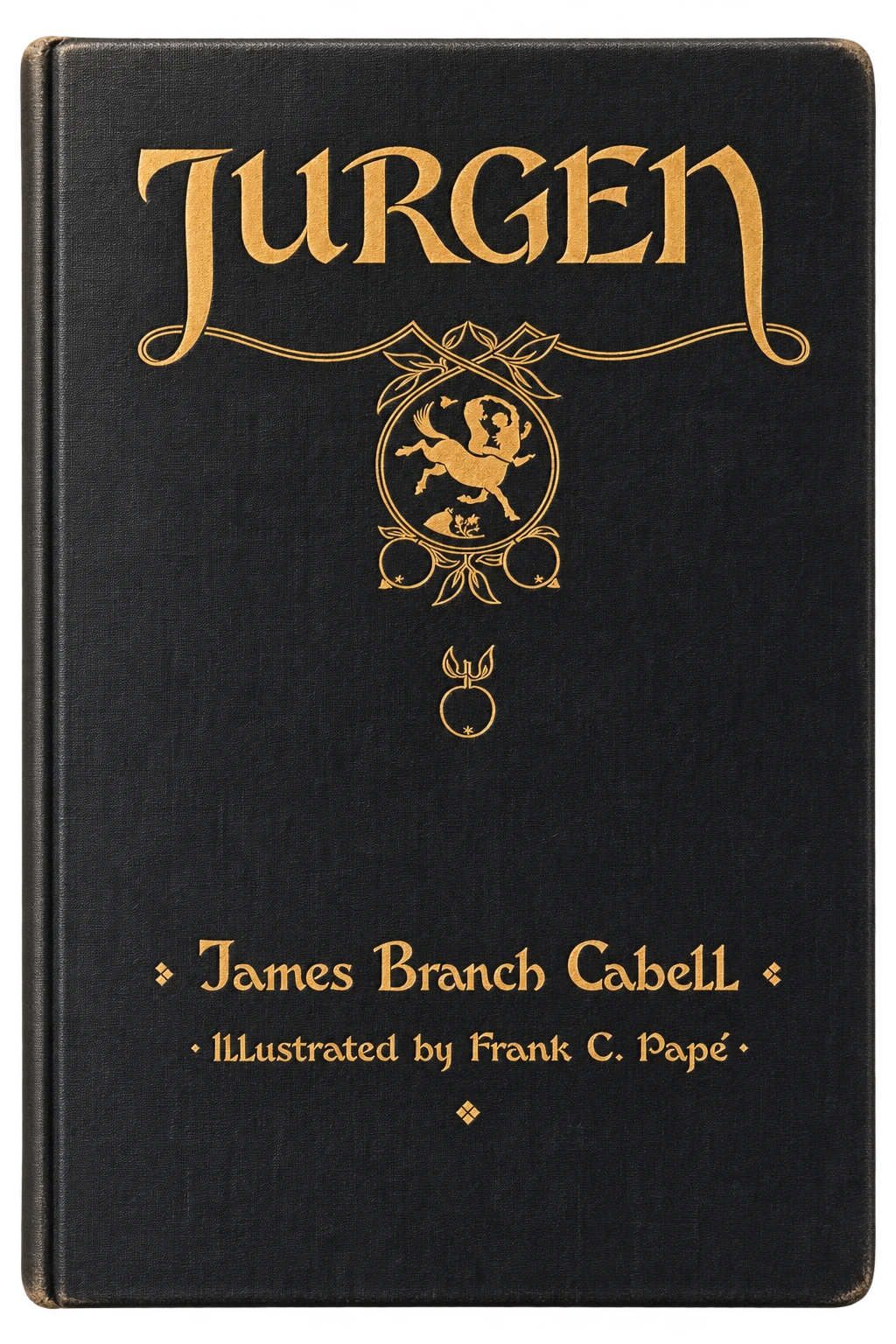
The 1922 Jurgen held here includes a prefatory trial in which an accusing tumblebug discovers indecency in ordinary objects. Jurgen asks that the judges read the pages as a whole. Their refusal makes interpretation a public contest over authority, before the novel’s journey is properly under way.
Cabell gives the accuser sincere convictions rather than a convenient secret knowledge that it is wrong. That sincerity darkens the comedy: a community can sustain injustice while believing itself virtuous. The Garden between Dawn and Sunrise extends the play between imagined guides, desire and ordinary life. The title’s promise of a comedy of justice remains unsettled by the changing explanations Jurgen supplies for himself.