From Kirriemuir to the London stage
James Matthew Barrie grew up in Kirriemuir, Scotland, and studied at Edinburgh University before working for the Nottingham Journal. Short stories based on the fictional town of Thrums developed memories of his native place. Auld Licht Idylls and A Window in Thrums helped establish him as a novelist before drama became a larger part of his work.
Quality Street and The Admirable Crichton preceded the success of Peter Pan on stage in 1904. His friendship with Arthur and Sylvia Llewelyn Davies and their sons began in Kensington Gardens in 1897; he later became a guardian to the boys after their parents died. In 1929 he gave the rights to Peter Pan to Great Ormond Street Hospital. Prose, theatre and personal attachments all belong to the history of the character’s changing forms.
A park remade by narration and illustration
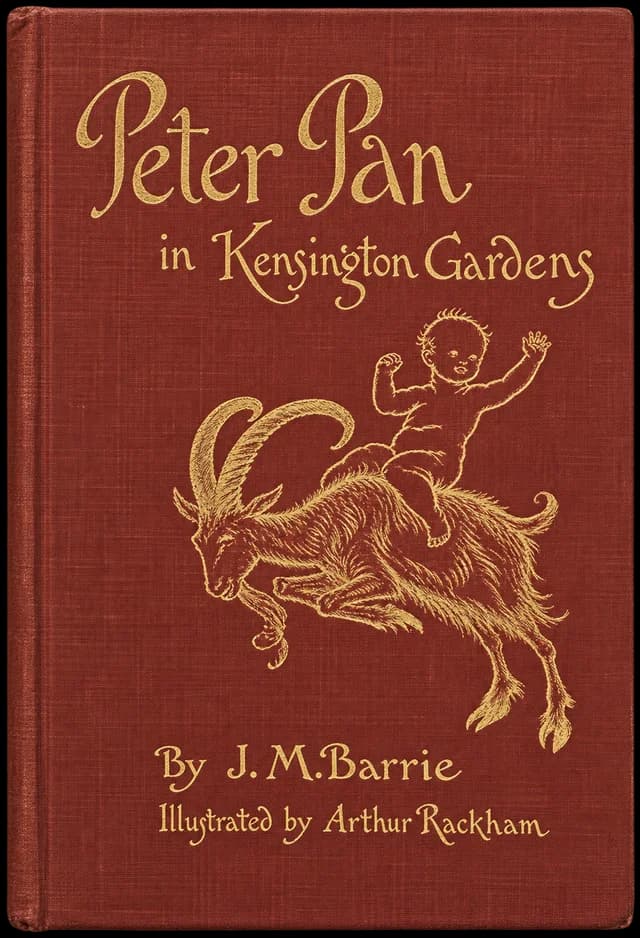
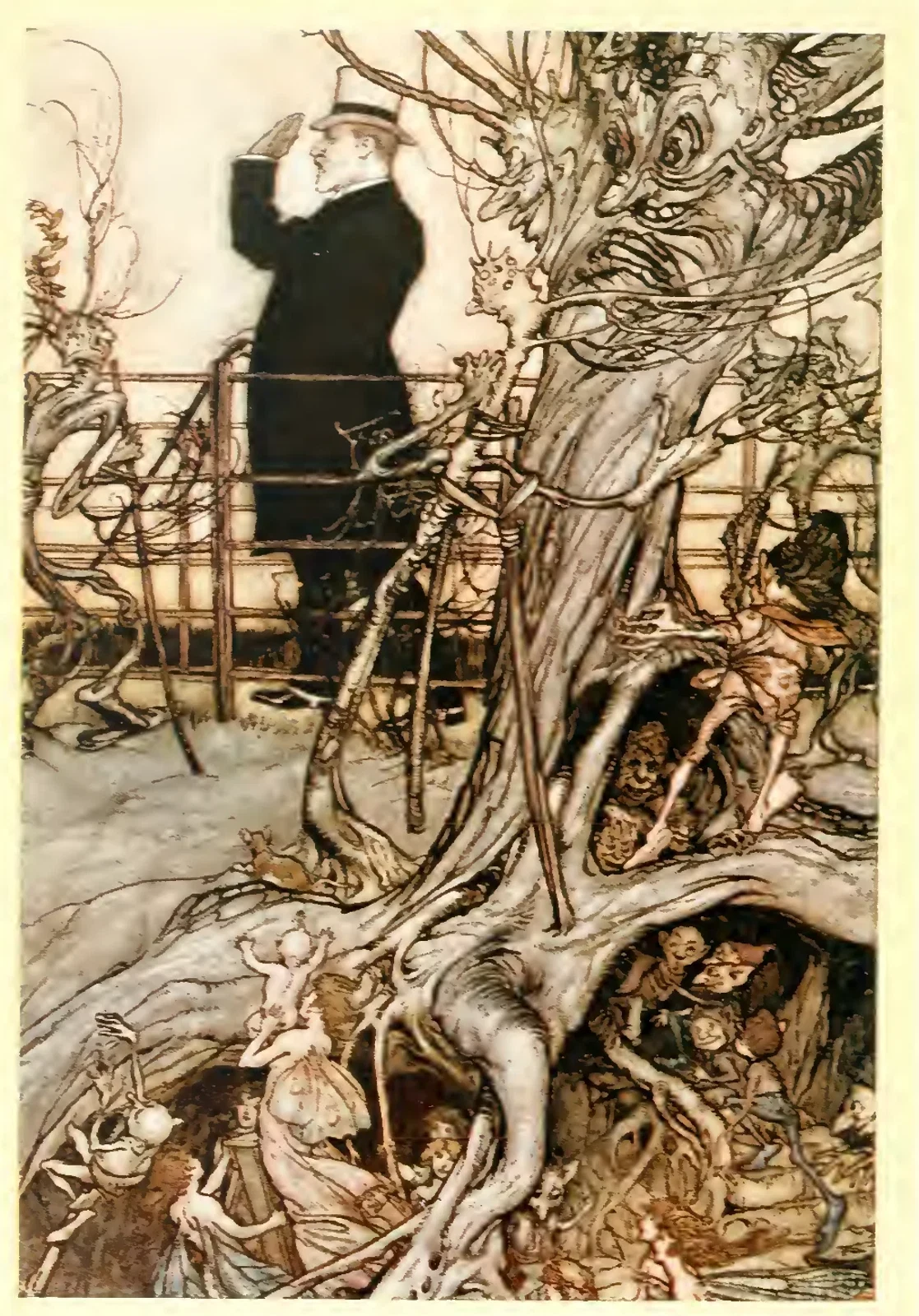
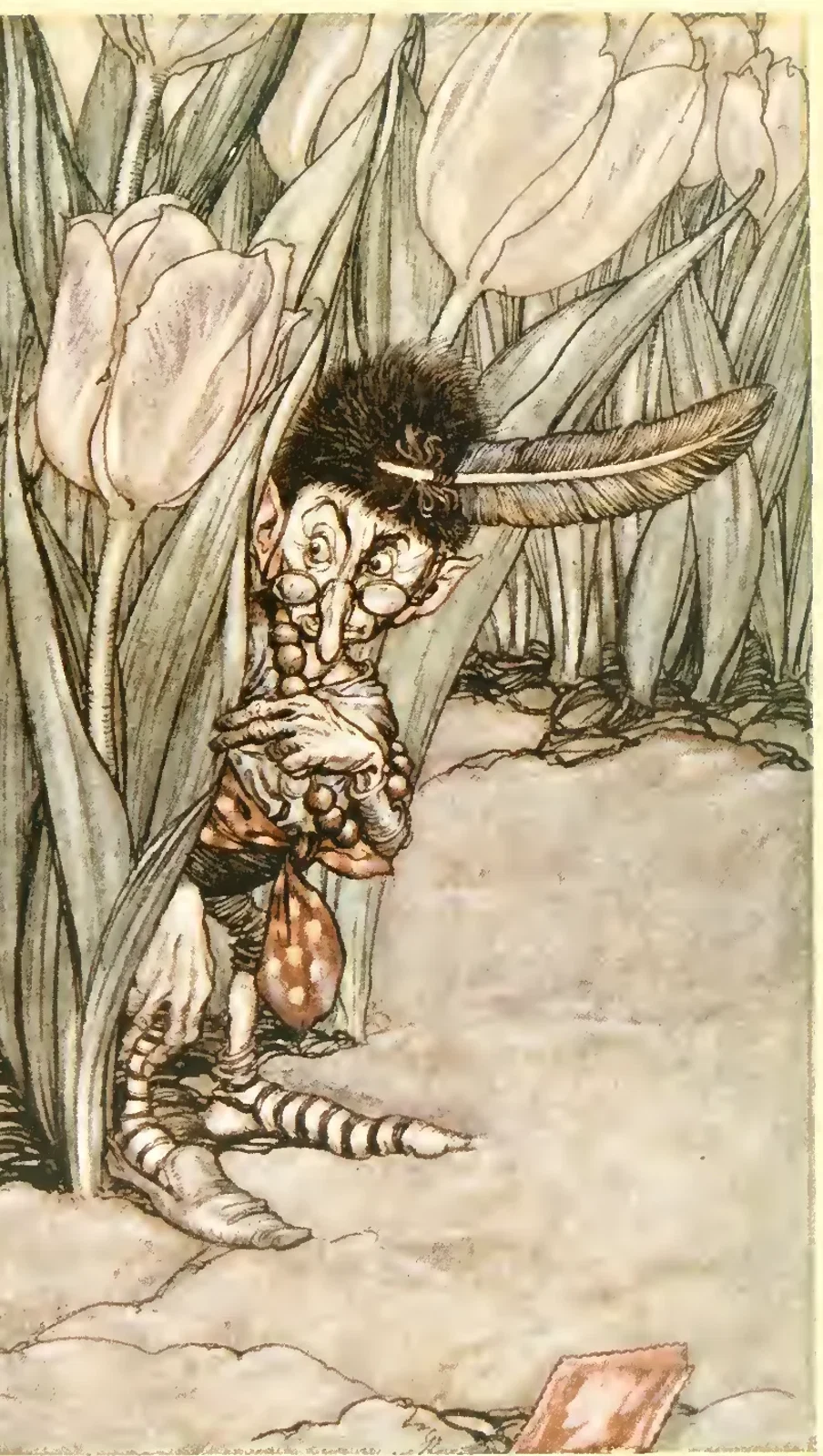
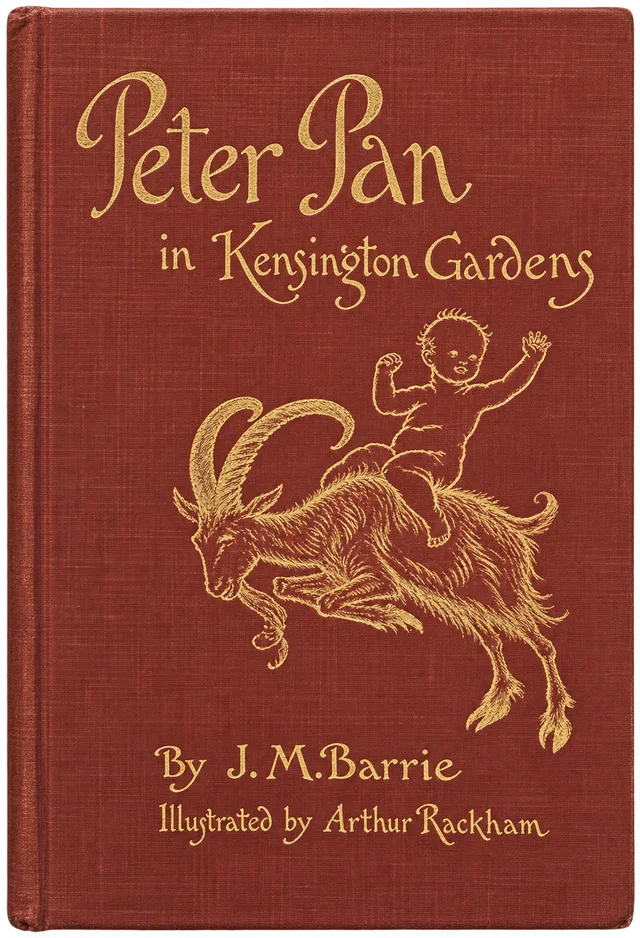
The Kensington Gardens narrative is a distinct Peter Pan book, rather than simply the play’s story of Wendy and the Lost Boys. The Scribner’s edition held here is dated 1910 and credits Arthur Rackham with the drawings. Barrie’s words and Rackham’s pictures bring separate imaginative choices to the setting.
The opening tour measures the Gardens through walks with David, including naps, a nurse’s authority and the possibilities of small boats on the Round Pond. An ordinary stick-boat can acquire voyages that an elaborate toy cannot supply on its own. Paths supposedly made at night extend this transformation into the landscape. The narrator and child construct explanations together, making the park a real place that storytelling continually reorders.