Education and international exchange
Nitobe was born into a samurai family in Morioka and graduated from Sapporo Agricultural College in 1881. He left Tokyo University before completing its course and went to the United States in 1884, becoming a Quaker during his study abroad. After returning to Japan in 1891, he held teaching posts at Sapporo and Tokyo.
He led the First Higher School from 1906 to 1913 and became the first president of Tokyo Woman’s Christian University. His educational approach emphasised personal development. Later he served as an Under-Secretary General of the League of Nations and worked in Pacific international relations. He also entered Japan’s House of Peers in 1927. Bushido belongs within this wider career of explaining ideas across national and cultural boundaries.
Ethical inheritance through comparison
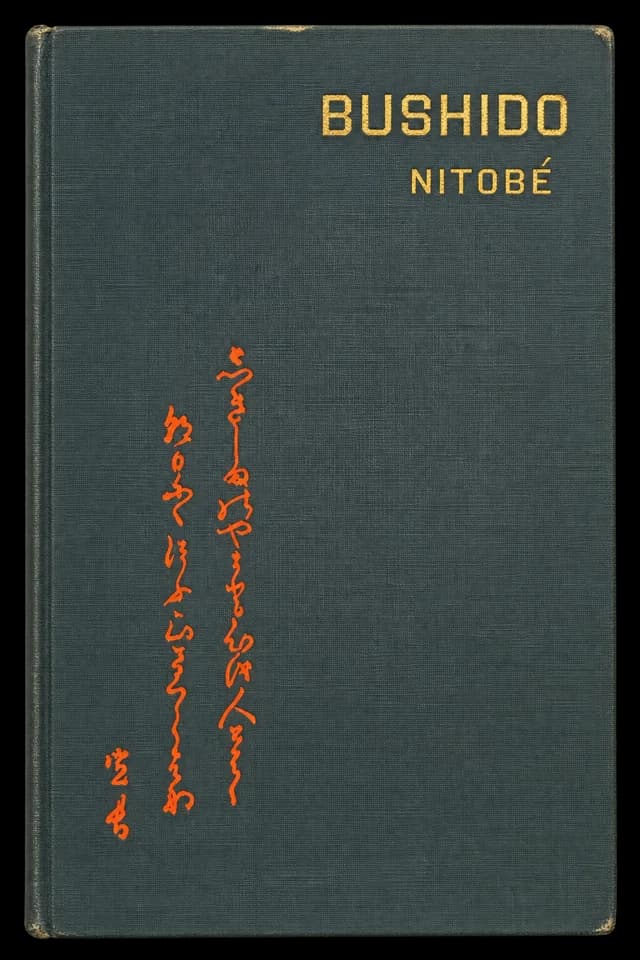
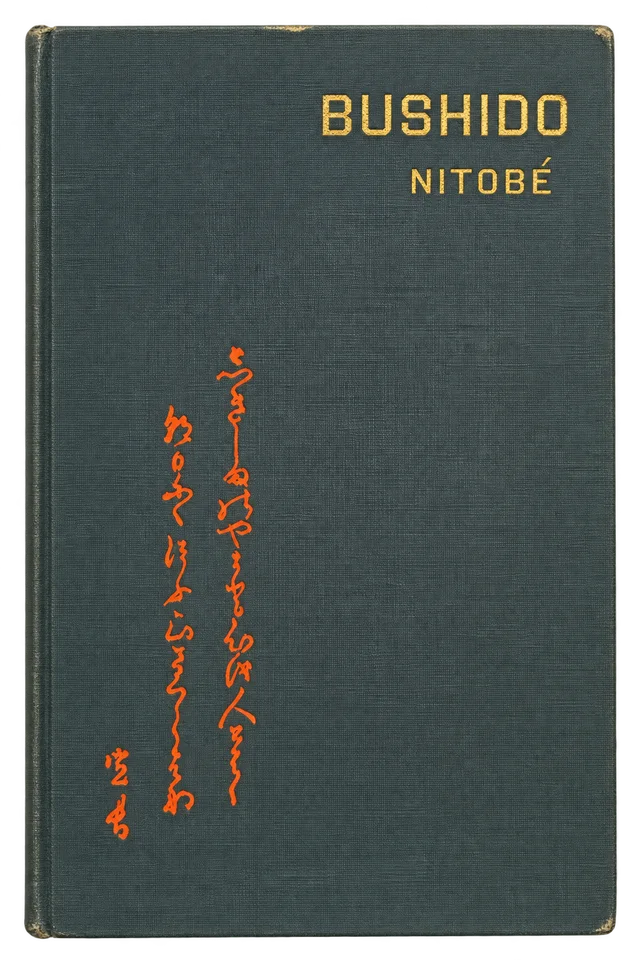
The retained Bushido is a tenth revised and enlarged edition with copyright dates of 1900 and 1905, but no verified printing year. William Elliot Griffis supplies a distinct introduction. Nitobe presents the moral influence of a feudal order as something that can survive the institutions from which it emerged.
Chapters on rectitude, courage, benevolence, sincerity, honour and loyalty give that inheritance a connected form. Comparisons with European chivalry and Plato’s Crito make unfamiliar obligations more accessible to English-language readers, while selecting the terms in which they appear. The concluding question of whether Bushido remains alive exposes the book’s concern with national continuity under change. It is a particular modern interpretation of Japanese tradition, shaped by Nitobe’s purposes and intended audience.