Design across countries and media
Rosse was born in The Hague and studied art and design there, in Delft and at the Royal College of Art in London. Travel in Japan, Java and Borneo deepened his interest in masks and batik. He completed a degree at Stanford, then returned to the Netherlands and contributed decoration to the Peace Palace in The Hague.
He married Sophia Helena Luyt in 1913, and work on the Netherlands pavilion at San Francisco’s Panama-Pacific Exposition brought them to California. Teaching and design commissions preceded an appointment at the School of the Art Institute of Chicago. He later moved towards New York theatre and film work. His art direction for King of Jazz won an Academy Award at the ceremony held in November 1930. Architecture, objects and staged environments remained connected parts of his career.
Masks as objects and instruments of performance
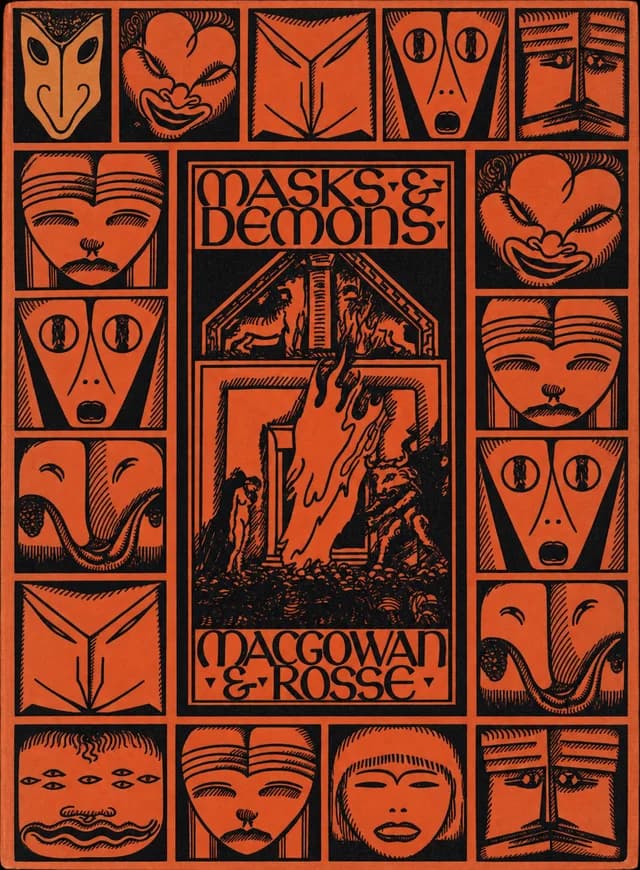
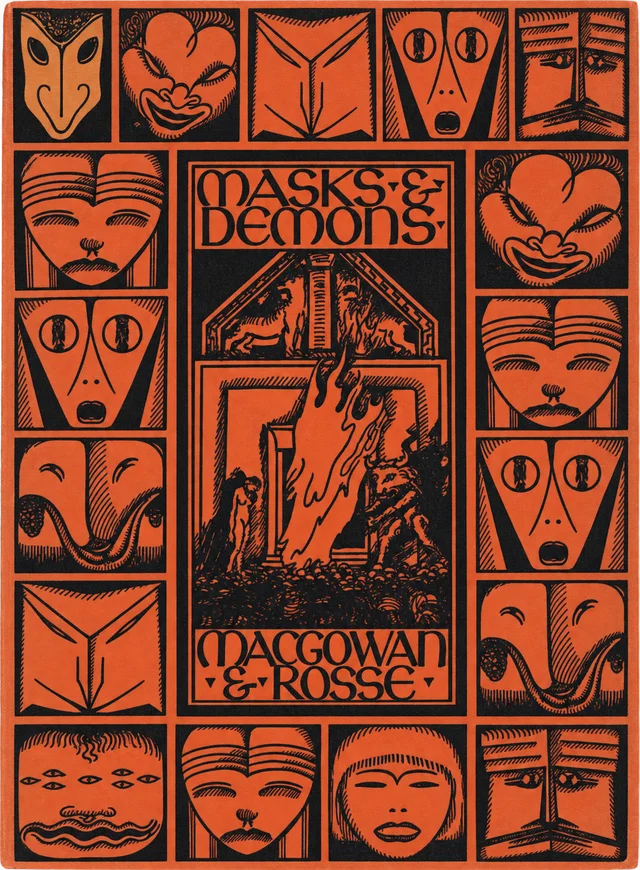
The acknowledgments to Masks and Demons credit Rosse with theatrical knowledge and numerous drawings. Kenneth Macgowan describes an artistic and theatrical inquiry that draws on both facts and conjectures. The book’s proposed movement from ritual mask to drama is therefore an argument shaped by those interests.
Photographs show masks from named museum collections, while a separate list identifies the line drawings. Rosse did not make the historical objects simply because he helped create the book. His drawn interpretations can restore a performing body, gesture or imagined action to an isolated mask. The comparison moves among original makers, collections, photographs and modern theatrical design, relationships that broad historical labels can otherwise conceal.