An American career followed by work in Asia
Olcott was born in Orange, New Jersey, in 1832. Agricultural science and journalism preceded service as an investigator of fraud and corruption during the American Civil War. He subsequently practised law while continuing journalism, including reports on Spiritualist phenomena. In 1875 he helped found the Theosophical Society with H. P. Blavatsky and William Q. Judge.
As president he accompanied Blavatsky to India, directing much of the Society’s organisational work. He became a Buddhist in 1880 and supported Buddhist education in Sri Lanka, also working with Buddhists in Burma and Japan. Institutional histories emphasise his administrative and public role in this revival. He died at Adyar in 1907. His catechism belongs to these practical efforts to formulate and circulate religious teaching for modern learners.
A teaching book made through revision
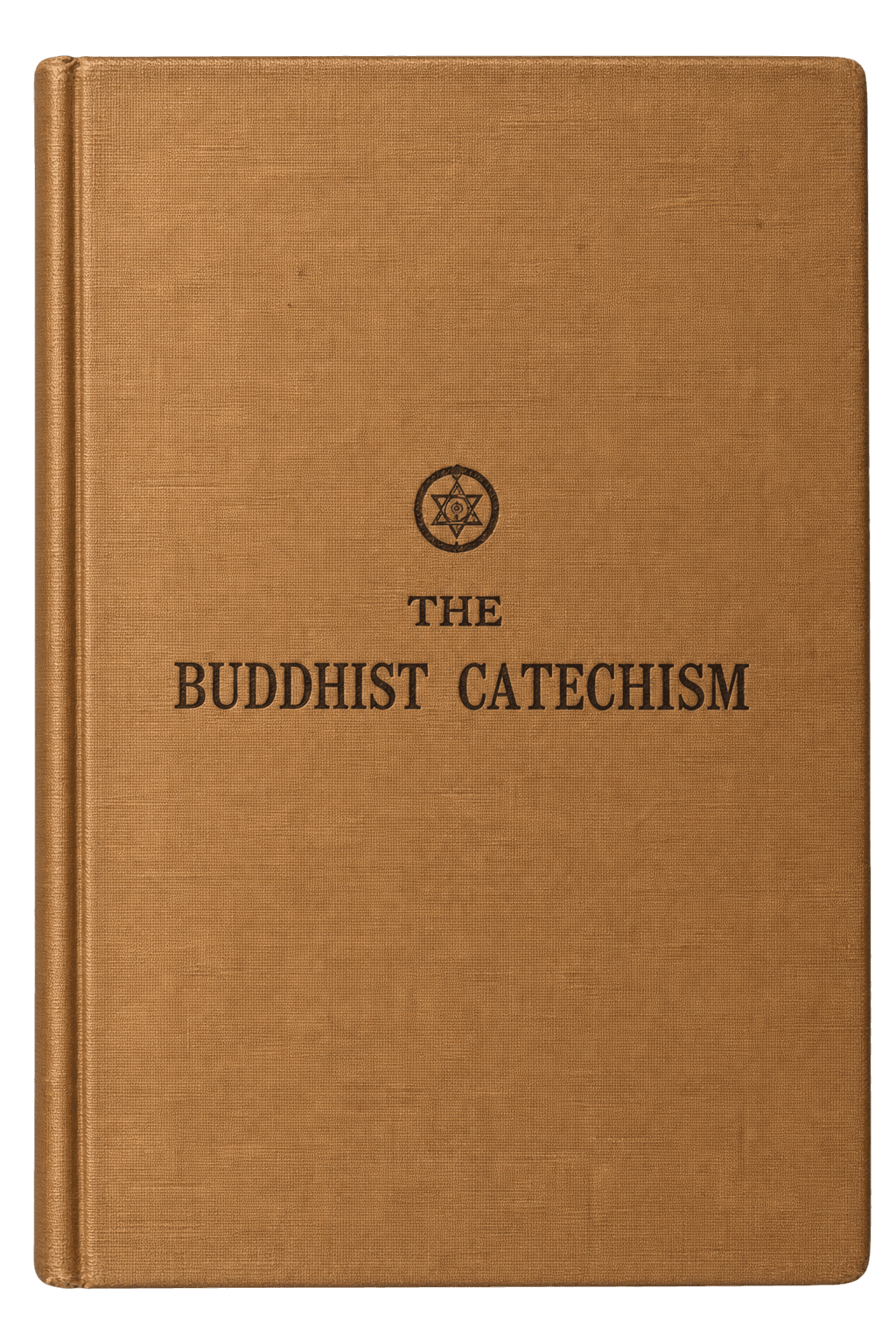
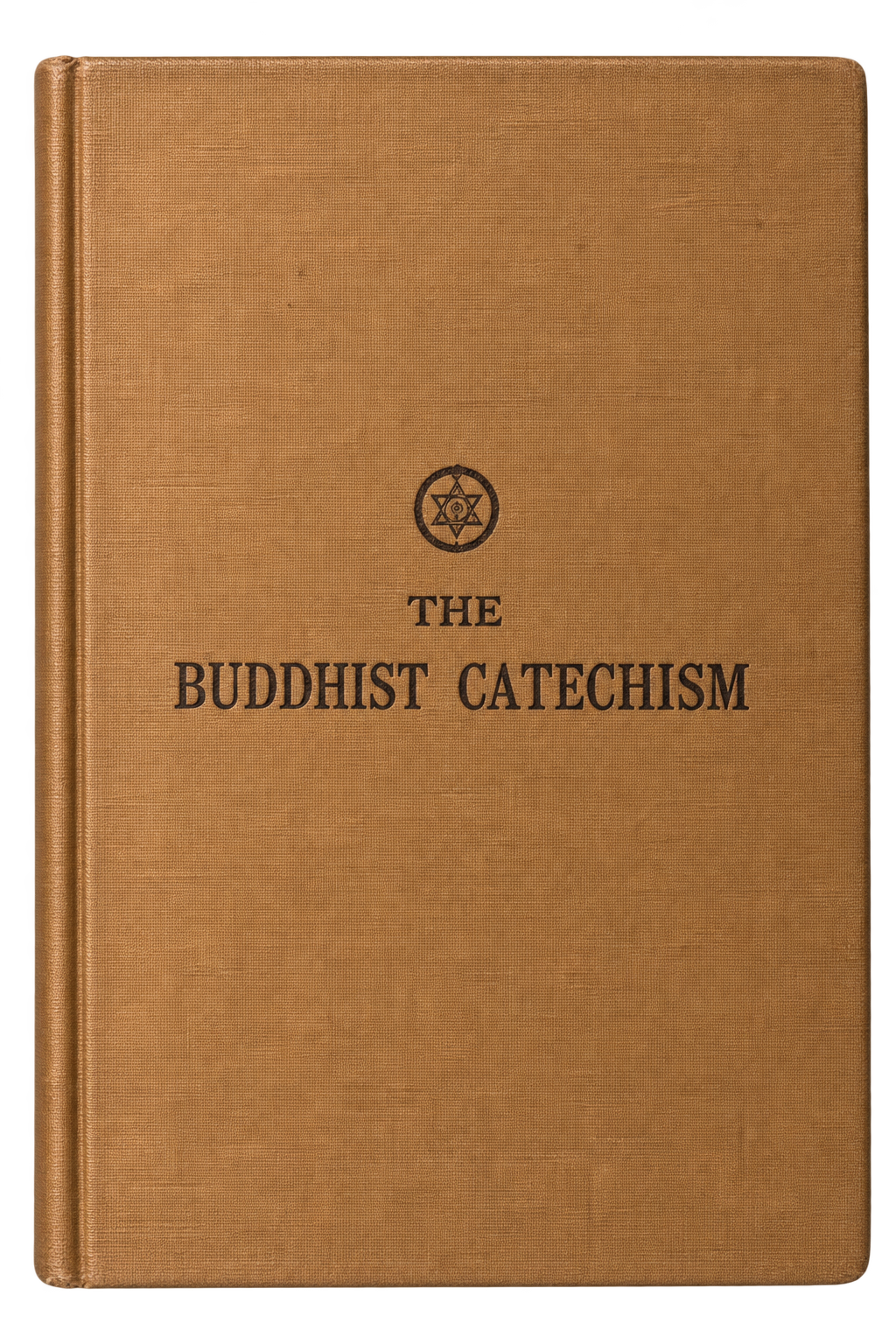
The held Buddhist Catechism is the thirty-sixth edition, dated 1903 and described as corrected and enlarged. Its title records approval for Buddhist schools by H. Sumangala. Prefaces acknowledge Sinhalese colleagues and scholarly review, contributions that should remain visible beside Olcott’s name.
Questions and answers address the Buddha’s life, doctrine, the monastic order, history and a proposed relationship with science. The opening links Buddhist identity to conduct as well as professed belief. Successive additions and translated editions show a text being developed for an educational purpose. Its emphasis on what Olcott calls the Southern Church is one historical formulation within Buddhism, shaped by choices about what a short answer can communicate and what it necessarily compresses.