Learning, patronage and controversy
Heinrich Cornelius Agrippa von Nettesheim studied at Cologne and moved through teaching, medical practice and service to political patrons. Lectures on Reuchlin at Dôle in 1509 provoked accusations of heresy. Meeting Johannes Trithemius helped bring his early work on magic into a more definite form. In Metz he defended a woman accused of witchcraft.
His positions at court were often insecure, and religious disputes accompanied his attempts to publish. On the Uncertainty and Vanity of the Arts and Sciences appeared in 1530; the enlarged Three Books on Occult Philosophy followed in 1533. Their coexistence makes his project more complicated than a simple endorsement or rejection of magic. Criticism of human learning and a search for religiously grounded knowledge belonged to the same intellectual life.
Agrippa within a later English book
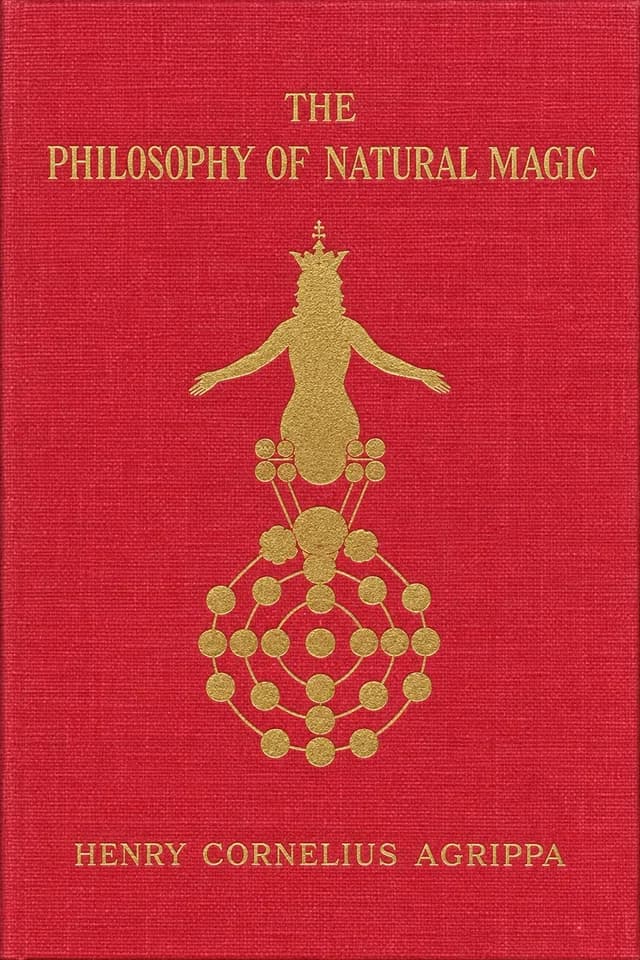
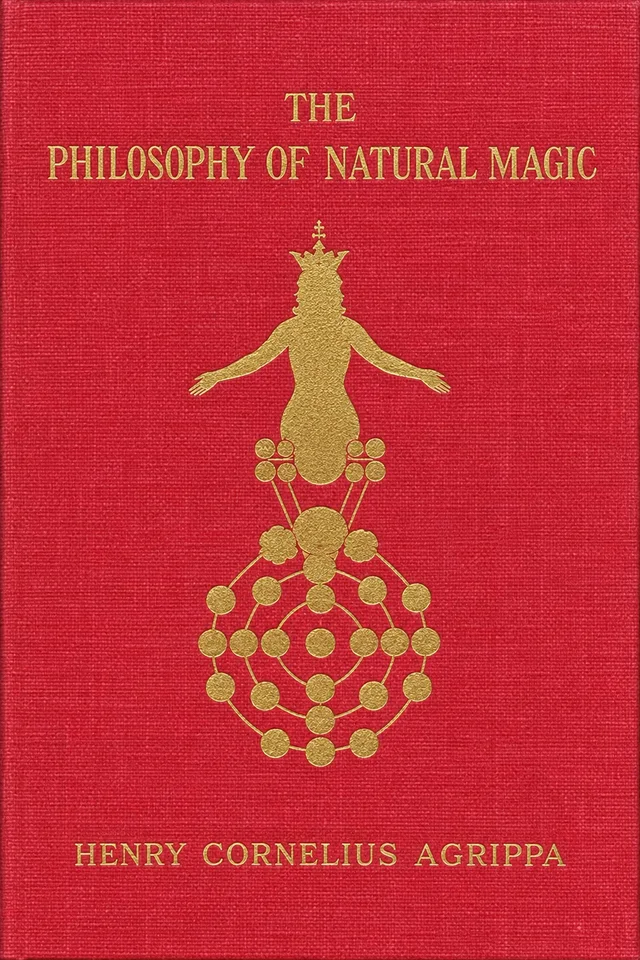
The Philosophy of Natural Magic held here is a Chicago de Laurence Company edition dated 1913. Its preface identifies the principal text as the first book of Agrippa’s larger work, revised from a seventeenth-century English translation. Henry Cornelius on the title names the same writer known as Heinrich Cornelius Agrippa.
The contents distinguish Agrippa’s chapters from introductory and appended material, including contributions associated with Henry Morley and a treatment of the magic mirror. The opening account of a threefold world supplies a framework for relations between different levels of reality. Agrippa’s address also qualifies material he reports rather than affirms. Those distinctions preserve the difference between his reasoning, traditions he collects and the interpretations or illustrations added by later editors.