A difficult apprenticeship in entertainment
Born Erik Weisz in Budapest, Houdini grew up in an immigrant family in Wisconsin and New York. Odd jobs and small entertainment ventures preceded professional magic. His stage name reflected admiration for the French conjuror Robert-Houdin. Early partnerships brought work in small theatres, circuses and travelling shows.
In 1894 he married Beatrice Rahner, known as Bess, who also became his performing partner. Handcuff challenges supplied publicity, and an engagement through manager Martin Beck in 1899 helped bring wider success. European touring turned him into an international celebrity. He continued to develop escapes on land and in water, alongside ventures in film and collecting. He died in 1926. His library, much of it concerned with magic and psychic phenomena, survives in part at the Library of Congress.
Hope tested against a performer’s methods
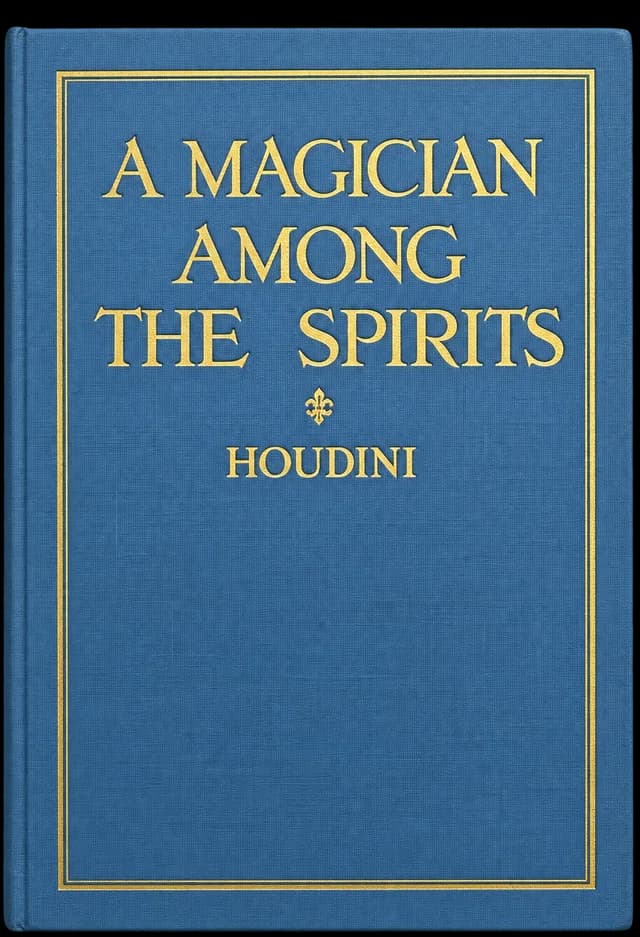
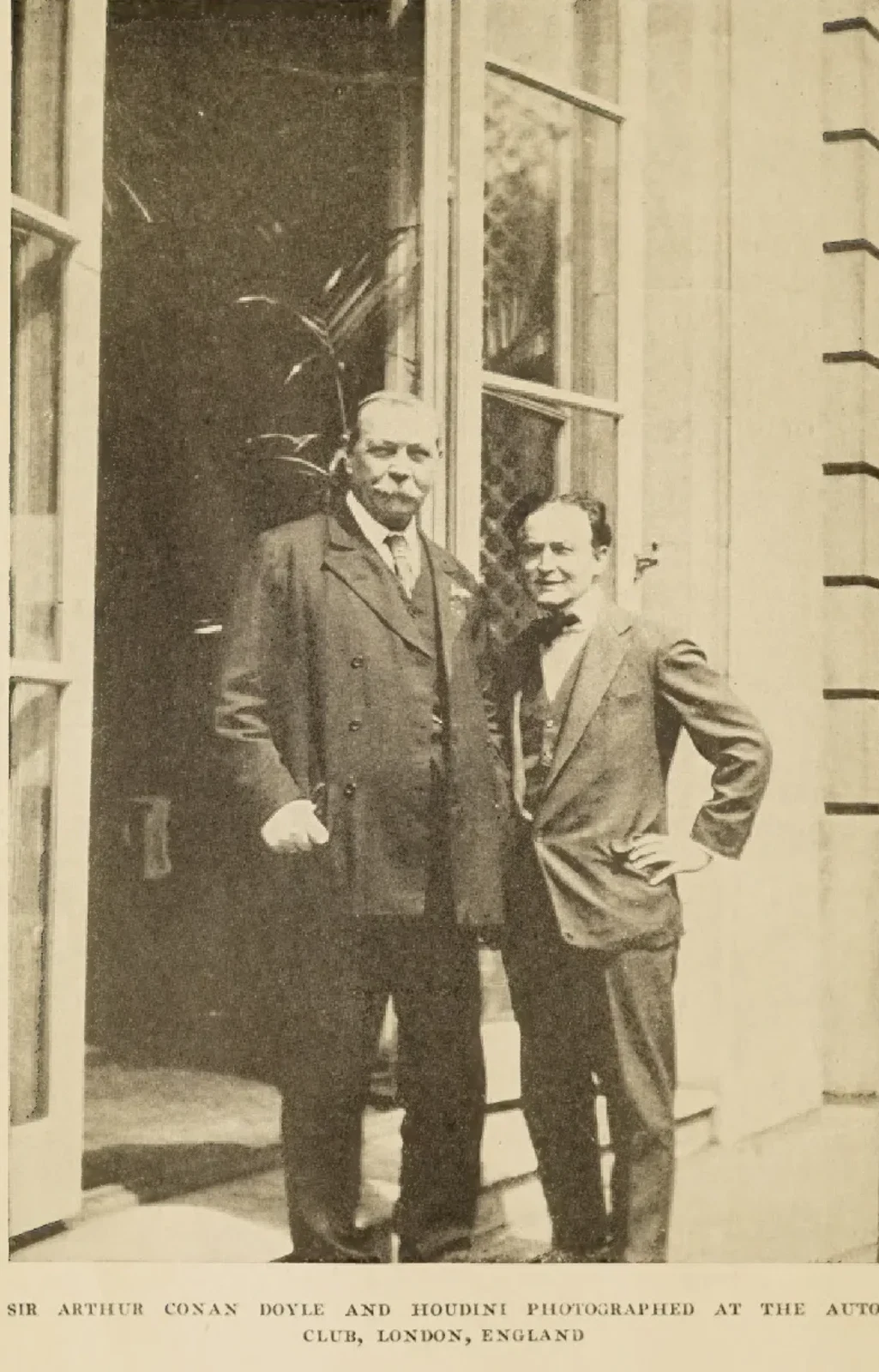
A Magician Among the Spirits was published by Harper & Brothers in 1924. Its dedication remembers Houdini’s mother; a photograph places him beside Arthur Conan Doyle, whose views of Spiritualism increasingly differed from his own. Personal relationships belong within the history of the dispute.
Houdini recalls waiting without result for a promised message from his deceased friend John W. Sargent. He also explains that a magician can create effects whose methods defeat other magicians. That experience separates an unexplained observation from the explanation offered for it. Chapters on slates, photography and materialisation develop his investigations through particular classes of effect. The book records an active participant’s arguments, demanding attention to both the conditions of a demonstration and the strength of the conclusions drawn from it.