From a Prague bank to literary work
Born Gustav Meyer in Vienna, Meyrink moved between cities with his actress mother before completing his schooling and commercial training in Prague. Inherited money enabled him to establish a bank. His interests also led into occult study: in 1891 he helped found the city’s Blue Star Theosophical lodge, later passing through several esoteric organisations.
An unfounded suspicion of fraud brought detention in 1902. The case was dropped, but the publicity ruined his banking business. Writing became his livelihood. Grotesque stories and sharp military satires in Simplicissimus established his reputation, alongside later work as a translator. He settled in Starnberg in 1911. Meyrink, initially a literary name, became his legal surname in 1917. His novels developed occult questions through invented situations, while his satire could also expose pretension and credulity.
A city entered between waking and sleep
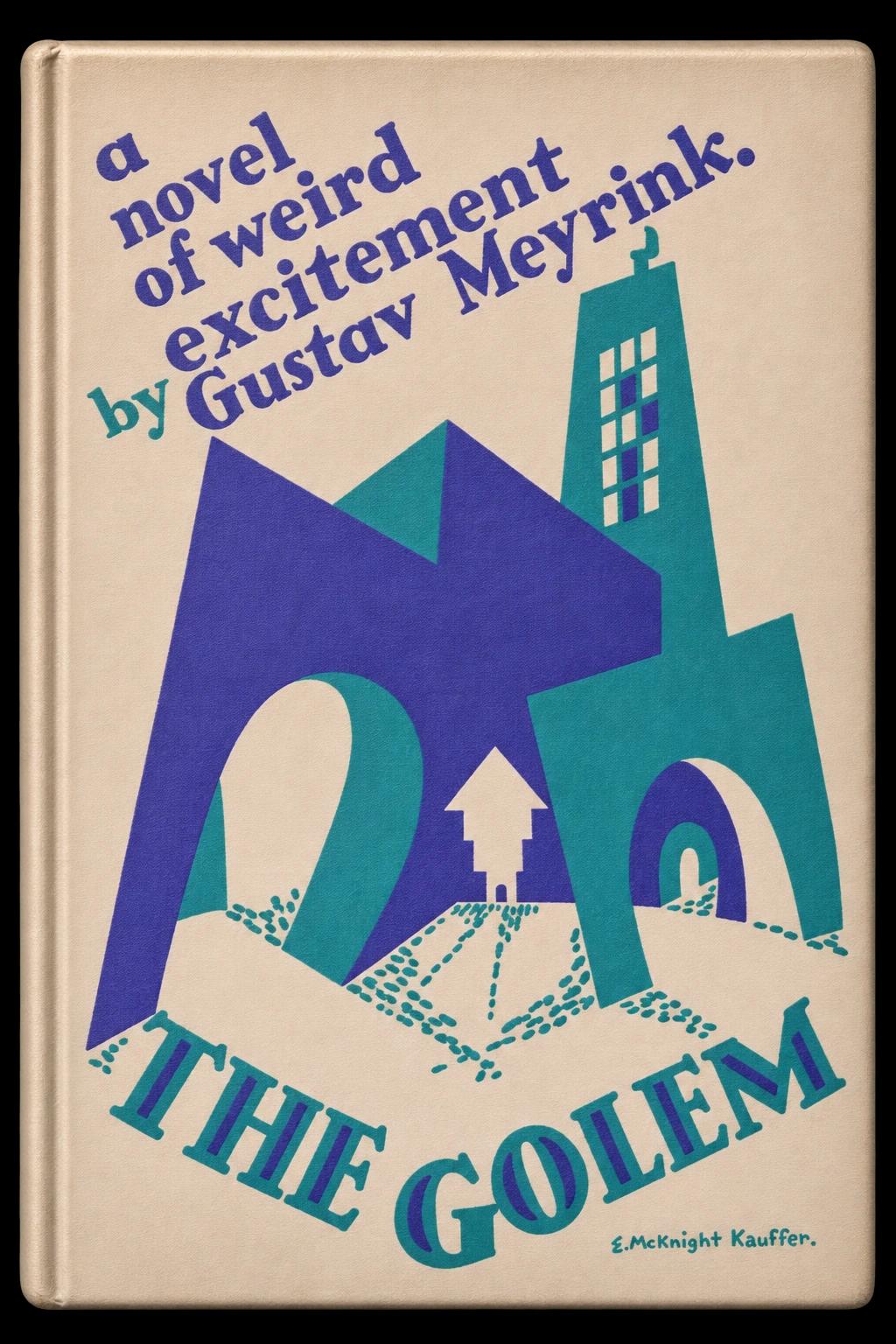
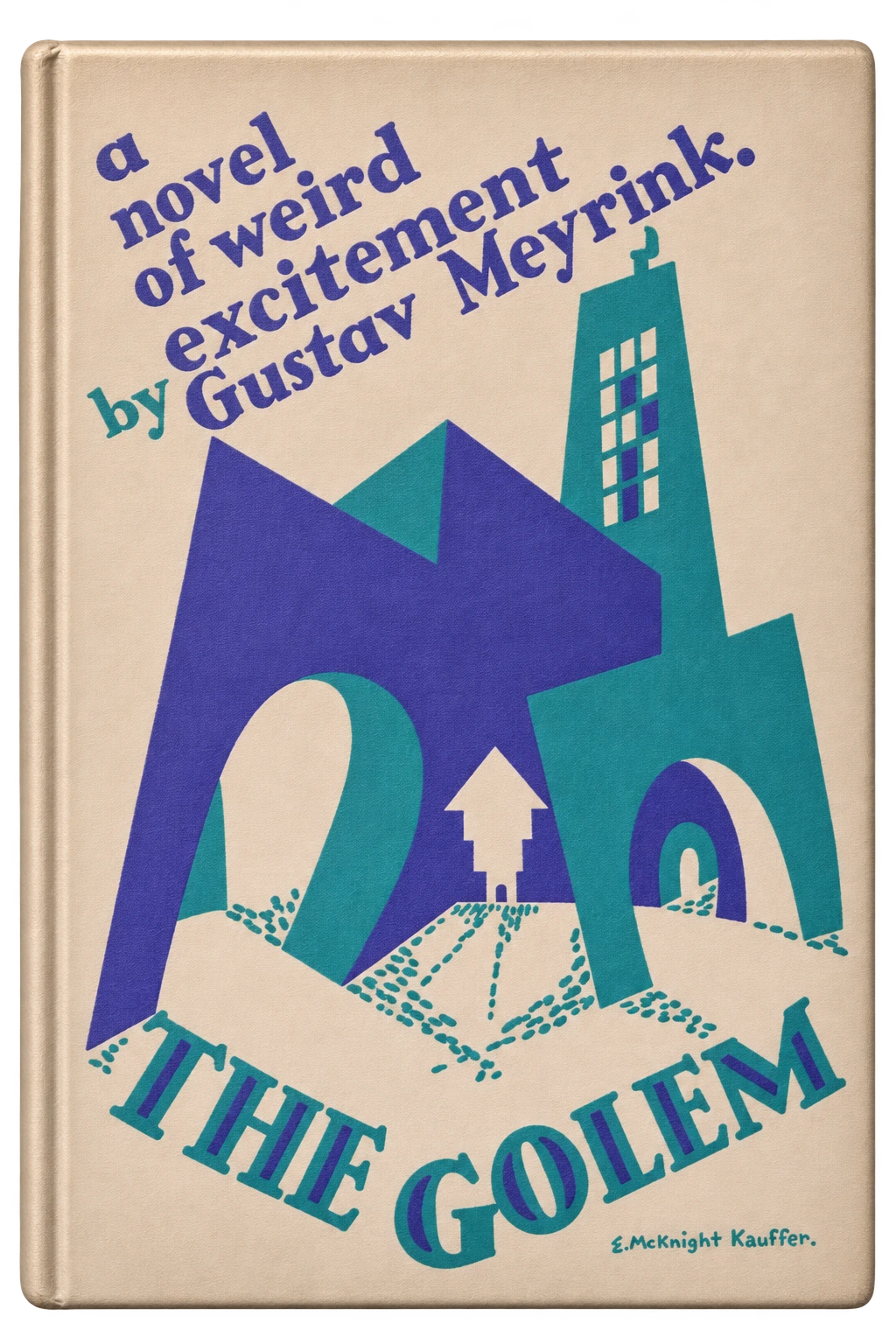
The Golem draws on Prague and an inherited legendary figure to create its own unstable world. The copy held here is a German Kurt Wolff edition, printed in Fraktur. The English catalogue title identifies the work, but the reader contains Der Golem in German. The catalogue’s English-language cover represents the same work, rather than this German printing.
The opening chapter, Schlaf, places moonlight across a bed while things experienced, read and heard begin to mingle. Faces, stones and crowded spaces acquire connections that may belong to perception or memory. The narrative makes uncertainty something its reader experiences, rather than simply a mystery described from outside. Its suspicion and exaggerated portraits of the district also carry period prejudices; the fantastic city should not be treated as a straightforward account of Jewish life.