Naples, Florence and humanist scholarship
Boccaccio was the son of a Florentine merchant. He went to Naples as a young man for commercial training and studied canon law, but literary study and the culture around the Angevin court drew him more strongly. Early poetry and prose developed during these formative years. His later return to Florence brought economic uncertainty alongside continued writing.
Florence employed him on diplomatic business. His meeting with Petrarch in 1350 began an important friendship, and later work increasingly included Latin scholarship and the recovery of classical learning. He also wrote about Dante and began public lectures on the Comedy in 1373, stopping when ill health intervened. He died at Certaldo in 1375. This learned career extends well beyond the reputation for comic and erotic storytelling attached to the Decameron.
Company, comfort and uncertain judgment
The Decameron surrounds its hundred tales with ten young people’s retreat from plague-stricken Florence. Its proem offers stories as comfort and diversion, especially to women whose opportunities for distraction it describes as restricted. The chosen company creates an order against the disorder outside.
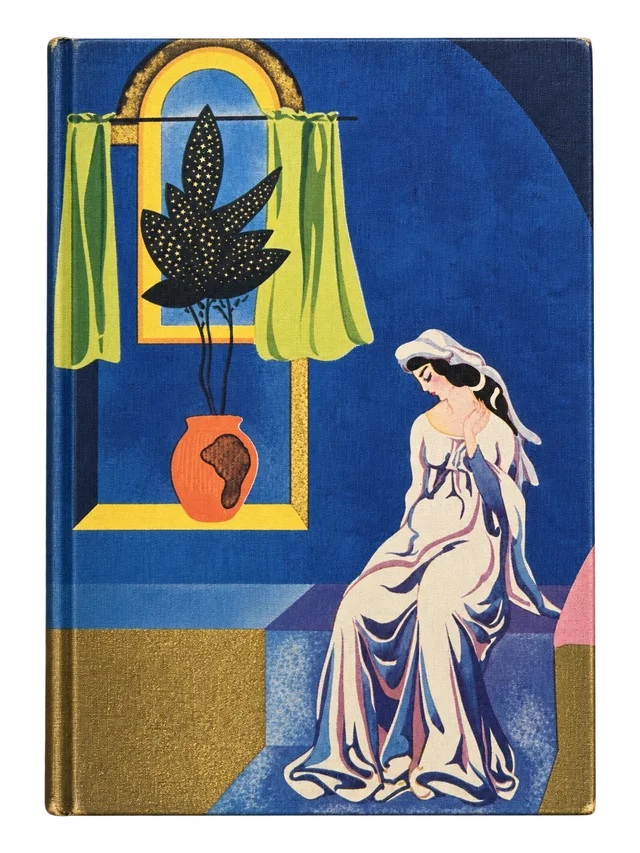
The privately printed English book here is Volume I, with J. M. Rigg as translator and Louis Chalon as illustrator; it does not contain the complete collection. The opening tale of Ser Ciappelletto turns on the distance between a life and its public reputation. An impressive account can organise belief around an undeserving person. The separate tellers, their listeners and the framing occasion allow different judgments to coexist, giving storytelling a social purpose beyond the delivery of a single moral.