Artistic beginnings and public recognition
Hauptmann grew up in Silesia and tried agricultural work and sculpture before finding his vocation in writing. He studied art in Breslau and Dresden and spent time in Italy. Marriage to Marie Thienemann in 1885 helped provide the material security for his literary work. Before Sunrise and The Weavers established his place in German naturalist theatre.
His range extended to fairy-tale drama, historical subjects and prose fiction. The Nobel award recognised his dramatic achievement, but his public standing also brought difficult political choices. A supporter of the Weimar Republic, he did not publicly distance himself from National Socialism after 1933. He remained in Germany, where selected works continued to be performed and the regime honoured him. He died in 1946.
A crossing and an uncertain purpose
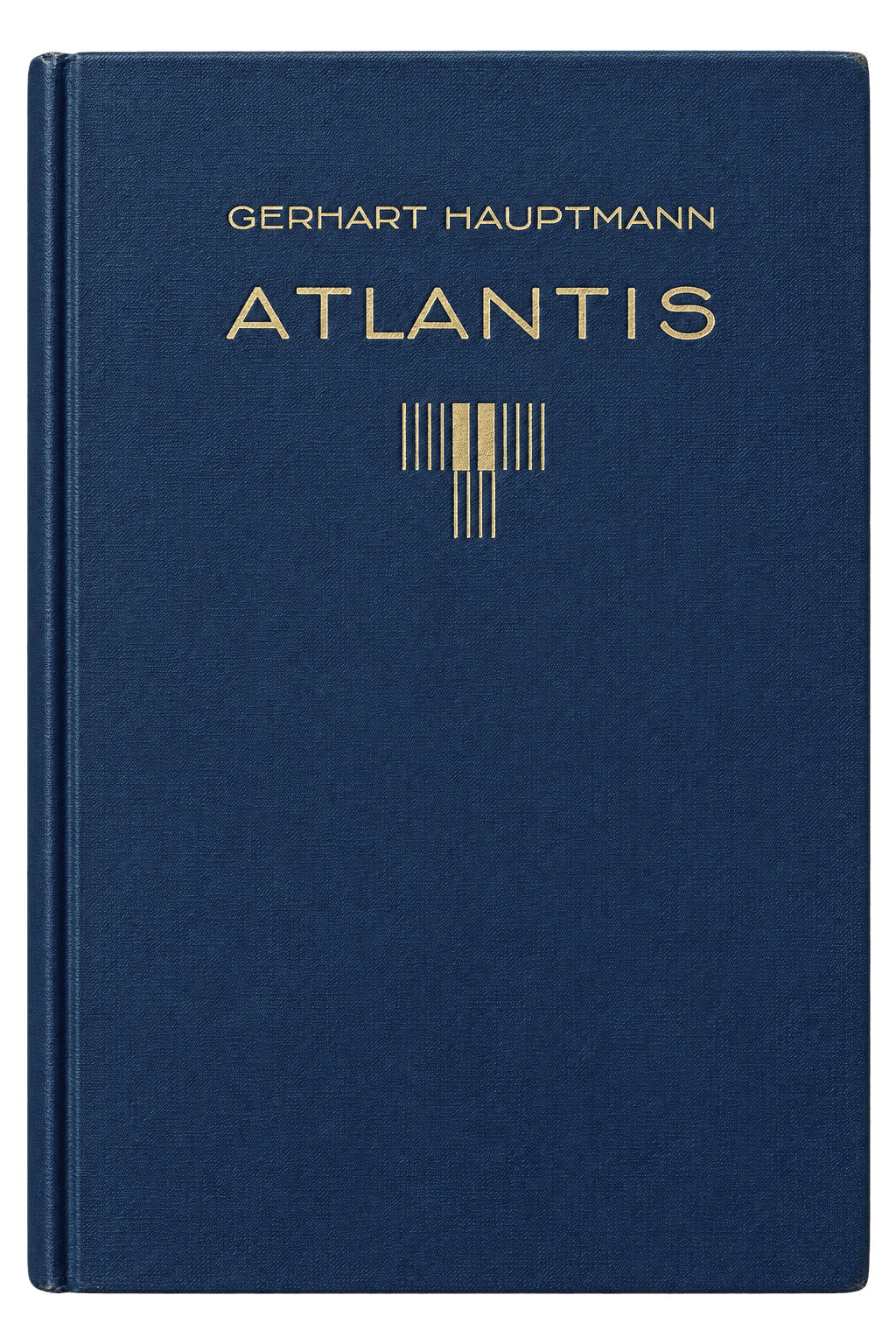
Atlantis appeared in 1912. The English title held here names Adele and Thomas Seltzer as translators and B. W. Huebsch as publisher. Its subject is a modern Atlantic passage and a traveller’s emotional upheaval, rather than an account of the legendary island.
The opening presents the Roland as a working mail steamer between Bremen and New York, setting the voyage in January 1892. The vessel’s construction and timetable supply a confidence absent from Frederick’s hurried decision to sail. Sparse luggage, an evasive explanation and a letter expose a gap between outward movement and inward purpose. Hauptmann sets material arrangements beside unstable motives, allowing the journey to become a test of how the traveller understands himself.