Newspapers, California history and public debate
Parsons was born in Brighton, England, in 1840. After several years at sea, he tried the Cariboo goldfields and entered journalism in British Columbia. He later worked on San Francisco newspapers before taking editorial control of the Sacramento Record, continuing after its merger with the Union. In the early 1880s he joined the New York Tribune. His Life and Adventures of James W. Marshall, published in 1870, recorded the career of the man associated with California’s gold discovery.
His interests extended beyond newspaper politics. He wrote on Theosophy and served on the Theosophical Society’s American Board of Control in 1884. His Atlantic Monthly essay The Labor Question appeared in 1886, warning of socialism and industrial conflict. It also recognised the danger that workers denied confidence in electoral reform might turn towards revolution. Alongside these arguments, he wrote literary criticism and introductions to Balzac. He died in 1893.
Interpreting Balzac’s spiritual ascent
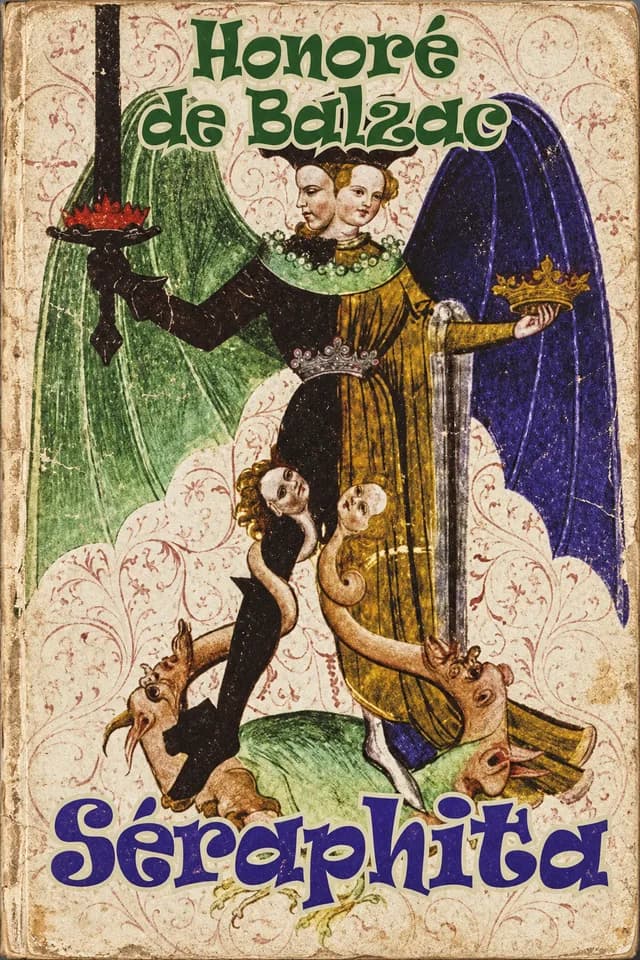
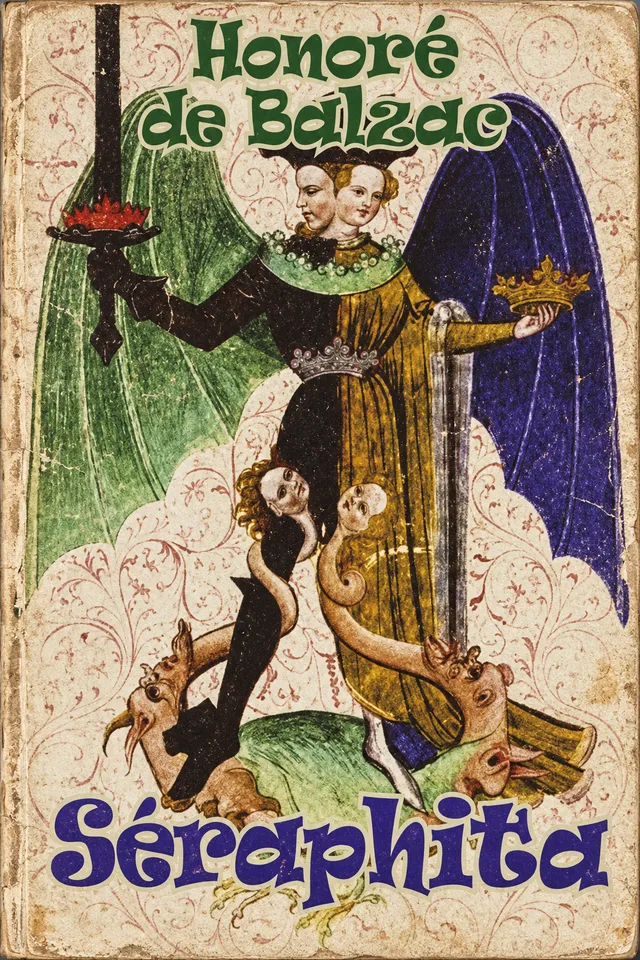
Parsons’s introduction accompanied Katharine Prescott Wormeley’s translation of Séraphîta in 1889. The held Little, Brown Centenary volume preserves the essay, signed with his full name, before Balzac’s text. Wormeley is the translator and Jules Girardet the credited illustrator; Parsons supplies the extended critical reading.
He treats the novel as the culmination of Balzac’s philosophical fiction. The ascent from material existence towards a divine state becomes intelligible, in his reading, through reincarnation and the gradual replacement of self-love by love of others and of God. He follows the spiritual education of Wilfrid and Minna and their relationship to the mysterious Séraphîta. His account also relies on fixed contrasts between masculine and feminine natures. These are features of Parsons’s interpretation, shaped by his Theosophical interests, rather than a neutral summary of the novelist’s beliefs.