From parish work to Spiritualist lecturing
Born in Birmingham in 1869, Owen worked as a foundry clerk before preparing for the Anglican ministry. Night classes at the Midland Institute helped him study Greek and Latin, followed by training at Queen’s College. He married Rose Pemberton in 1892 and was ordained deacon in 1893 and priest the following year. After several Liverpool curacies, he went to Orford, near Warrington, in 1900. He helped raise funds for a church and became its first vicar when the new parish was formed in 1908.
Owen’s mother died in 1909. In his account, his wife developed automatic writing before he began recording messages himself in 1913. Publication in the Weekly Dispatch brought the parish priest a much wider audience. His Spiritualist work met church opposition, and he left his Orford post in 1922. He subsequently lectured in Britain and America; his On Tour in U.S.A. appeared in 1924. He died in 1931.
The Lowlands of Heaven
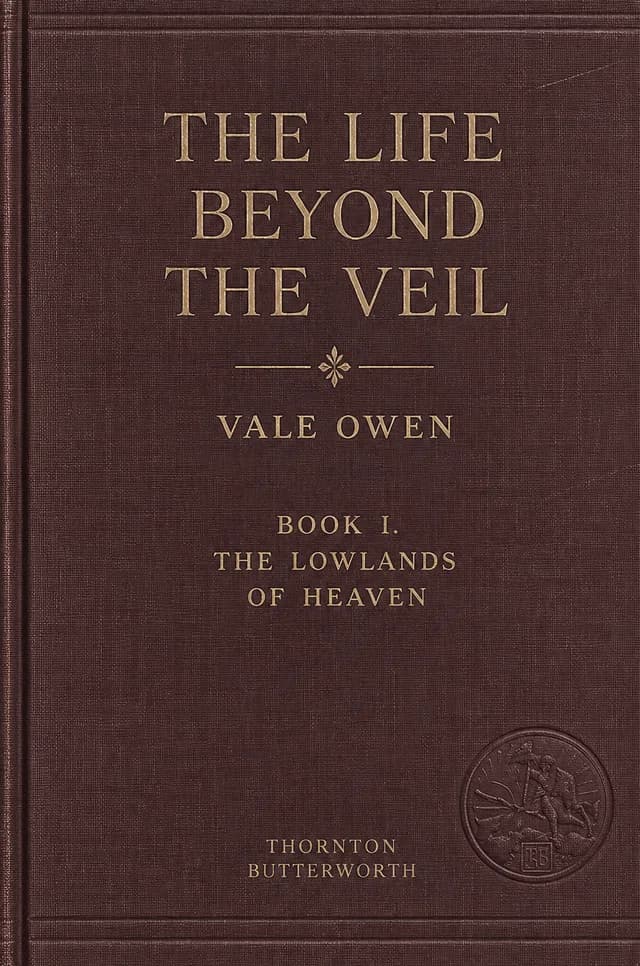
The held Greater World Association edition contains a preface signed in autumn 1925 and an introduction by Arthur Conan Doyle. Owen describes his method as inspirational writing: sitting after Evensong with a pencil, he recorded thoughts that he regarded as coming from another personality. The opening exchange is dated 23 September 1913. His mother’s band and a teacher called Astriel supply the messages presented in this first book.
The narrative places the dead in a world of occupations, companionship and education. Its inhabitants help others progress, sometimes describing their work in the language of light and vibration. One passage treats the conversion of sorrow into joy as a task constrained by respect for free will. Doyle’s introduction strongly endorses the communications as revelation. That endorsement belongs to the book’s Spiritualist presentation; the identities of its speakers and the worlds they describe remain claims made through Owen’s writing.