Journalism, fiction and public argument
Chesterton attended the Slade School of Art before turning to book reviews and newspaper columns. He married Frances Blogg in 1901. From 1905 until his death he contributed a weekly column to The Illustrated London News, alongside novels, poetry, literary biographies and the detective stories featuring Father Brown. He also edited journals, eventually establishing G. K.’s Weekly.
He entered the Roman Catholic Church in 1922 and supported Distributism, which sought a wider distribution of productive property. Religion and politics supplied subjects for argument across his work. His writing also included antisemitism and contradictory representations of other religions, matters examined in scholarship on his political and religious outlook.
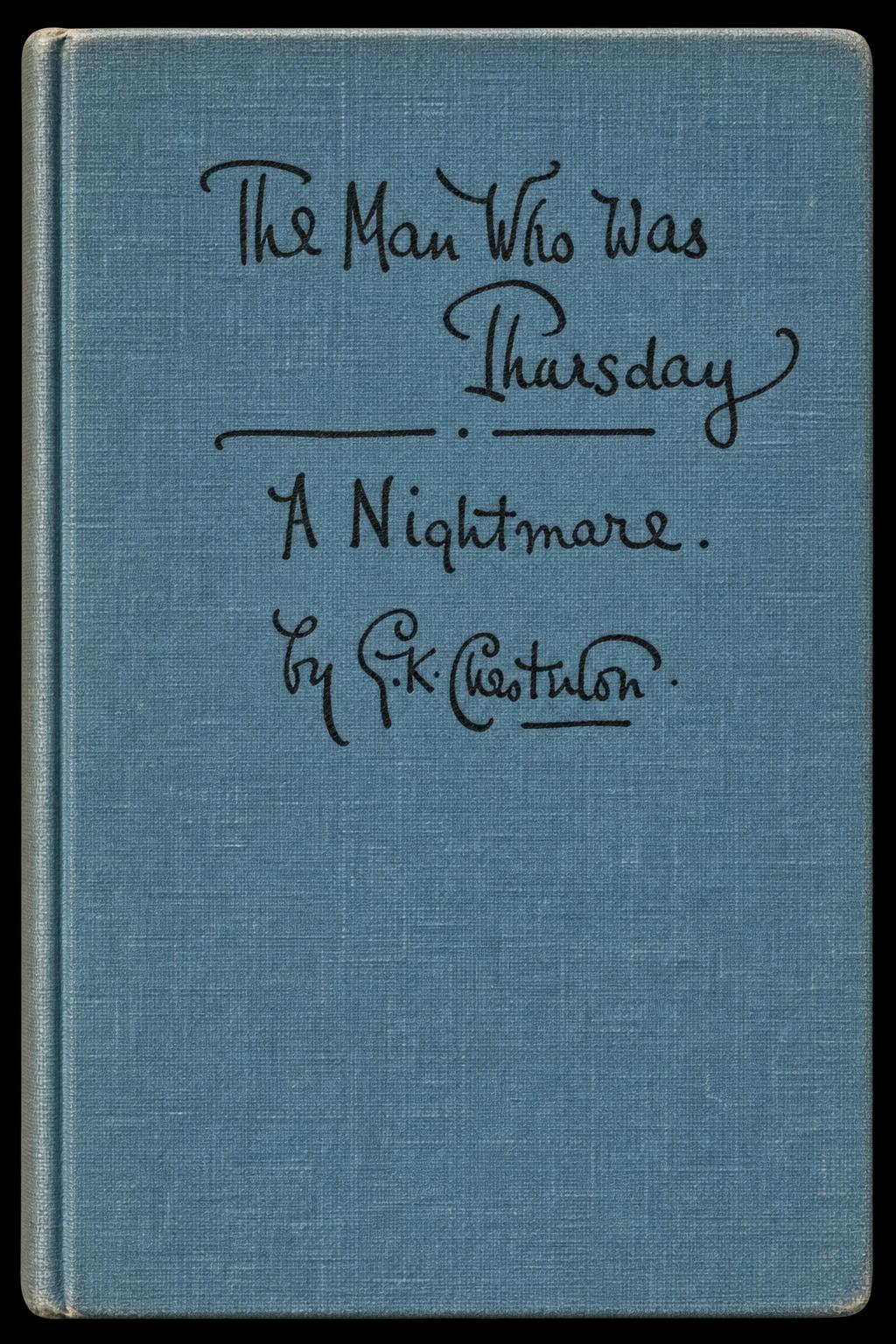
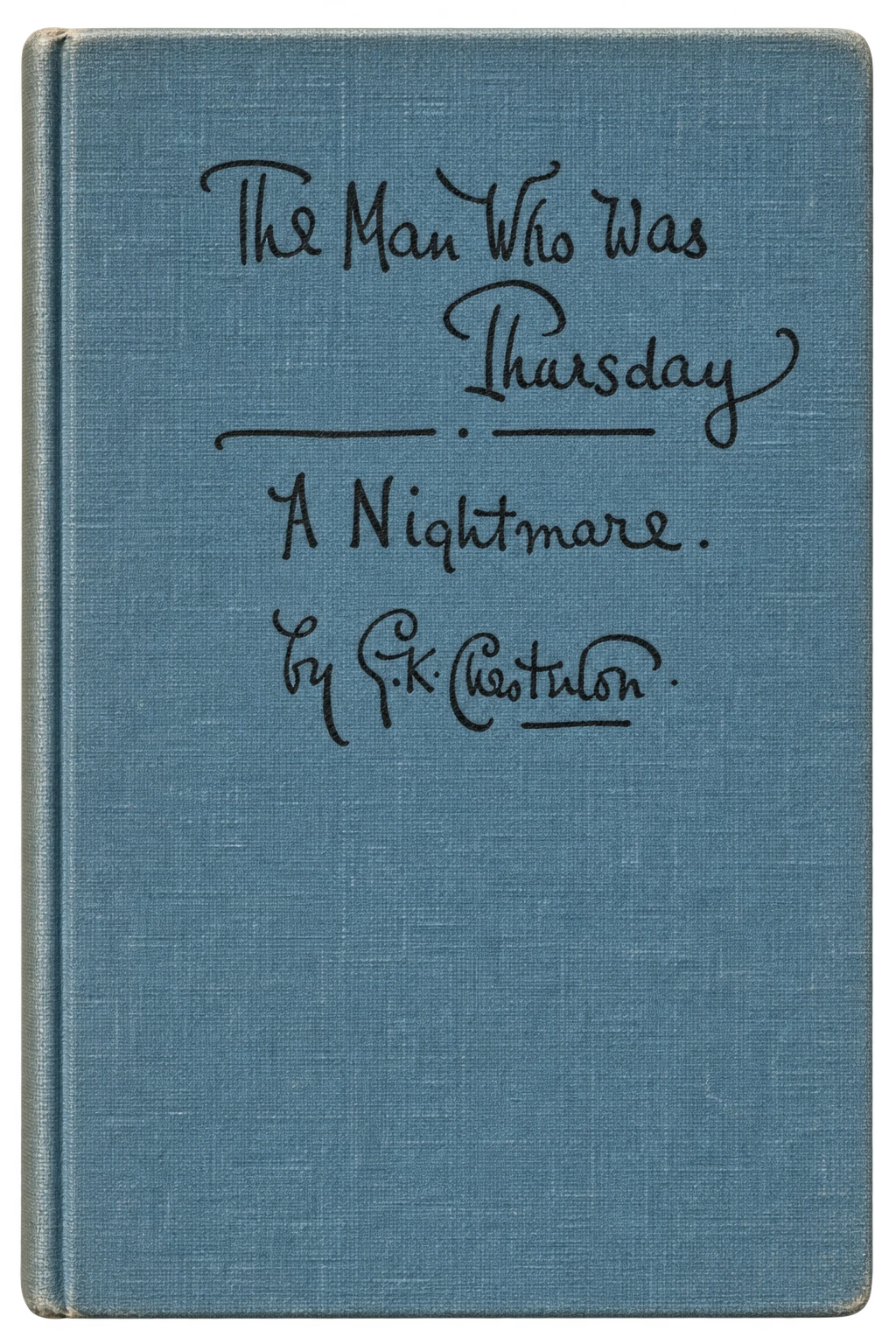
A detective story with shifting appearances
The reading edition of The Man Who Was Thursday opens in Saffron Park, whose artistic pretensions and exaggerated architecture already make the suburb seem a theatrical creation. Gabriel Syme and Lucian Gregory debate poetry, order and rebellion before the conversation leads toward the detective plot. Their positions become less secure as appearances change.
An early exchange reverses the relation between a lamp and a tree: what seems to illuminate something can itself become the object needing explanation. This small verbal turn anticipates the novel’s larger disorientations. Chase and argument develop together, so that a change in circumstances also changes the apparent meaning of a character’s convictions. Chesterton gives ideas bodies, landscapes and dangers rather than leaving them in the form of an abstract debate.