From classical philology to independent writing
Nietzsche became professor of classical philology at Basel in 1869, aged twenty-four. The study of ancient literature helped shape The Birth of Tragedy, which also reflected his early enthusiasm for Richard Wagner. Their eventual estrangement accompanied a wider change in Nietzsche’s intellectual direction.
Persistent ill health led him to resign in 1879. Moving between Switzerland and Mediterranean towns, he produced the books of his mature career, including The Gay Science, Beyond Good and Evil and On the Genealogy of Morality. His attacks on Christian morality and conventional philosophical assumptions were arguments about their origins and consequences. A collapse in Turin in 1889 ended his productive life; he subsequently lived in family care until his death in 1900.
A teaching tested by its listeners
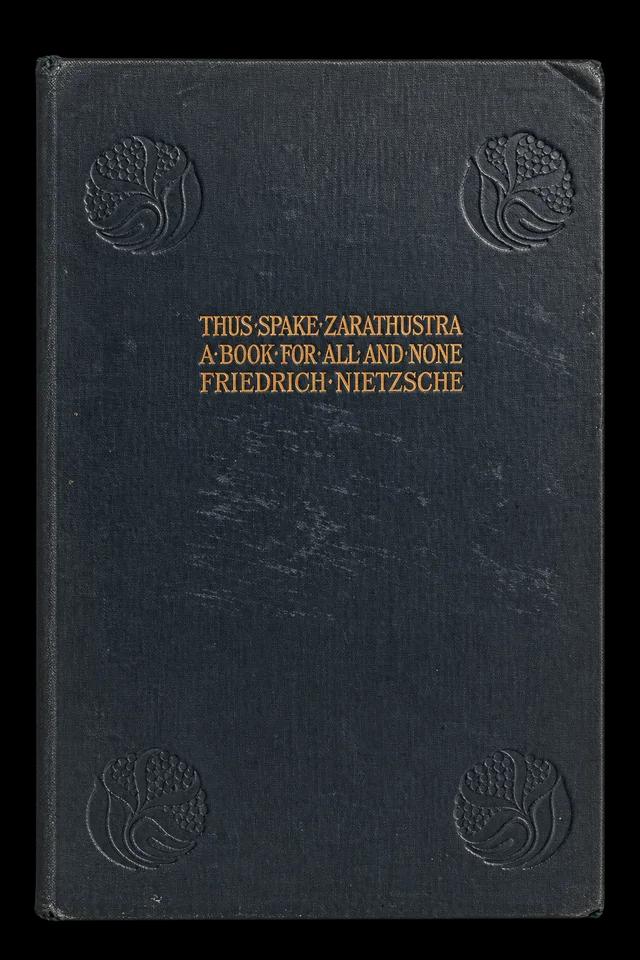
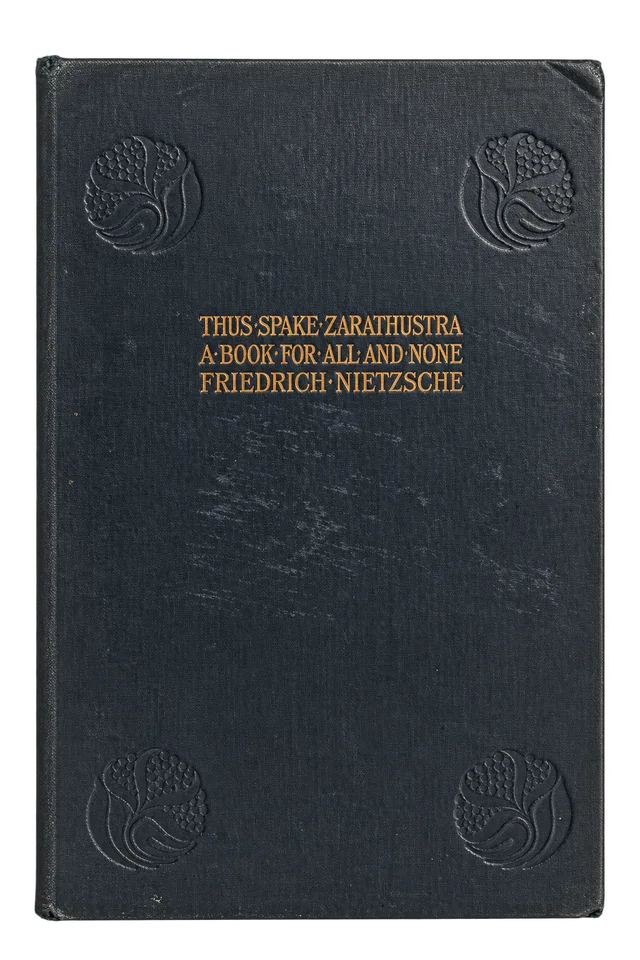
The Modern Library edition here names Thomas Common as translator of Thus Spake Zarathustra. Common’s archaic English gives the speeches a scriptural cadence. That cadence belongs to a particular translation of a work that moves between discourses, songs, visions and conversations.
Zarathustra descends from his mountain to address a crowd awaiting a tightrope walker. Laughter and danger interrupt his proclamation, making the relation between a teacher and his listeners part of the philosophical problem. The camel, lion and child in The Three Metamorphoses give changing forms to endurance, resistance and creation. These images do not settle into a simple sequence of commands: the speaker’s confidence, his failures and the surrounding scenes remain integral to Nietzsche’s treatment of self-overcoming.