The theatre and her father’s legacy
Estelle Stead grew up in the family of W. T. and Emma Lucy Stead. She later recalled a childhood filled with reading, newspaper discussion and lessons in languages. Her father initially resisted her wish to become an actress, but eventually agreed that she should join Frank Benson’s company. By 1912 she was touring with her own Shakespearean company.
Her father’s death on the Titanic that April redirected much of her public work. She published My Father in 1913, preserving family memories and his spiritual outlook, and continued his interest in communication with the dead. She was associated with the Stead Borderland Library and later with the Spiritualist activity at Burstow Manor. She died in 1966.
Recording The Blue Island
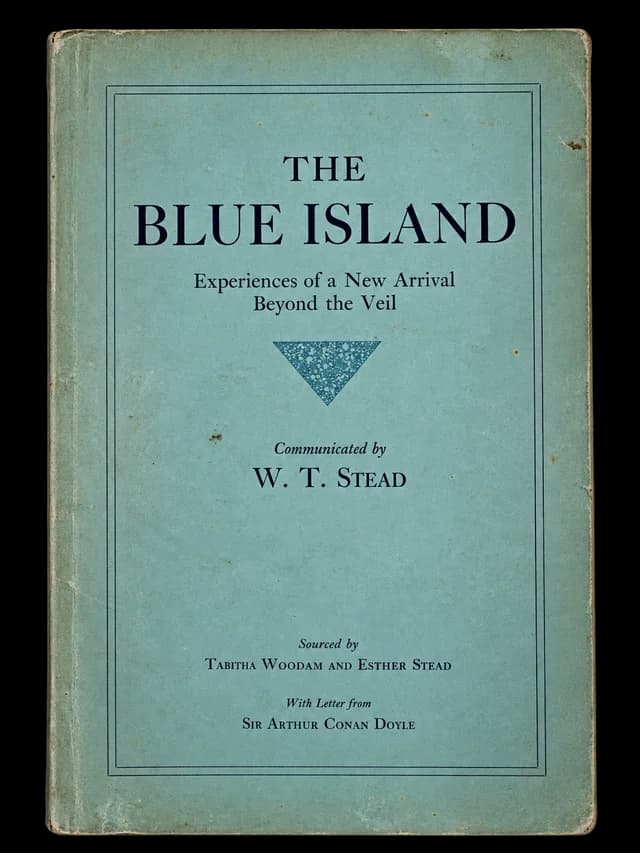
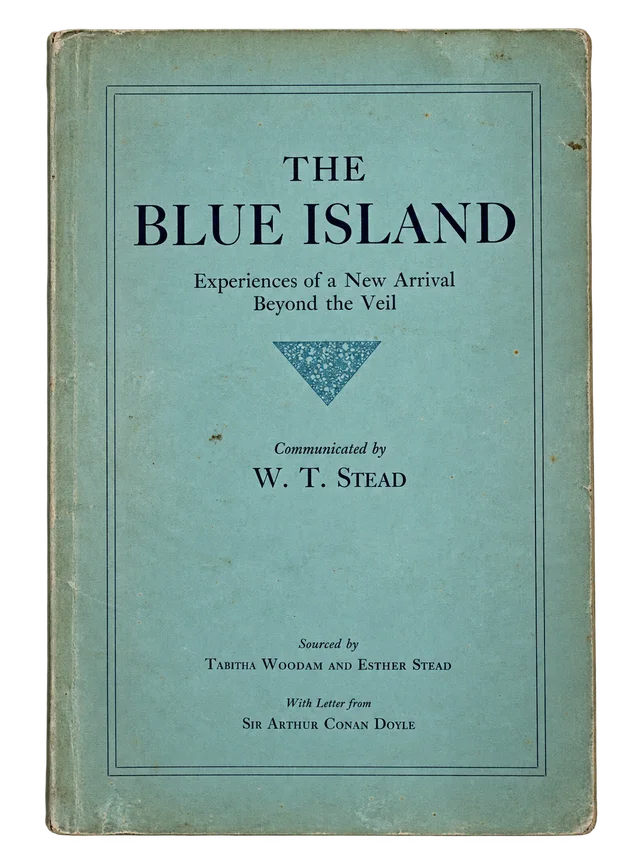
The held third edition names W. T. Stead as the purported communicator and Pardoe Woodman and Estelle Stead as the recorders. A letter by Arthur Conan Doyle is dated September 1922. In her preface, Stead explains that Woodman had been a member of her theatrical company. After his wartime service, he developed automatic writing; she describes herself as sitting beside him while he wrote, rather than holding the pencil herself.
The resulting narrative describes an arrival beyond death and a setting called the Blue Island. Stead interprets it as continued contact with her father. Doyle praises the prose’s resemblance to his style while acknowledging that he could not assess the conditions of production or the role of subconscious influences. Those qualifications matter to the book’s evidential status: it records the participants’ conviction and their account of a mediumistic process, rather than independently verified testimony from the dead.