Life and career
Emanuel Swedenborg began his career in the workshops and mines of early eighteenth-century Sweden. Born Emanuel Swedberg, he studied at Uppsala and travelled in Europe to learn from mathematicians, instrument makers and engineers. Back in Sweden he worked with the inventor Christopher Polhem. Their scientific journal, Daedalus Hyperboreus, published in Swedish at a time when a learned periodical would ordinarily have addressed its readers in Latin.
A long appointment on the Swedish Board of Mines gave him practical experience of metallurgy. He wrote on mineralogy and the structure of matter, then turned to anatomy in an effort to understand the relationship between the body and the soul. During the 1740s he recorded dreams and visions that he understood as a divine calling. He eventually left the board to devote himself to writing about Scripture and the spiritual world.
Work and ideas
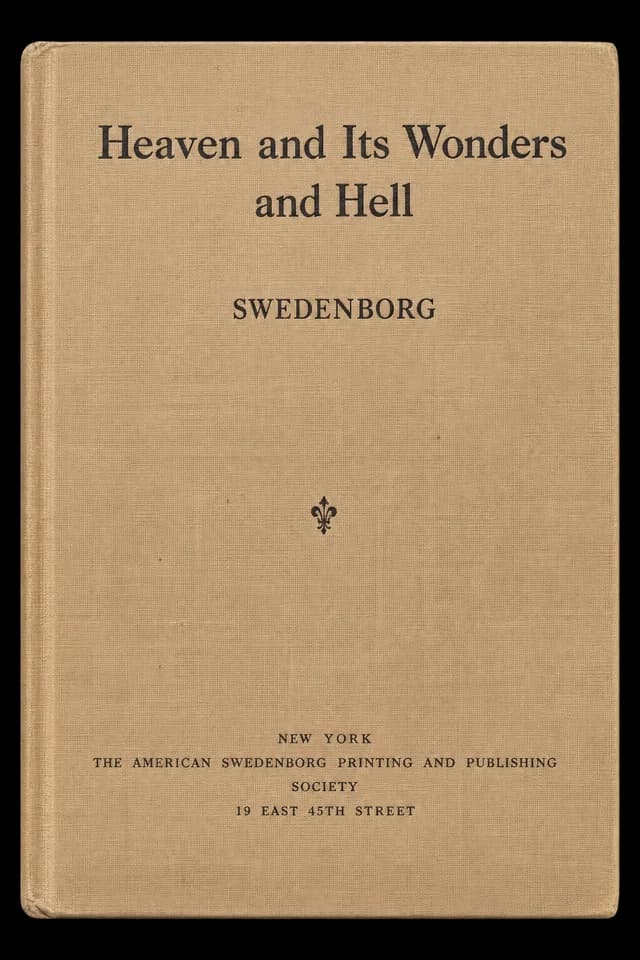
Swedenborg believed that ordinary things correspond to spiritual realities and that this relationship gives biblical narratives an inner meaning. In his extensive Arcana Coelestia he developed that argument through Genesis and Exodus. Heaven and Hell, published in Latin in 1758, offered a more concentrated account of what he said he had witnessed in the company of spirits and angels.
His account of the afterlife gave unusual weight to familiar human activities. Communities, occupations, conversation and affection continue there in forms shaped by what each person loves. These were claims Swedenborg made on the authority of his own experiences. Readers translated and circulated the works during his lifetime, and after his death in London some organised churches around his theology.