Life and career
Alphonse-Louis Constant grew up in Paris and trained for the Catholic priesthood. He became a deacon but left before ordination. He spent the following years among writers, artists and social reformers. In La Bible de la liberté, published under his own name in 1841, he used the language of Scripture to argue for political and social change. The authorities prosecuted him and he served a prison sentence.
It was as Éliphas Lévi, a name he fashioned as a Hebrew equivalent of his own, that he became known outside France. His earlier religious and political interests remained visible in the new work. The question of who had the authority to interpret a sacred sign, once a matter of church teaching and public controversy for Constant, became central to his account of magic.
Work and ideas
Dogme et rituel de la haute magie appeared in two parts in the 1850s. Lévi drew together ceremonial magic, the tarot and his reading of Jewish Kabbalah within a single scheme. His drawing of Baphomet, a figure combining human and animal features, expressed his fascination with the reconciliation of opposites. It became so widely reproduced that many readers now encounter the image before they encounter the text it accompanied.
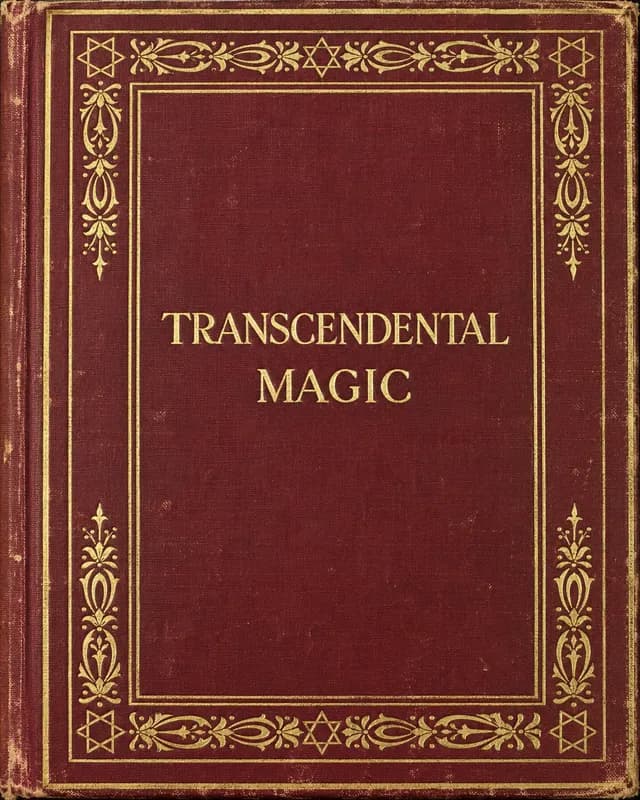
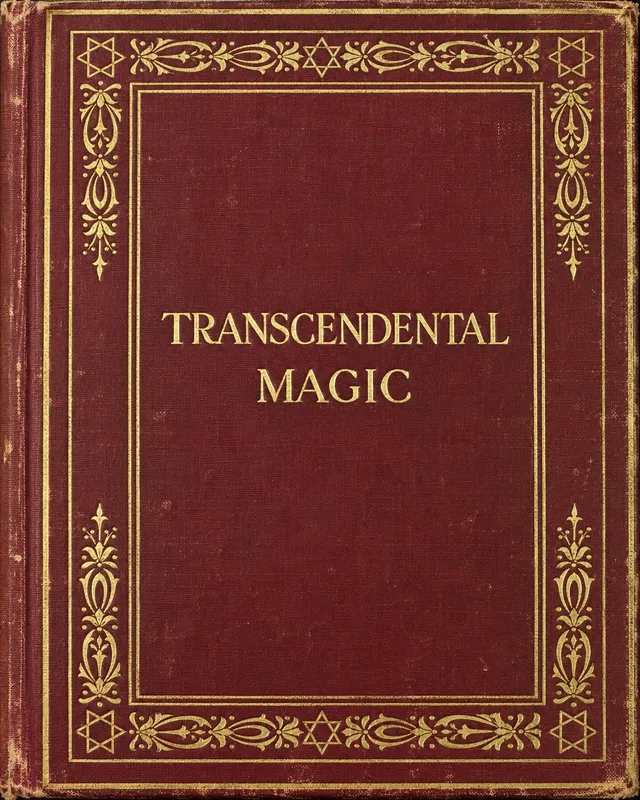
In 1896 the English occult writer Arthur Edward Waite published a translation as Transcendental Magic. Waite supplied his own introduction and critical apparatus. The edition therefore brings together two moments in the occult revival, Lévi’s reconstruction of magical philosophy in mid-century Paris and a later British writer’s attempt to interpret that work for English readers.