Teaching and spiritual inquiry
A contemporary biographical sketch by Hudson Tuttle describes Babbitt’s early work in teaching and penmanship. He developed a handwriting system and established Miami Commercial College in Dayton, Ohio, in 1860. The account places these educational activities before his later prominence in Spiritualist circles.
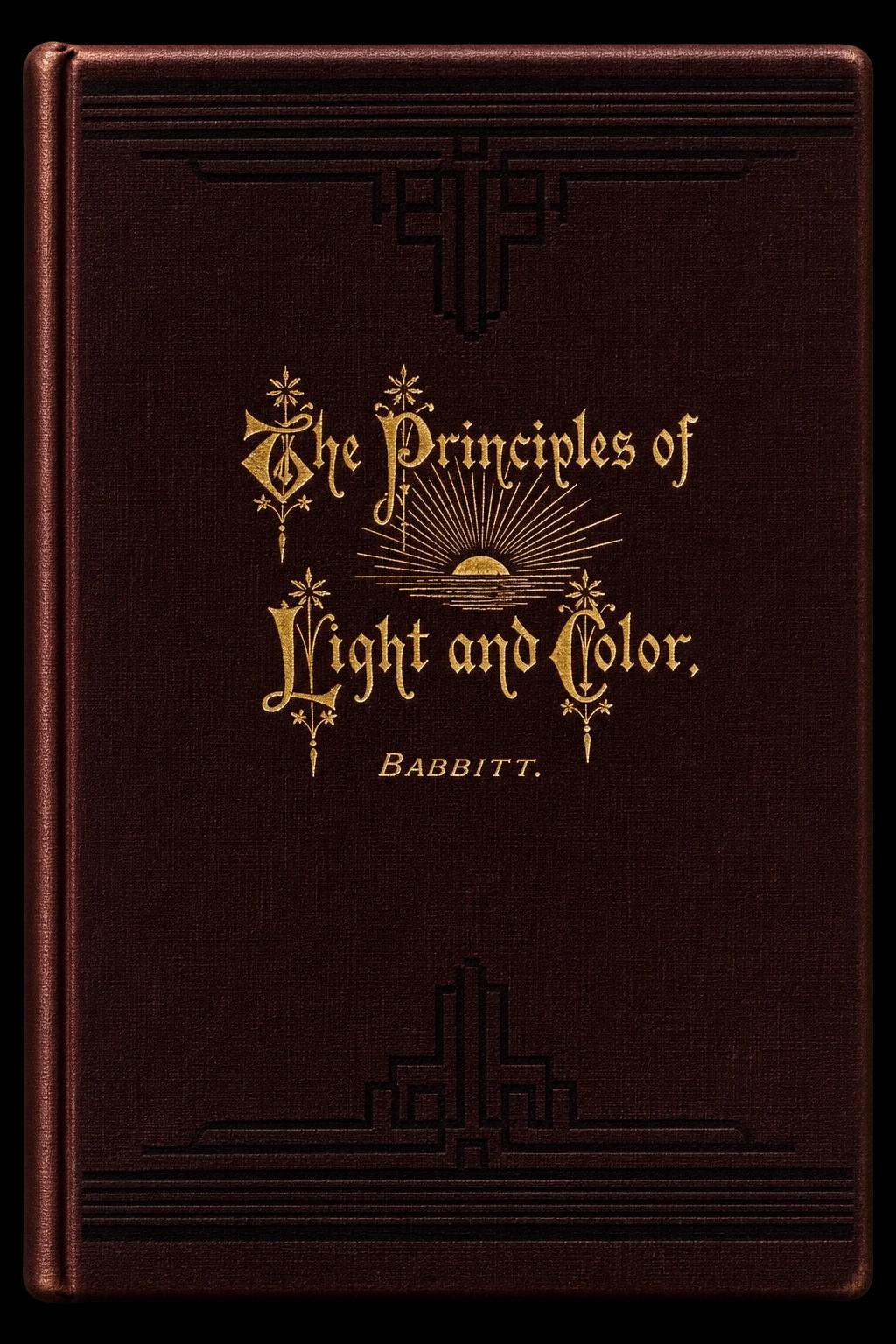
Babbitt’s writing eventually sought a comprehensive explanation of physical and mental life. The Principles of Light and Color joins an account of natural forces to proposed bodily and psychological effects of colour. Its scope reflects his desire to connect subjects normally treated separately, while his preface argues that existing science had not yet reached the fundamental principles he believed he had identified.
Diagrams and claims about colour
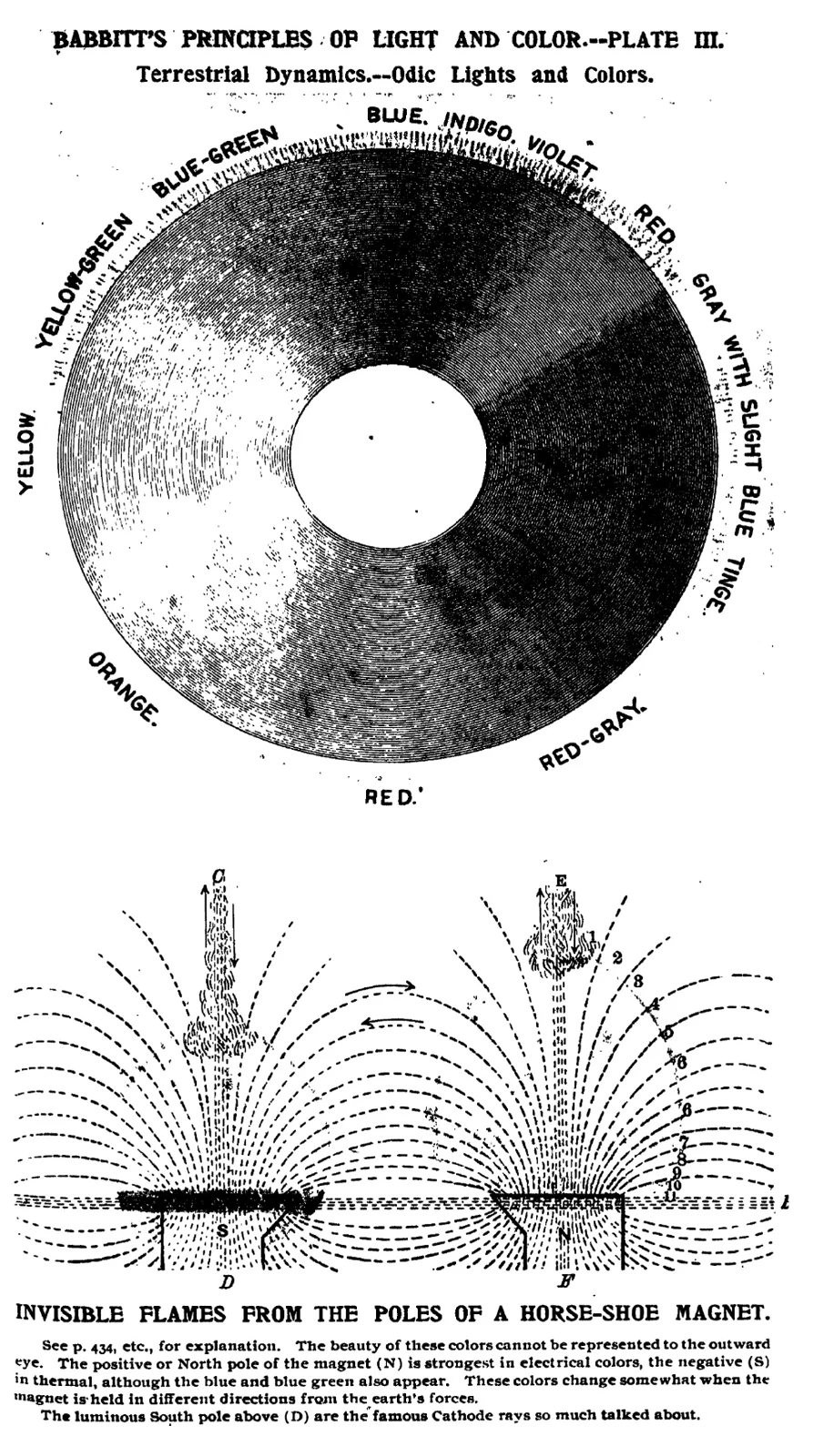
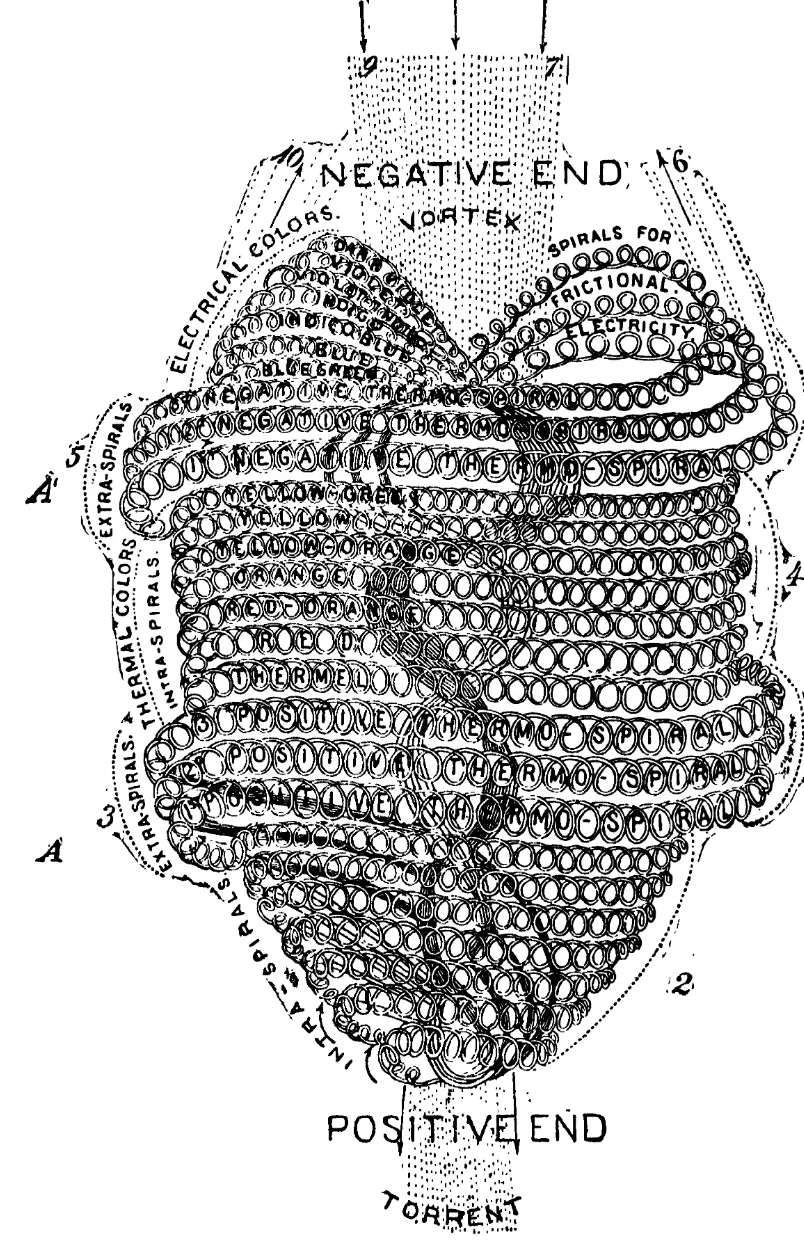
The opening finds recurring patterns in branches, flowers and shells. Similar arrangements at different scales become the basis for larger claims about unity in nature. The book’s technical vocabulary and coloured plates give a visible structure to an explanation that extends well beyond those initial observations.
Later chapters assign particular actions to colours and connect them with the body and mental influence. Those are claims within Babbitt’s historical system. A diagram may bring an observed form and an inferred cause together without demonstrating the relationship between them. The volume’s interest lies in the ambition and visual detail of that system; its proposed treatments should not be mistaken for established conclusions about health.