A literary life in Suffolk
FitzGerald came from a wealthy Anglo-Irish family and studied at Trinity College, Cambridge. Family resources allowed him to pursue literary work without earning a living from it. He spent most of his adult life in Suffolk, maintaining friendships and a substantial correspondence while translating, editing and making small literary collections.
His friendship with Edward Byles Cowell led first to Spanish and then Persian study. Cowell supplied copies of manuscripts containing quatrains attributed to Omar Khayyam and answered questions during the translation. FitzGerald’s first Rubaiyat appeared anonymously in 1859. It initially attracted little notice, but later editions and admirers transformed its reputation.
An English poem and a designed book
FitzGerald rearranged and recast the material rather than preserving every Persian quatrain in a literal sequence. The English voice moves among pleasure, doubt and resignation, repeatedly returning to time and mortality. Its coherence is part of the translator’s making and should not be treated as a complete account of Khayyam’s thought.
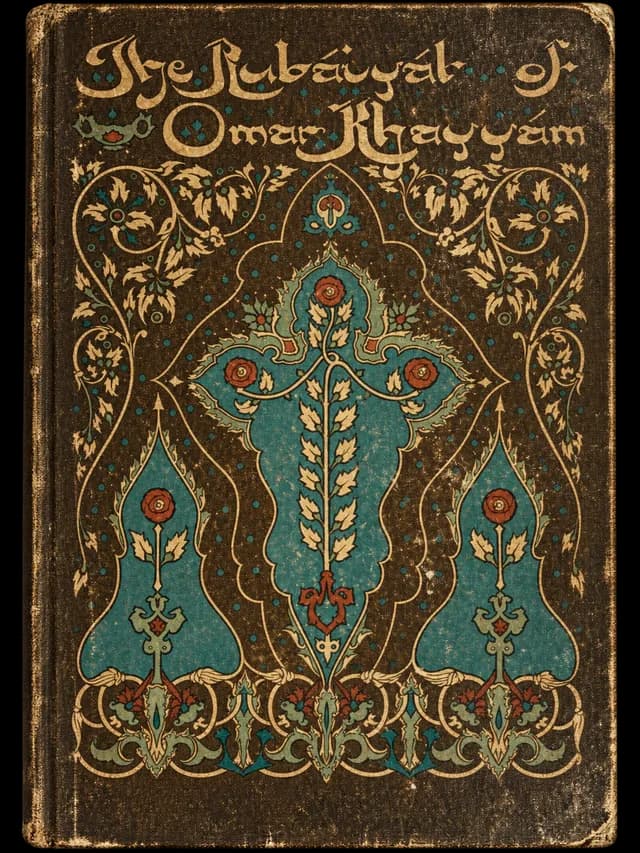
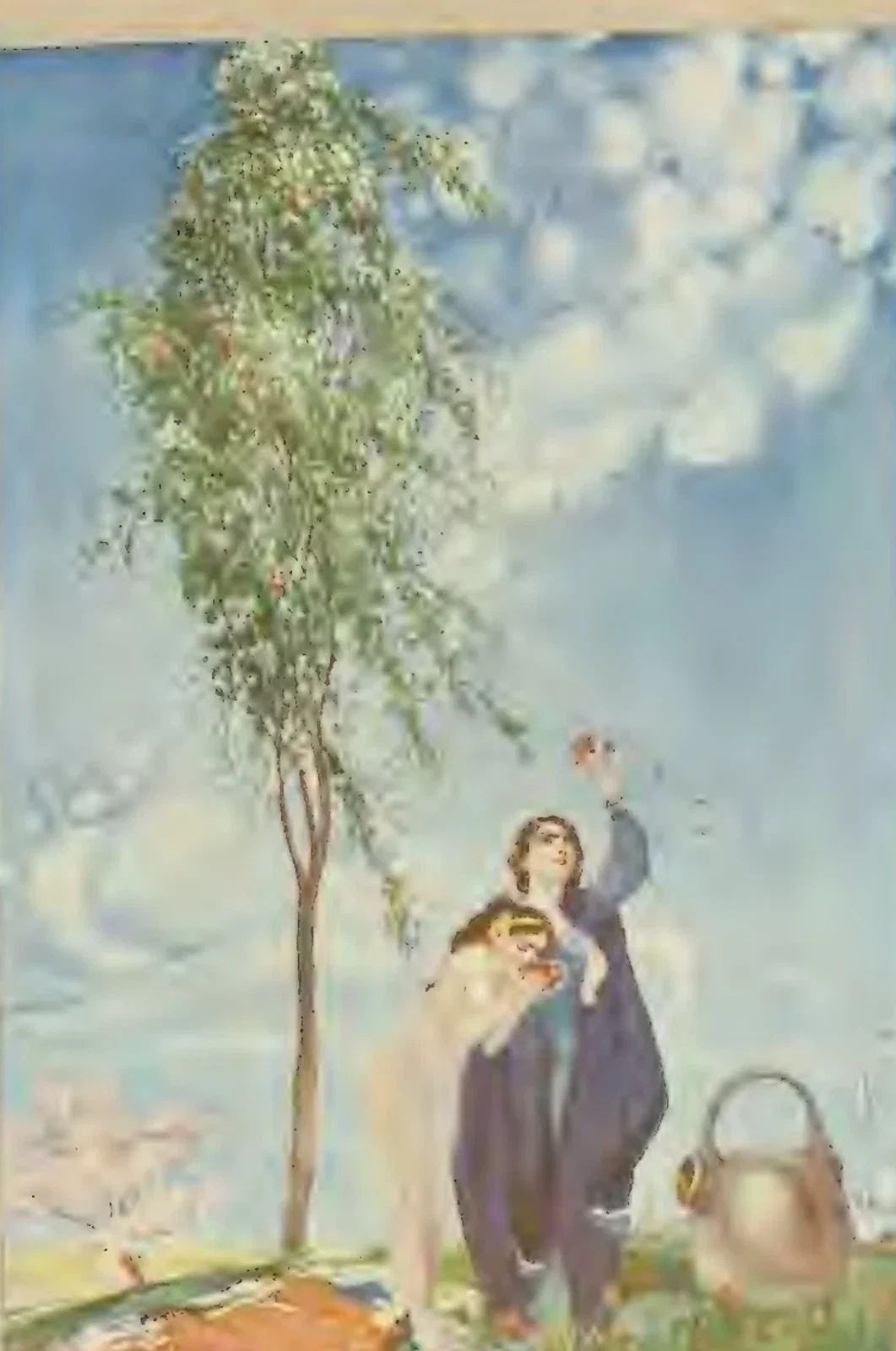
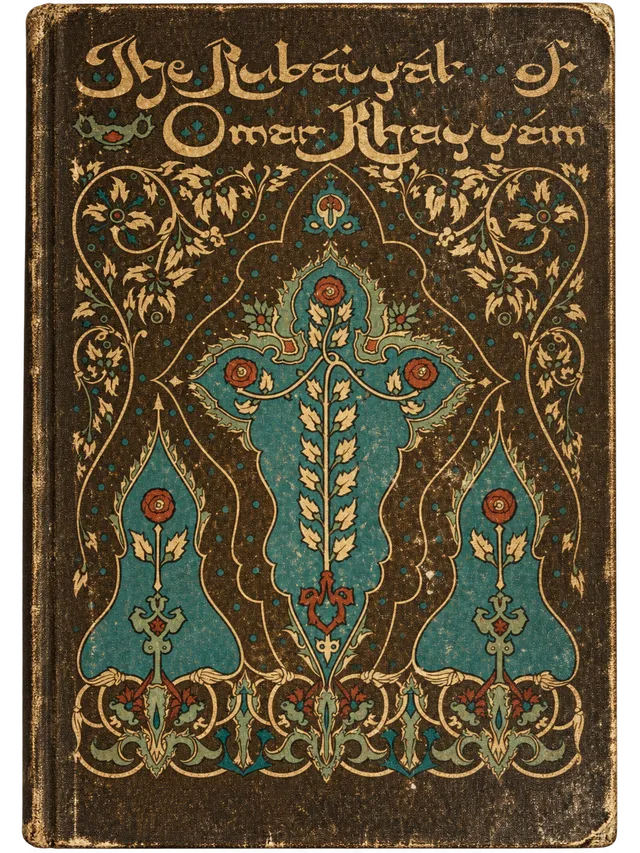
The edition held here uses Willy Pogány’s 1909 design. Calligraphic lettering, ornament and painted scenes give individual stanzas a setting and a pace. Small images such as a garden or departing bird compress the passage of time into memorable forms. FitzGerald’s adaptation and Pogány’s art belong to different stages in the work’s reception, brought together within an illustrated English book.