From literary ambition to criticism
Wilson grew up in New Jersey and studied at Princeton, where he developed interests in English and French literature. His early ambitions included imaginative writing as well as criticism. Work on magazines became the setting for a long career of essays, reviews and reporting: he edited at Vanity Fair and The New Republic and later wrote for The New Yorker.
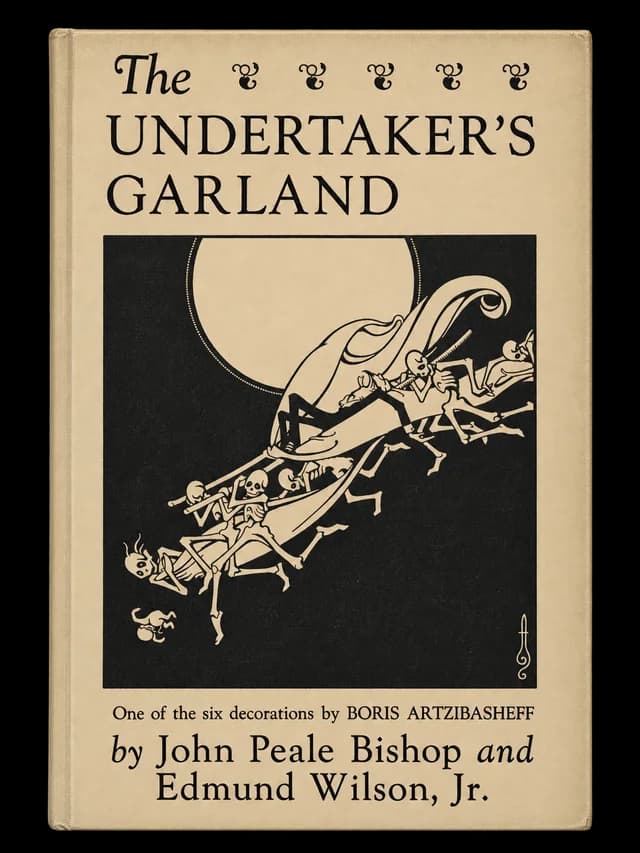
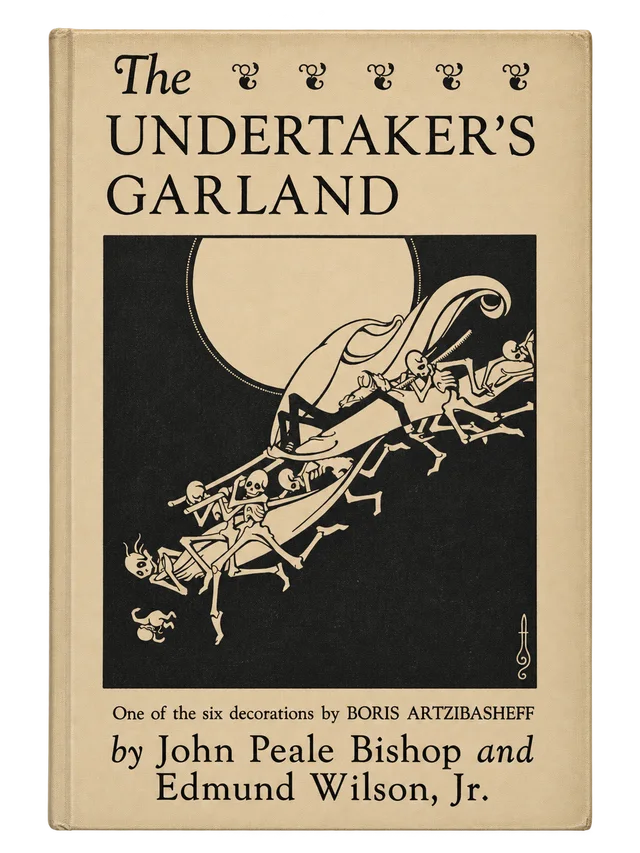
Axel’s Castle examined modern literature through the legacy of Symbolism, while To the Finland Station followed the development of socialist thought. Other books ranged across fiction, history and personal experience. His criticism sought to understand writing within the conditions that shaped it. The Jr. on The Undertaker’s Garland title page names this same Wilson, rather than another author.
The separate voices in a shared book
The Undertaker’s Garland was published by Knopf in 1922, with decorations by Boris Artzybasheff. Its allocation of contributions identifies which pieces belong to Wilson and which to Bishop. Wilson wrote the preface, epilogue and several of the satires; the shared title does not make every piece jointly authored.
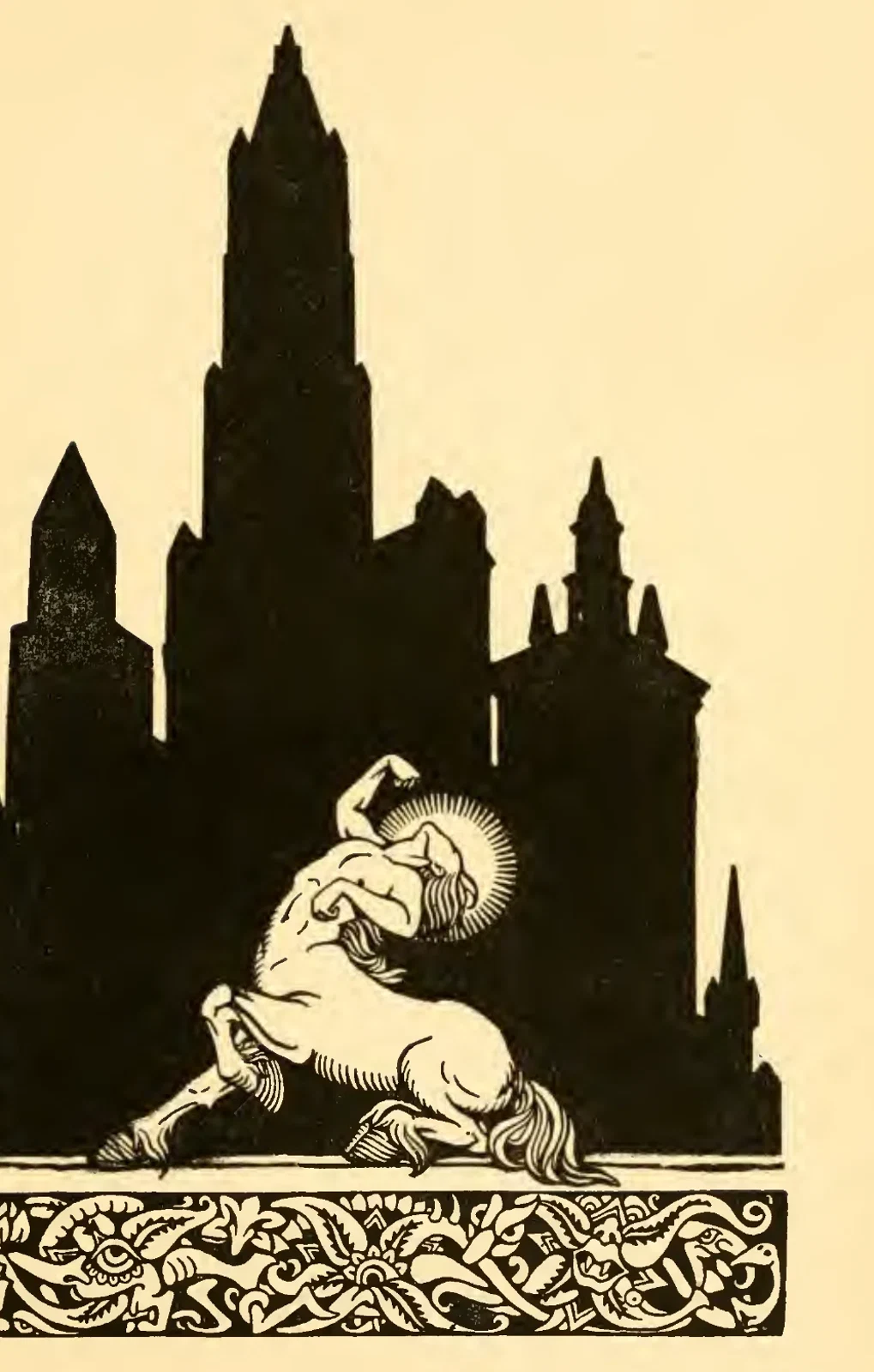
The preface connects the project with the aftermath of war and dissatisfaction with commercial life at home. Death becomes a way of judging the living, as elevated funeral language meets figures such as an efficiency expert or a romantic poet. Classical references supply another scale of comparison. Artzybasheff’s decorations intensify the volume’s character while remaining a distinct artistic contribution to its satire.