Journalism, poetry and South Africa
Fydell Edmund Garrett was born in 1865 and educated at Rossall School and Trinity College, Cambridge. He became president of the Cambridge Union before entering journalism at the Pall Mall Gazette. Tuberculosis interrupted his London career and prompted a visit to South Africa in 1889–1890. His reporting there became In Afrikanderland and the Land of Ophir.
He later worked for the Westminster Gazette and translated Ibsen’s Brand into English verse. In 1895 he became editor of the Cape Times, and in 1898 entered the Cape parliament for Victoria East. He supported Cecil Rhodes and British imperial interests, advocating a united South Africa within the empire. Worsening illness forced his return to Europe. He married Ellen Marriage in 1903 and died in Devon in 1907.
An attack on Theosophical authority
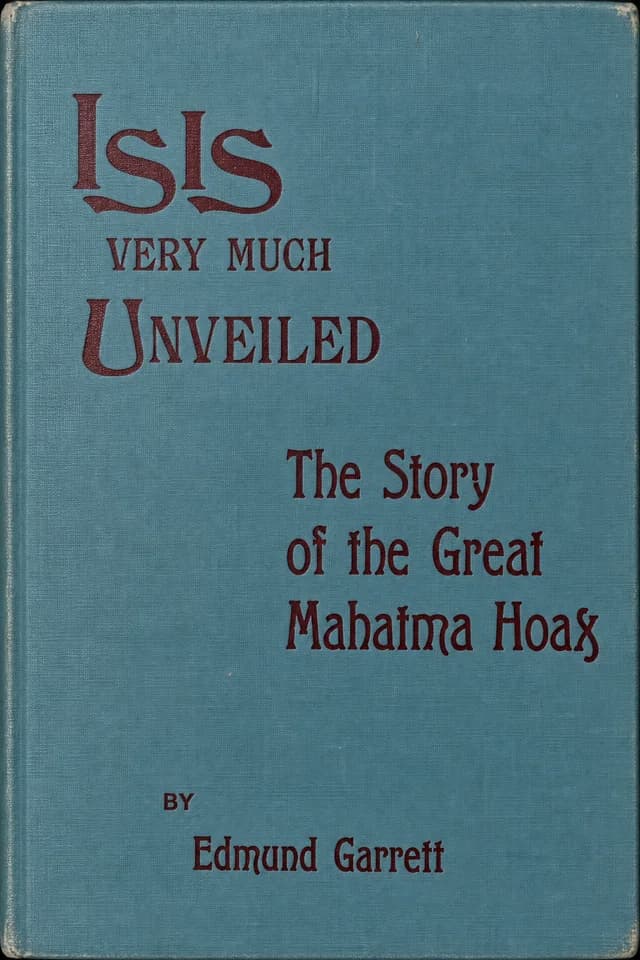
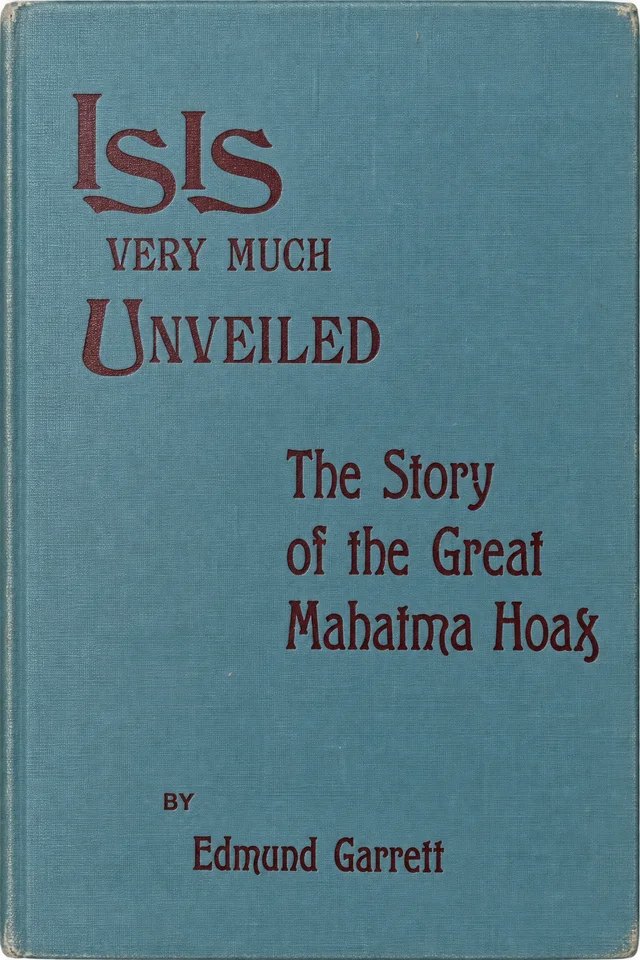
Isis Very Much Unveiled grew from Garrett’s 1894 Westminster Gazette articles. The held booklet combines his narrative with responses, a rejoinder and material concerning William Q. Judge. Its title deliberately answers Helena Blavatsky’s Isis Unveiled. Garrett presents himself as an outsider, drawing much of his evidence from disagreements and documents within the Theosophical Society.
His central targets are purported Mahatma communications, their use in the Society’s affairs and the handling of allegations against Judge. Annie Besant and Henry Steel Olcott also figure prominently. Facsimiles, quotations and replies sit beside a mocking commentary intended to undermine the leaders’ credibility. The booklet therefore preserves evidence of the controversy and a vigorous participant’s interpretation of it. The quoted documents supply his evidence; his conclusions about them form part of the polemic.