Cambridge, travel and personal freedom
Forster grew up with his mother after his father died while he was very young. An inheritance helped make a literary career possible. At King’s College, Cambridge, where he arrived in 1897, friendships and the study of Classics offered an alternative to the conventions he had found restrictive at school.
Travel in Europe and India enlarged the settings of his fiction. During the First World War he worked for the Red Cross in Alexandria; he later served as private secretary to the maharaja of Dewas. A Passage to India appeared in 1924. His novel Maurice, a homosexual love story, remained unpublished until after his death. His subsequent essays and broadcasts defended tolerance, civil liberties and individual relationships. He spent his later years at King’s as an honorary fellow.
When experience escapes respectable explanation
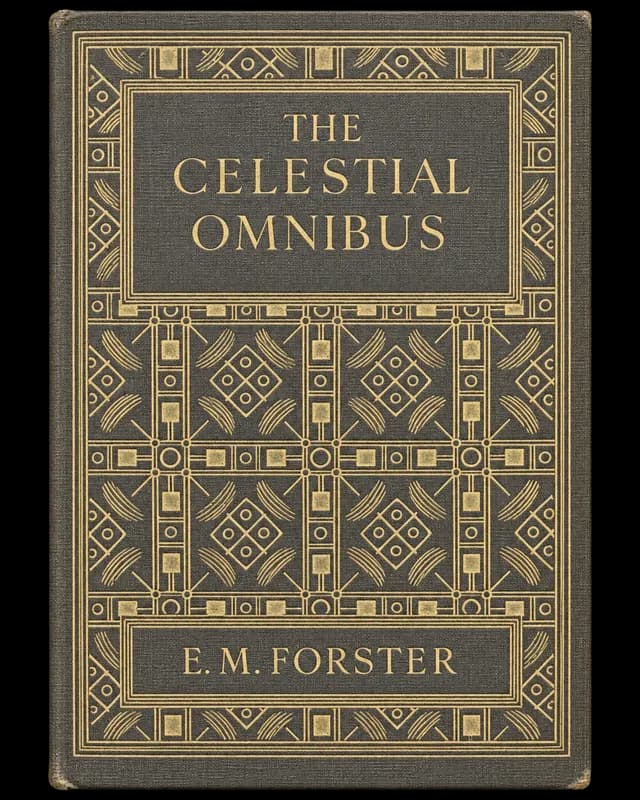
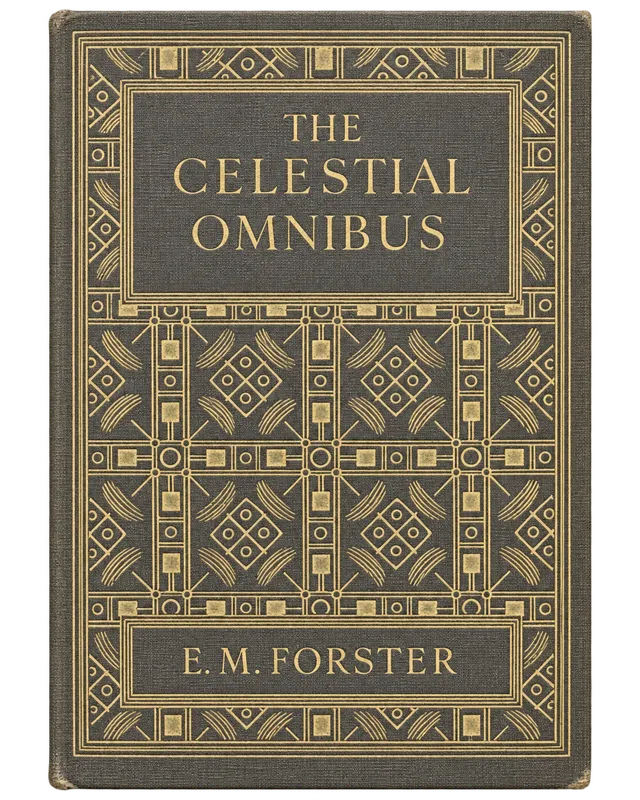
The Celestial Omnibus and Other Stories gathers shorter fantastic writing. The copy held here is the 1912 second impression, whose acknowledgments record earlier publication in periodicals. The stories turn differences of temperament and social standing into disagreements about what an extraordinary event can mean.
In The Story of a Panic, a narrator’s insistence on his own fairness exposes his judgments about a boy and the people around him. In the title tale, an ordinary-looking transport notice offers a journey that a child may be more ready to attempt than a cultivated adult. Forster’s fantasy places wonder inside recognisable social encounters, making the authority to explain an experience part of the conflict itself.