Writing, conscience and criticism
Born in Ealing in 1878, Physick came from a family of sculptors. He worked for the Indo-European Telegraph Company while beginning his literary career. Buccaneer Ballads and The Haunted Island appeared in 1910. During the First World War he registered as a conscientious objector, defending non-resistance on Christian grounds. After leaving telegraph work, he undertook agricultural and charitable work and later taught in schools.
His literary reputation developed through both fiction and criticism. Medusa, published in 1929, follows a voyage into strange seas and experiences that unsettle ordinary reality. His studies of Milton included Milton Agonistes and an edition of Milton’s poetry and selected prose. He also wrote about Joseph Conrad. He lived in Hove in later life and died in 1972.
A reader and advocate of Lindsay
Visiak began corresponding with David Lindsay after reading The Haunted Woman. He became a persistent advocate of Lindsay’s fiction, contributing The Arcturan Shadow to Notes and Queries in 1940; the essay later accompanied Gollancz editions of A Voyage to Arcturus. With Colin Wilson and J. B. Pick, he contributed to The Strange Genius of David Lindsay in 1970.
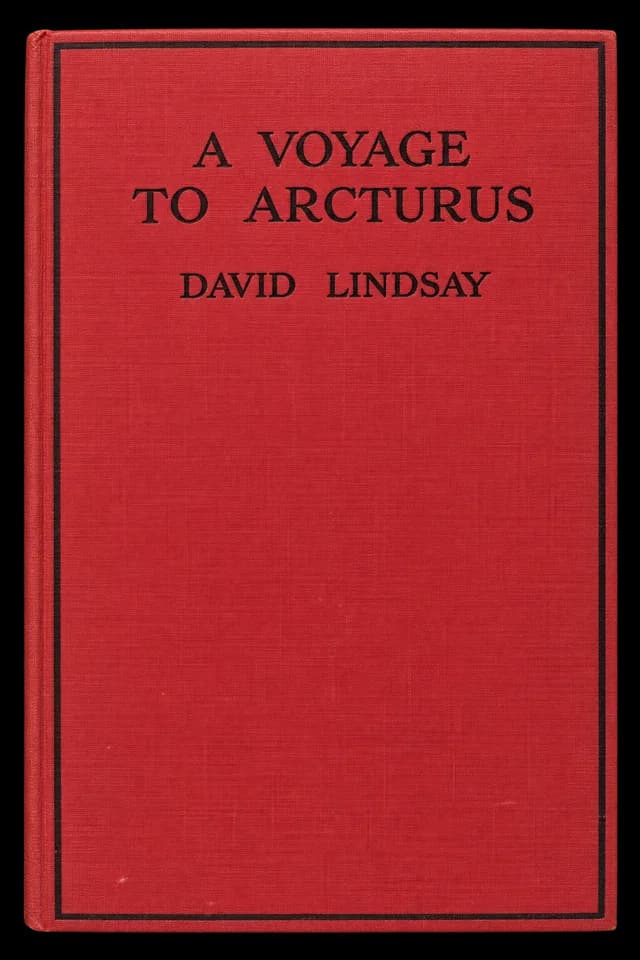
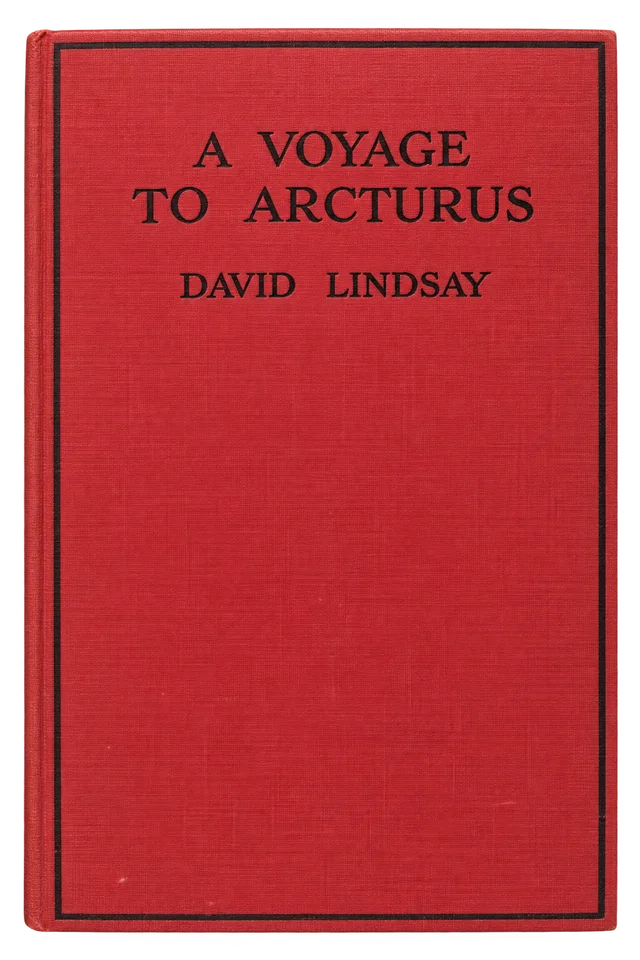
In his 1956 Radio Times discussion, Visiak distinguished Lindsay’s metaphysical beings from the physical aliens of scientific adventure. He interpreted the novel through spiritual captivity, deceptive beauty and painful redemption. This was his critical reading of Lindsay’s work, rather than evidence that both writers held an identical philosophy. The library’s current large-print transcription contains Lindsay’s novel without Visiak’s introduction. It is linked here as a book he championed, not as a text he authored or as an edition containing his contribution.