The woman behind the medium’s name
Elizabeth Jane Puttock was born in Shoreditch, London, in 1848, the daughter of a mariner. Researchers Adrian Parker and Elisabeth Warwood used birth, marriage and family records to correct the widely repeated 1855 birth date and the name Elizabeth Hope. She married Thomas Jackson Reed at Newcastle upon Tyne in 1870; the couple later separated.
Newcastle was an early centre of her mediumistic activity. She subsequently worked in Scandinavia, with Gothenburg an important base, and also lived in Germany. Sitters reported spirit forms, flowers and other objects appearing during her séances. Alexander Aksakov became a notable supporter. She died in Copenhagen in 1919.
Reading Shadow Land with its evidence
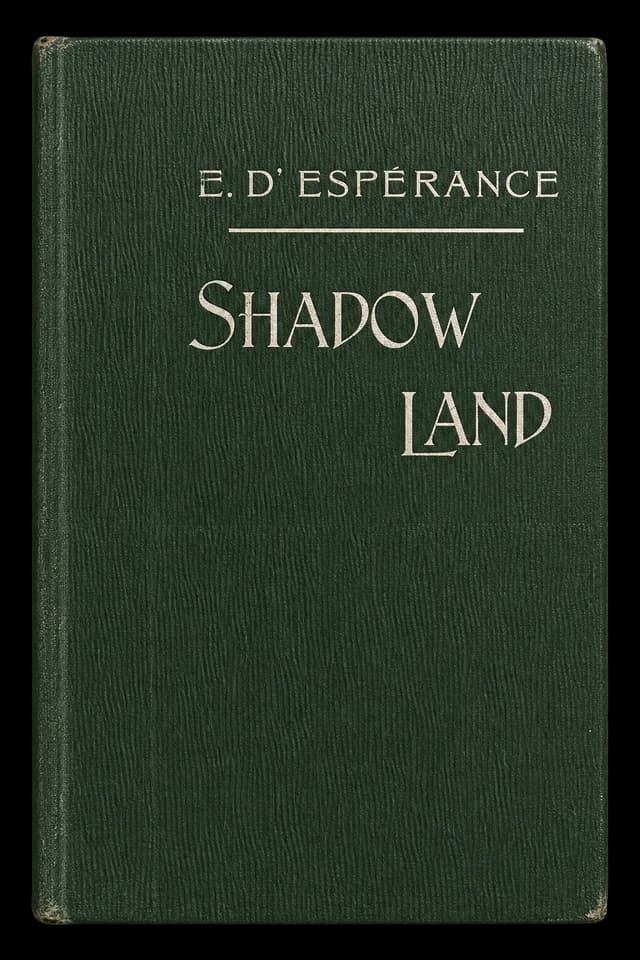
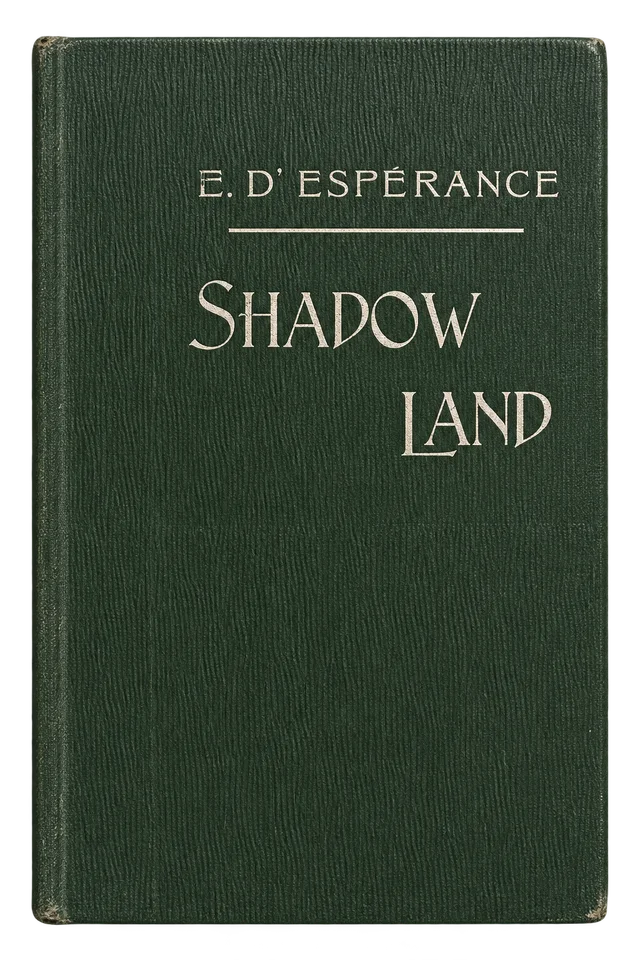
Published in 1897, Shadow Land: or, Light from the Other Side presents her experiences from within. In her preface, d’Espérance explains that she had considered posthumous publication but decided to take responsibility for defending the account herself. Aksakov’s introductory letter acknowledges damaging episodes while arguing that an unknown power could use the medium’s body without her conscious intent. His defence belongs to the book’s argument, rather than independently settling what happened.
The distinction matters. Parker and Warwood’s 2016 study compares the memoir with original photographic plates and contemporary reports held in Gothenburg. They identify masks, drapery and the medium impersonating the forms presented as spirits. This evidence substantially challenges the materialisations. Shadow Land remains a revealing account of how d’Espérance explained her work and answered suspicion, but its descriptions cannot be treated as straightforward proof of spirit visitors.