Psychology and an esoteric community
Firth was born in Llandudno and developed interests in psychology and occultism before publishing widely as Dion Fortune. She studied with Theodore Moriarty and participated in groups connected with the Golden Dawn and the Theosophical Society. Disagreements with existing organisations contributed to the development of her own community, based in Glastonbury and London.
Her books ranged from practical esoteric discussion to novels. The group’s teachings gave spiritual significance to disciplined imagination and inner experience. During the Second World War she organised meditation and visualisation among her followers, believing that this could contribute to resistance against Nazism. Her society’s account preserves that belief as part of its own history. She died in 1946 and was buried at Glastonbury.
A bereaved man and a bookshop
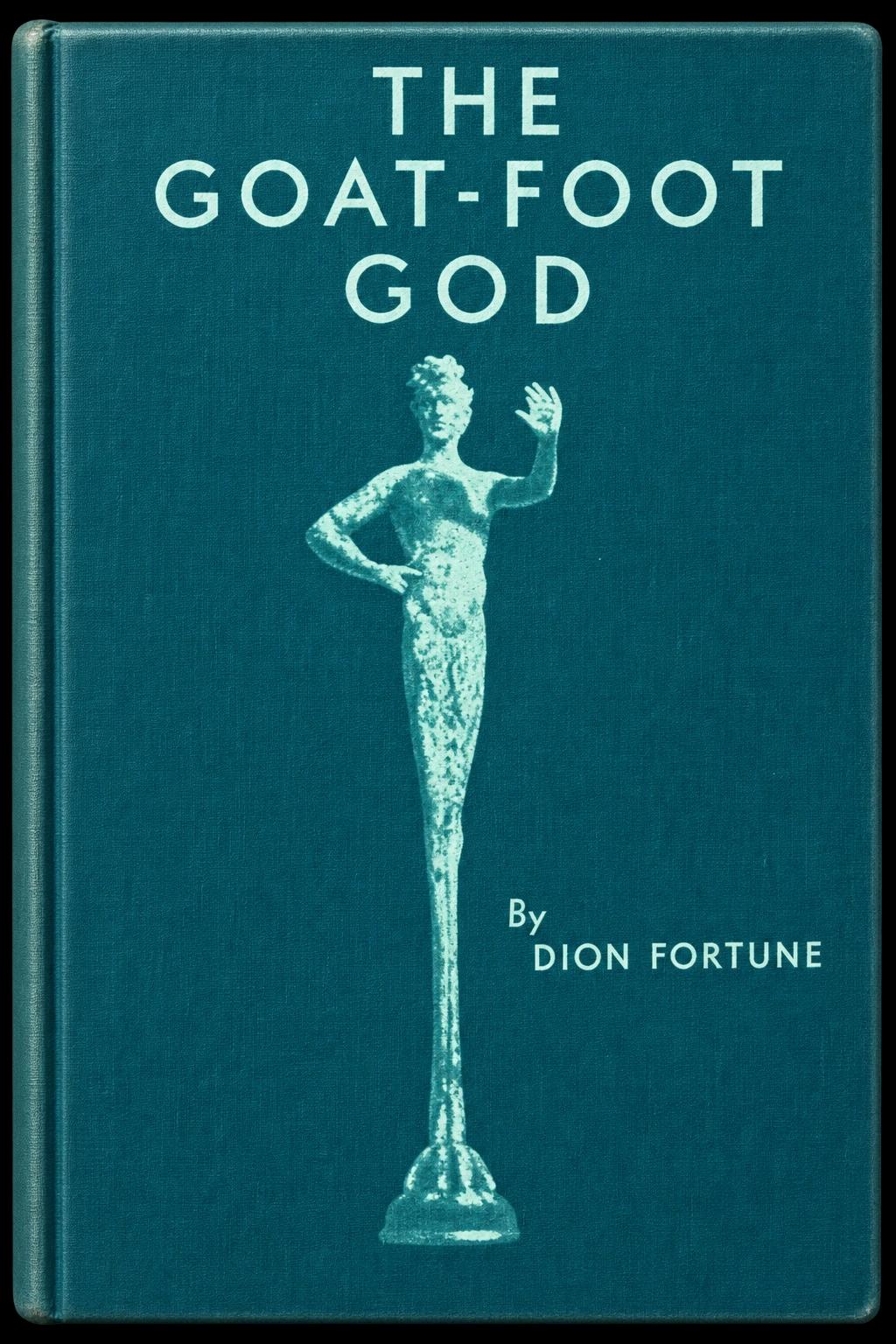
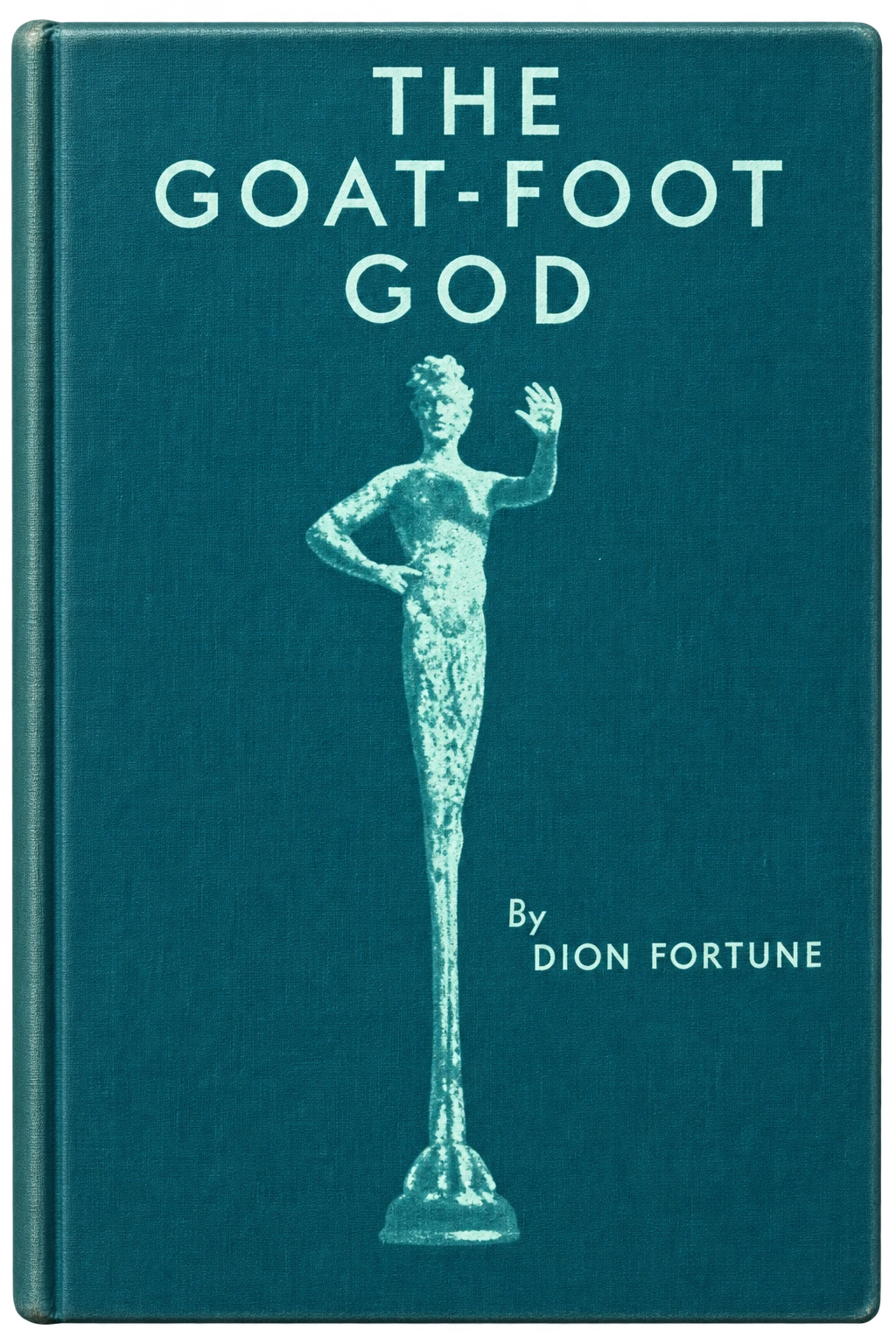
The Goat-Foot God begins with Hugh Paston returning from his wife’s funeral. Revelations about his marriage make bereavement part of a wider loss of certainty. Fortune establishes a domestic and social crisis before introducing the esoteric possibilities through which Paston seeks a different life.
An antiquarian bookshop supplies a concrete threshold. Paston’s curiosity about an allusion in a detective story draws him towards the bookseller Jelkes and a larger field of ideas. Rooms, streets and objects carry the transition from familiar routines to unfamiliar aspirations. The story brings Fortune’s psychological and religious interests together through a character’s changing desires, while its supernatural explanations remain claims within a novel.