Trade, dissent and the pillory
Defoe grew up in a London family of Protestant Dissenters around the time of the Restoration. He studied at a dissenting academy and entered trade. Bankruptcy made his own finances precarious, while pamphlets provided an outlet for his interest in religious liberty and politics.
In The Shortest-Way with the Dissenters he adopted the voice of a zealot calling for persecution. The satire brought a prosecution for seditious libel, imprisonment in Newgate and three days in the pillory in 1703. His periodical the Review followed in 1704. He was already an experienced journalist when Robinson Crusoe appeared in 1719 with a fictional castaway presented as the teller of his own history.
What a magician sells
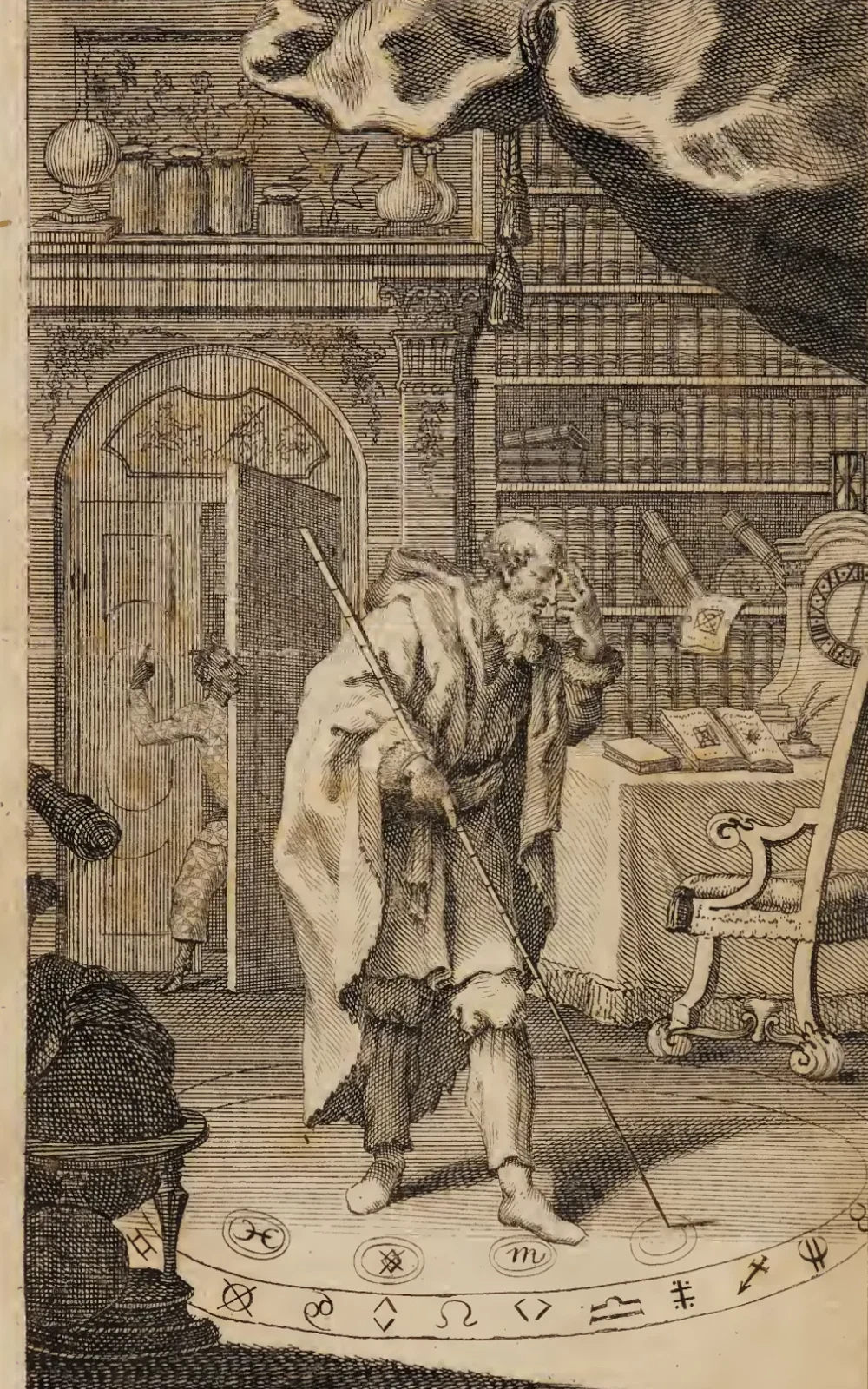
The second edition of A Compleat System of Magick, published in 1729, opens by teasing readers who expected to learn spells. Defoe is interested in the bargain between the claimant to hidden knowledge and the person who wants to buy it. His exposure of fraud sits alongside his Christian belief in spirits. For him an impostor could be taking a customer’s money even in a world in which the devil was real.