Military service and a contested retirement
Perkins was born in 1860. He entered naval service as a cadet midshipman in 1875 and transferred to the Marine Corps in 1884. In the foreword to The Crucible of Dreams he recalls serving as a lieutenant aboard the Marion in the Asiatic Squadron in 1893. Travel supplied the setting for the encounter around which he built the book.
His career later took a difficult turn. He retired as a lieutenant colonel in 1907 but contended that he had been forced into the decision by the threat of dismissal on grounds of insanity. After taking testimony, a congressional committee supported his claim and recommended reinstatement. The dispute appears in reports and debates leading into 1914.
A bowl holding the remains of dreams
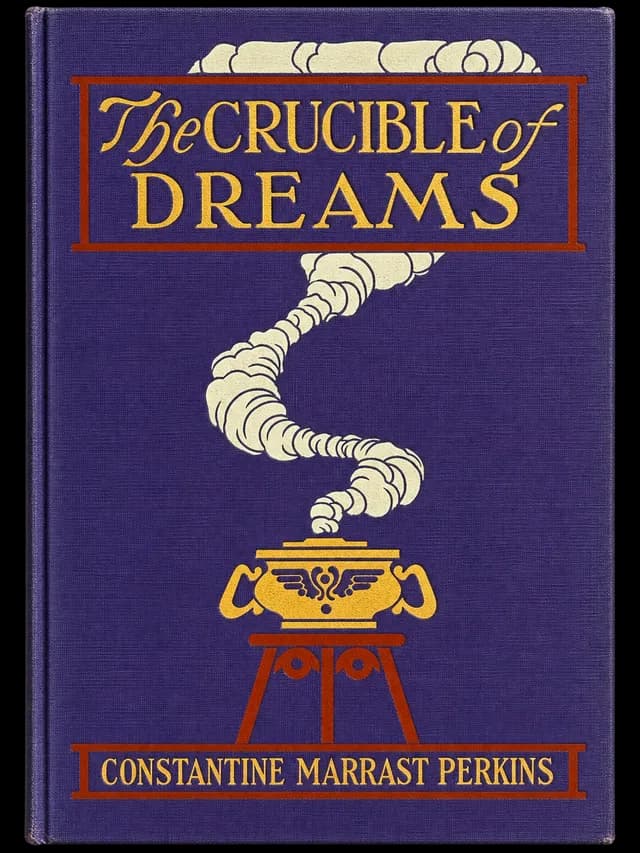
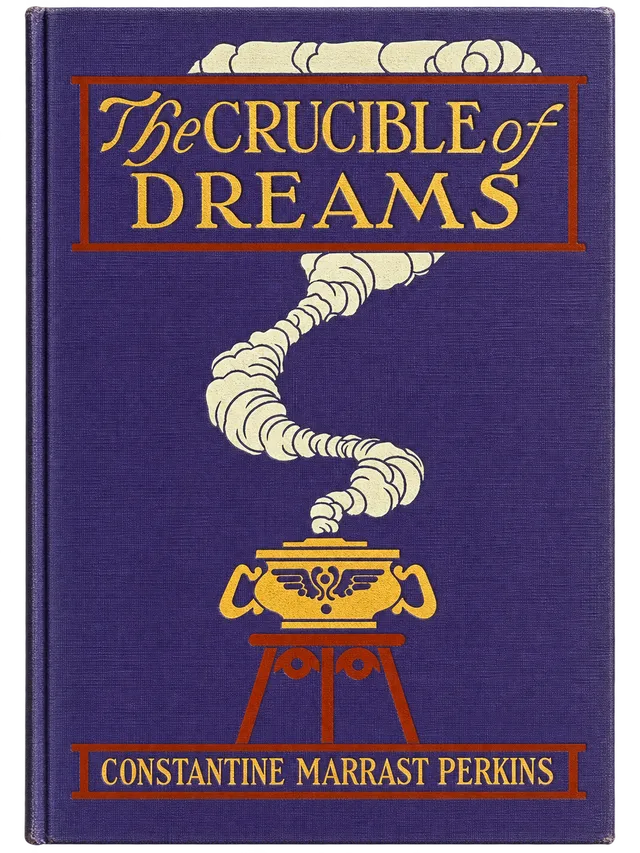
Published in 1911, The Crucible of Dreams begins with Perkins’s account of meeting a Buddhist priest near Saigon and receiving a brass bowl. He surrounds the gift with a story of sacred use, reincarnation and a warning against profanation. Those details form the book’s imaginative framework; his account should not be treated as an authoritative history of Tibetan Buddhism.
The poem turns that framework towards personal sorrow. In the prologue the bowl stands on the speaker’s table, holding incense and the figurative ashes of a former heart. Sacred fire becomes an image for what disappointment leaves behind. The illustrated pages and ornamental borders give this meditation the appearance of a carefully staged sequence. Perkins signed the foreword in Washington, D.C., in January 1911, placing the poem’s distant setting beside the place of its composition.