A teacher known through later sources
Confucius is traditionally dated to 551–479 BCE and associated with the state of Lu, in what is now Shandong. Later records describe him as a teacher who gathered disciples and sought opportunities to influence political life. Those accounts were written after his death and do not always agree. Details of his childhood, career and character therefore have different degrees of historical certainty.
The Analects preserve exchanges attributed to the teacher through the work of disciples and subsequent followers. Their Confucius values learning, moral example and the cultivation of conduct even under difficult circumstances. He is remembered within a tradition rather than through a single surviving manuscript written in his own hand. This distinction matters to both biography and authorship.
Conduct, government and an English selection
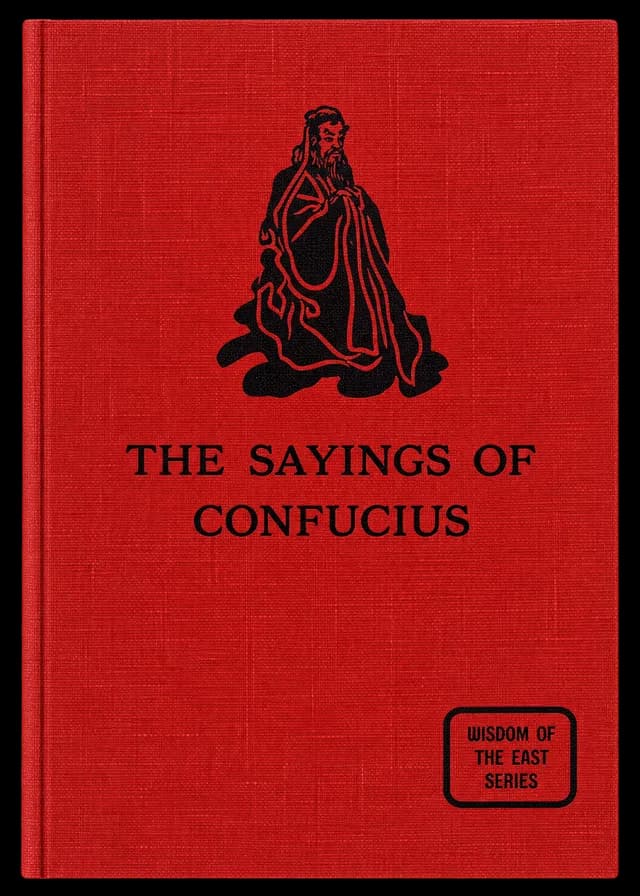
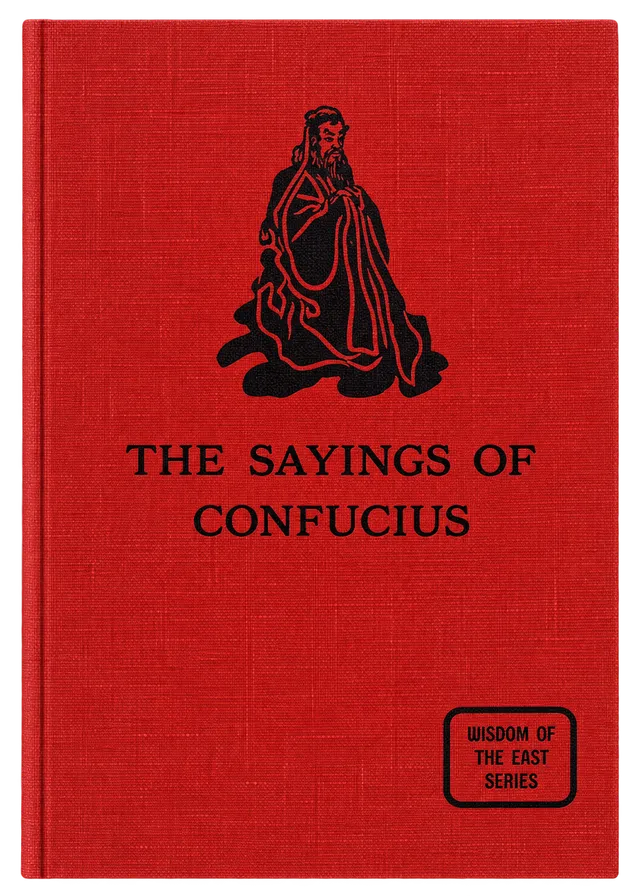
The Sayings of Confucius, published by John Murray in 1920, contains Lionel Giles’s translation of the greater part of the Analects. Giles arranges the material under themes including government, individual virtue and the disciples. His introduction criticises earlier translations and stresses the difficulty of finding exact English equivalents for important Chinese terms.
The selected exchanges contrast rule by punishment with government through example. One asks what a state could surrender among military strength, food and its people’s confidence. Their brevity gives such questions a concentrated form without removing the need for explanation. Giles’s notes and arrangement are part of this English edition’s interpretation, distinct from the later Chinese compilation and the teaching attributed to Confucius.