An education in drawing and architecture
Bragdon was born in Oberlin, Ohio, in 1866. His father, George, was a newspaper editor and poet whose search for publishing work took the family through several towns. His mother, Katherine, also taught and edited. Claude finished high school in Oswego and moved with the family to Rochester. With college beyond the family’s means, he used his talent for drawing to begin a career in architecture.
He worked in Rochester, Buffalo and New York before turning increasingly to the stage. In 1923 he moved to New York City and began a period of collaboration with Walter Hampden. The New York Public Library preserves scenic designs for productions extending through 1938. Architecture, theatre and writing gave him different ways to explore how an arrangement of space might shape a person’s experience.
Drawing a fourth dimension
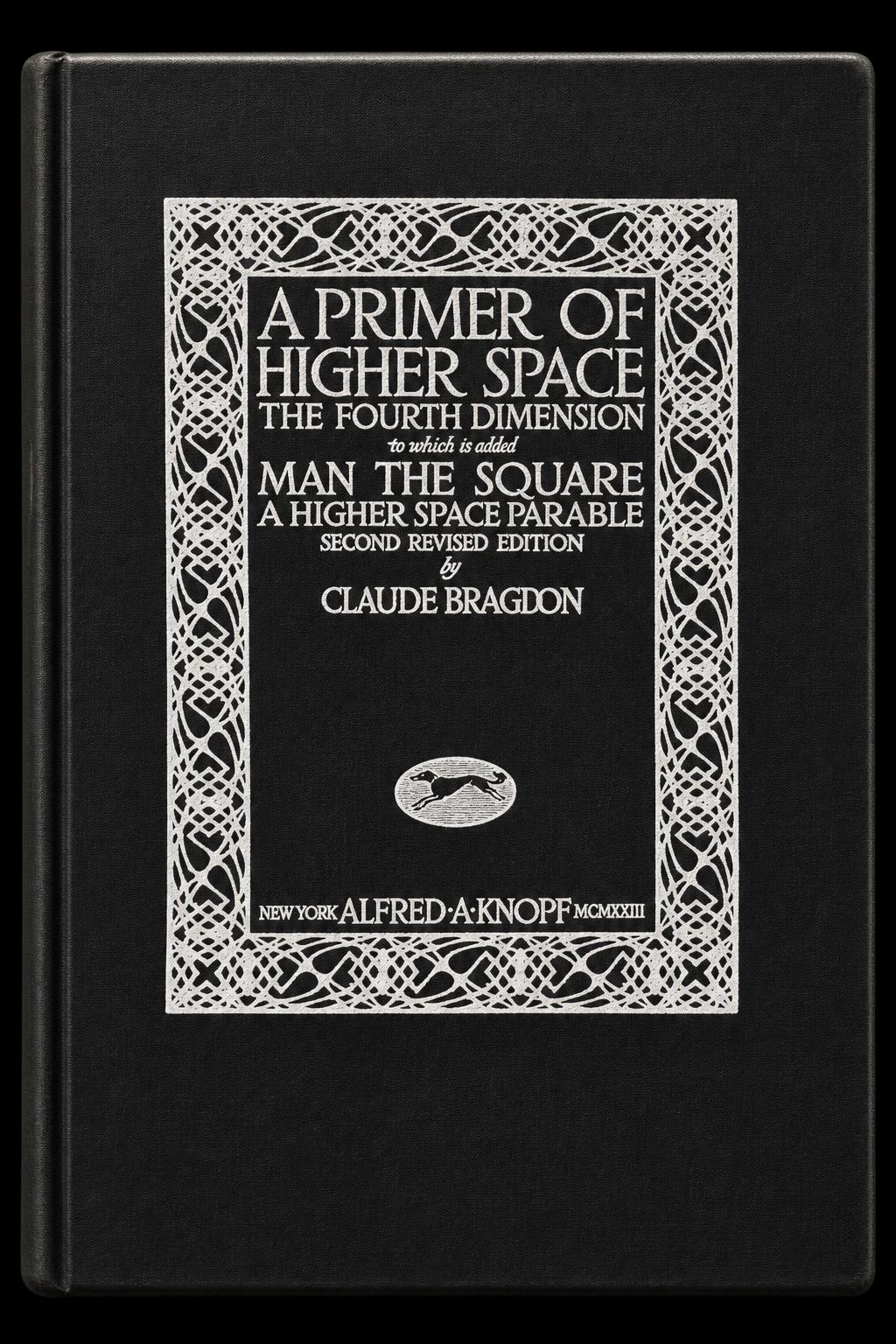
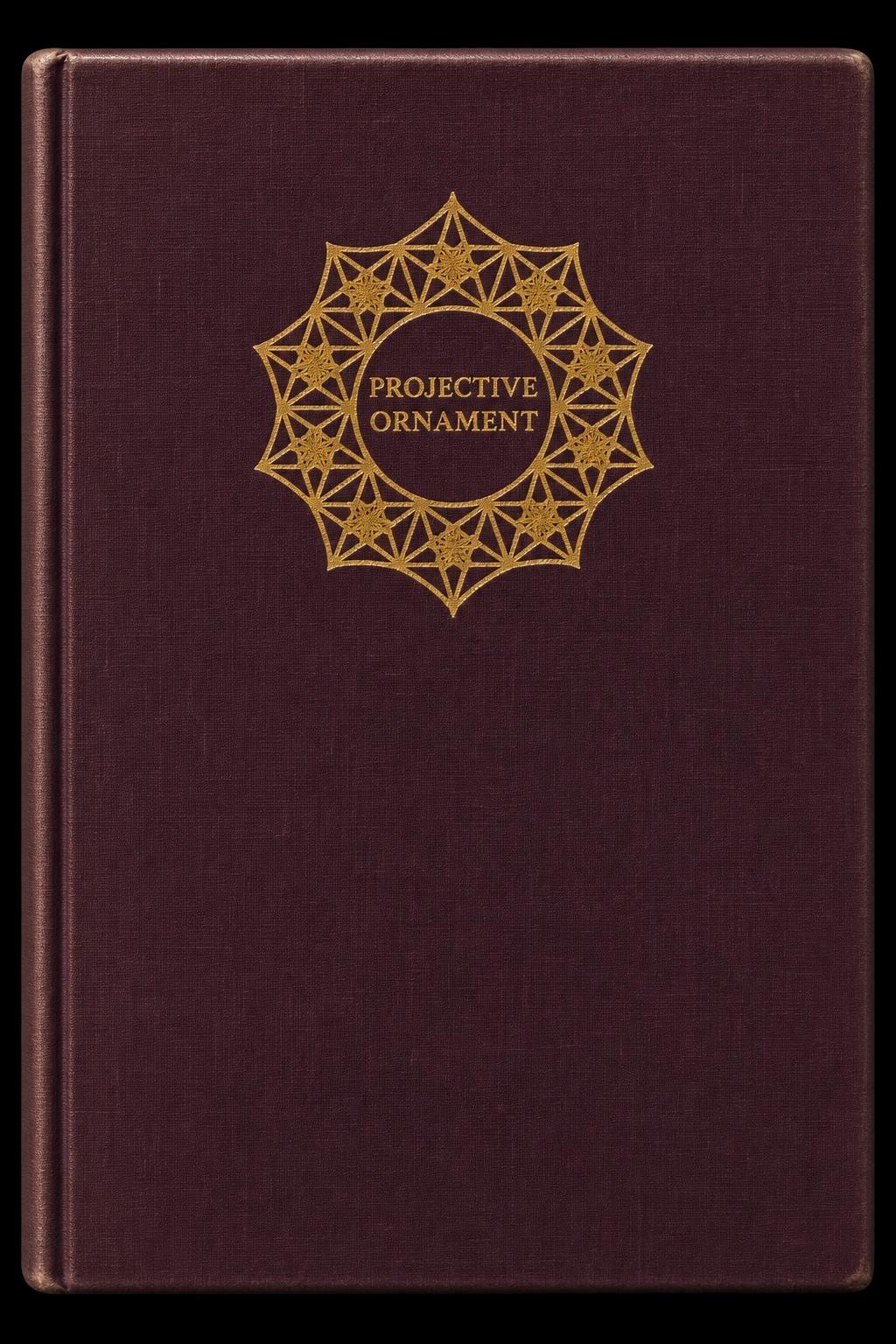
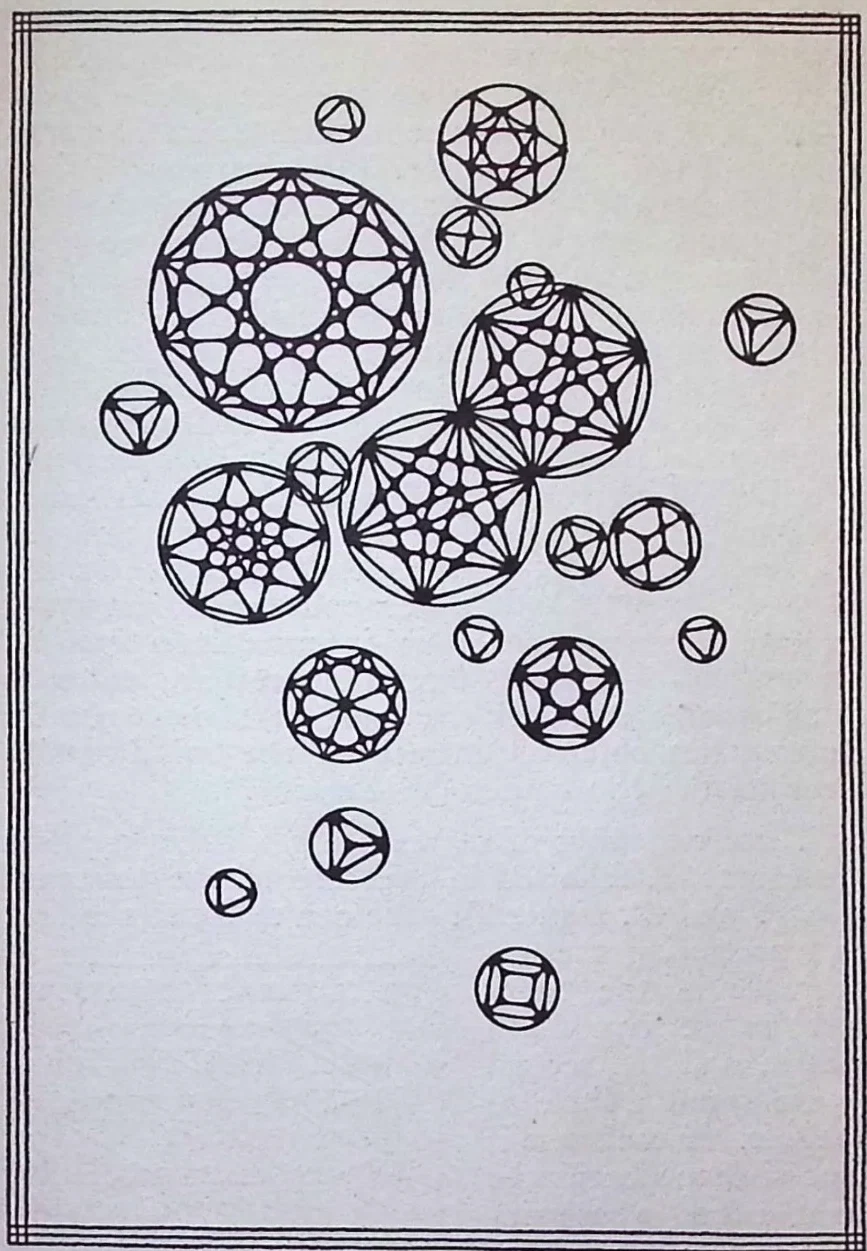
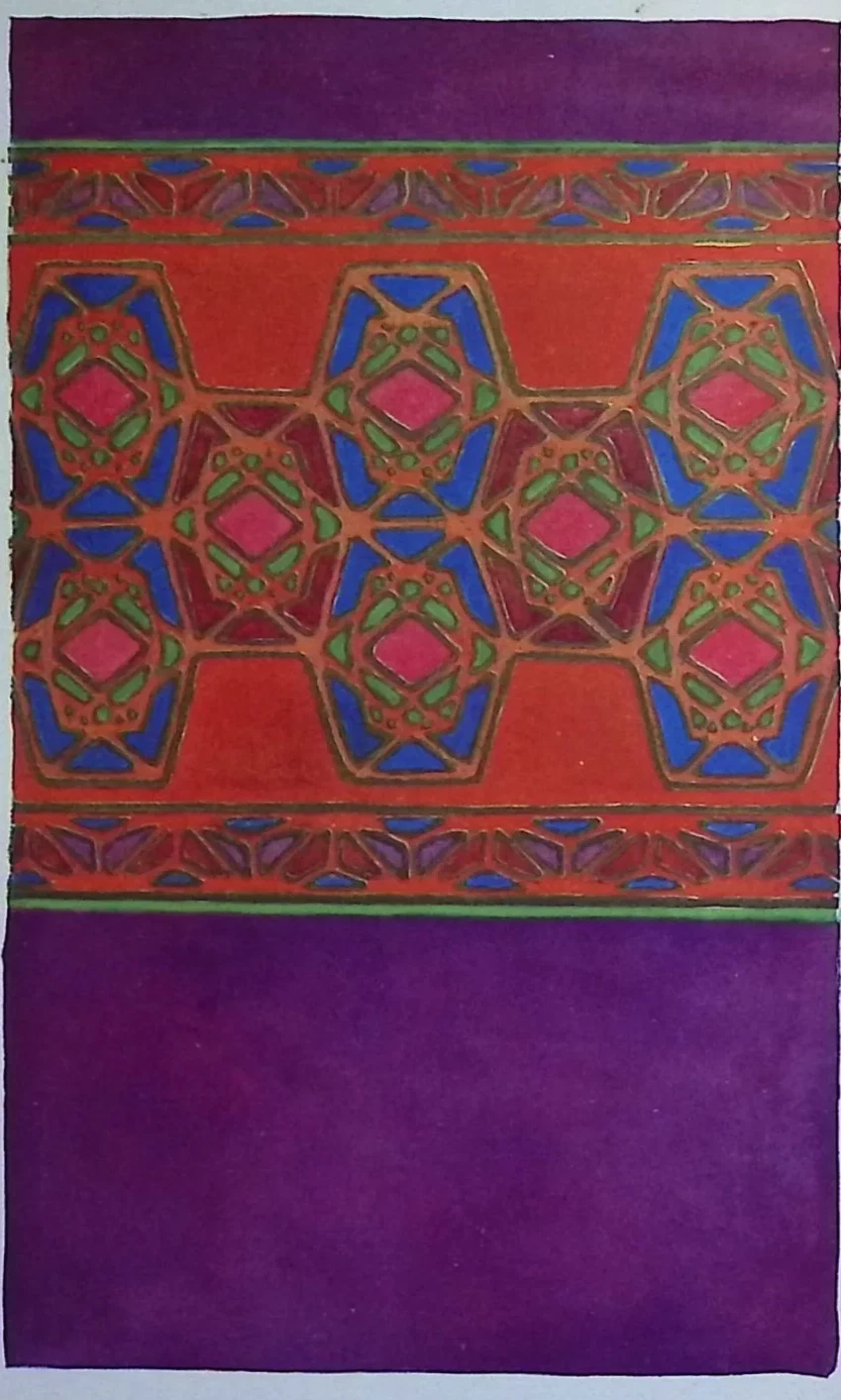
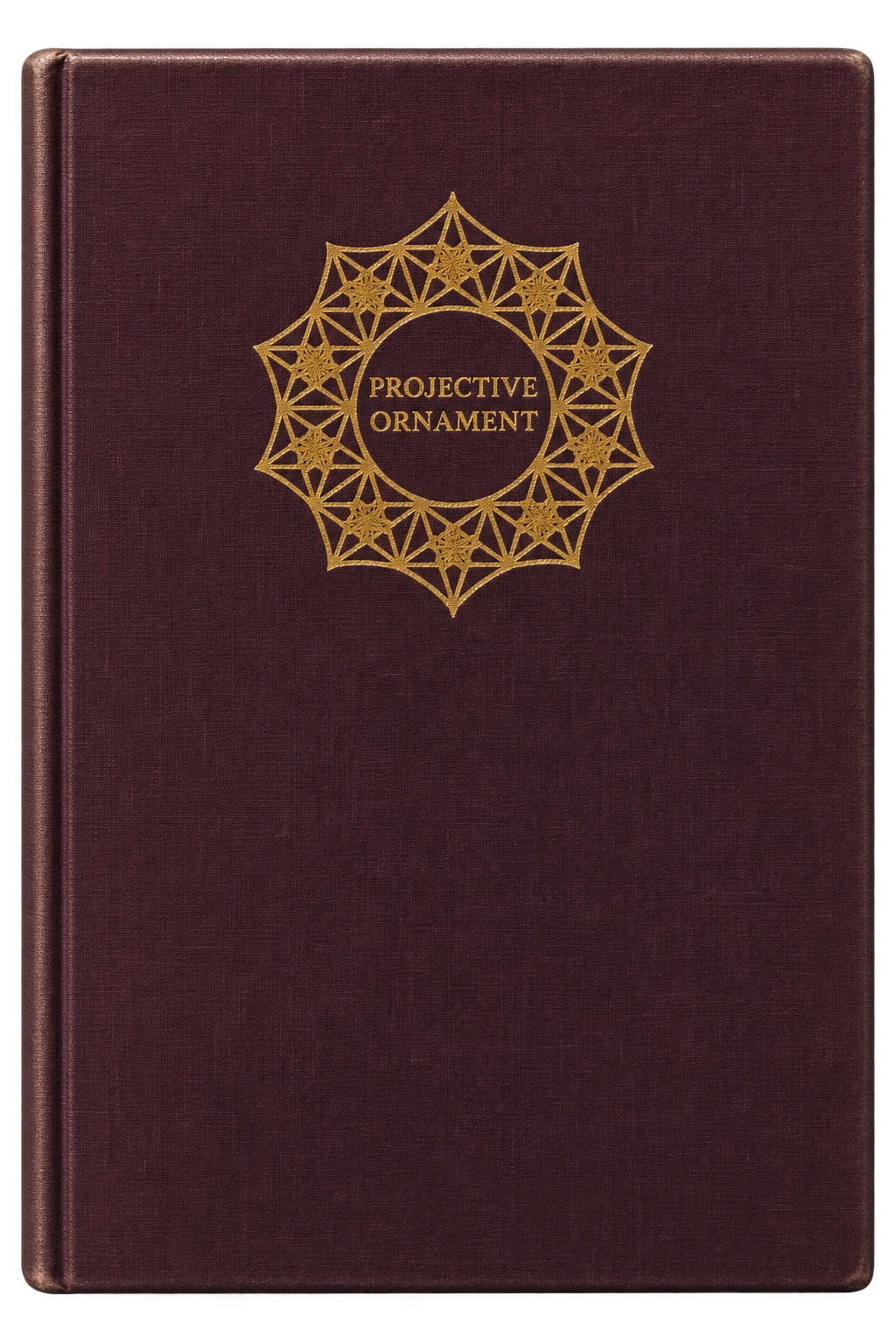
A Primer of Higher Space appeared in 1913. Bragdon uses analogies between flat figures and solids to help readers imagine another spatial direction. He also discusses Theosophical claims about perception, including Leadbeater’s account of seeing a tesseract. Projective Ornament, published in 1915, develops a practical use for related constructions. A solid becomes a network of lines on a flat surface, and the resulting pattern can furnish a frieze, screen or lamp. Moving from explanatory diagrams to coloured ornament, the book shows him developing a vocabulary for design.