Ministry, peace advocacy and philosophy
Henry was born at Rutland, Massachusetts, in 1804 and graduated from Dartmouth in 1825. He studied theology at Andover and New Haven before entering Congregational ministry. During his Hartford years he helped establish the American Advocate of Peace, connecting his religious work with the organised peace movement. In 1835 he entered the Protestant Episcopal Church and took up the teaching of moral and intellectual philosophy at Bristol College.
With Francis L. Hawks he founded the New York Review in 1837. He moved to a professorship of philosophy and history at New York University in 1839, while continuing to write and translate. An 1838 letter about an article on an Anglo-Saxon dictionary catches the practical editor at work: he accepted the contribution but asked for more legible handwriting and worried about obtaining suitable type. Henry later served as a rector and continued his literary work. He died in 1884.
Goodness beyond a calculation of reward
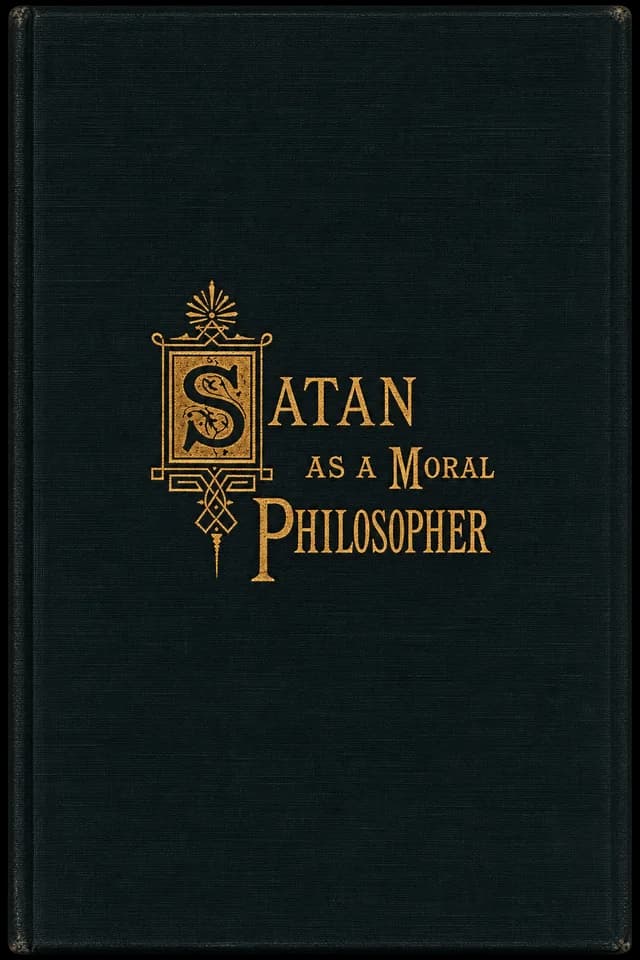
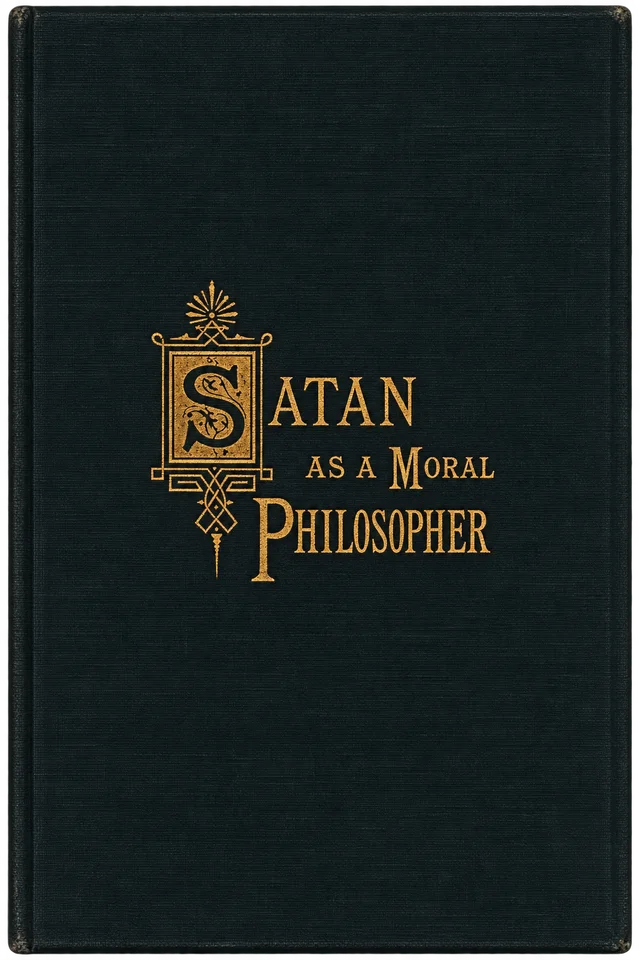
In Satan as a Moral Philosopher, Henry concentrates on Satan’s accusation that Job serves God because it pays. He argues that the accusation itself recognises a distinction between goodness and self-interest. Conduct performed only for advantage may look right while lacking an inward moral principle. Henry uses the biblical scene to dispute theories that make personal benefit the foundation of ethics.
The 1877 volume is a collection of essays and sketches. Its contents extend from dreams and witchcraft to manners, temper, patriotism and the American constitution. In his dedication to Bishop John Williams, Henry explicitly accepts responsibility for opinions the bishop may not share. That small precaution suits a book in which a churchman brings religious, philosophical and civic questions into the same conversation.