A scholar and collector
King was born in Monmouthshire and entered Trinity College, Cambridge, in 1836. He became a fellow in 1842 and was ordained a deacon three years later. A period in Rome and Florence allowed him to study Italian literature and begin collecting ancient engraved stones. Later purchases in London enlarged the collection.
Most of his subsequent life was spent at Trinity, where he devoted himself to writing about gems. As his eyesight failed, he sold his collection to John Taylor Johnston in 1878; Johnston gave it to the Metropolitan Museum in 1881. King’s books helped make the subject accessible in English, although later scholarship exposed limitations in his archaeological knowledge and historical method.
Objects and religious interpretation
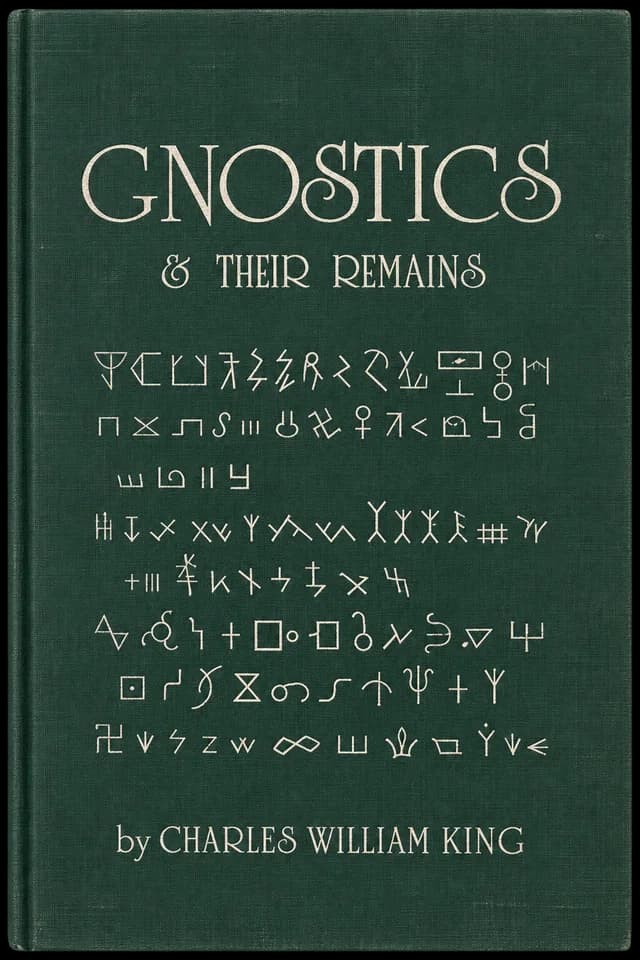
The Gnostics and Their Remains first appeared in 1864. The copy here is the second edition, published by David Nutt in 1887. King brings engraved stones, inscriptions and ancient texts into a broad account of religious images and their supposed meanings. His comparisons range beyond the objects themselves to arguments about the transmission of belief.
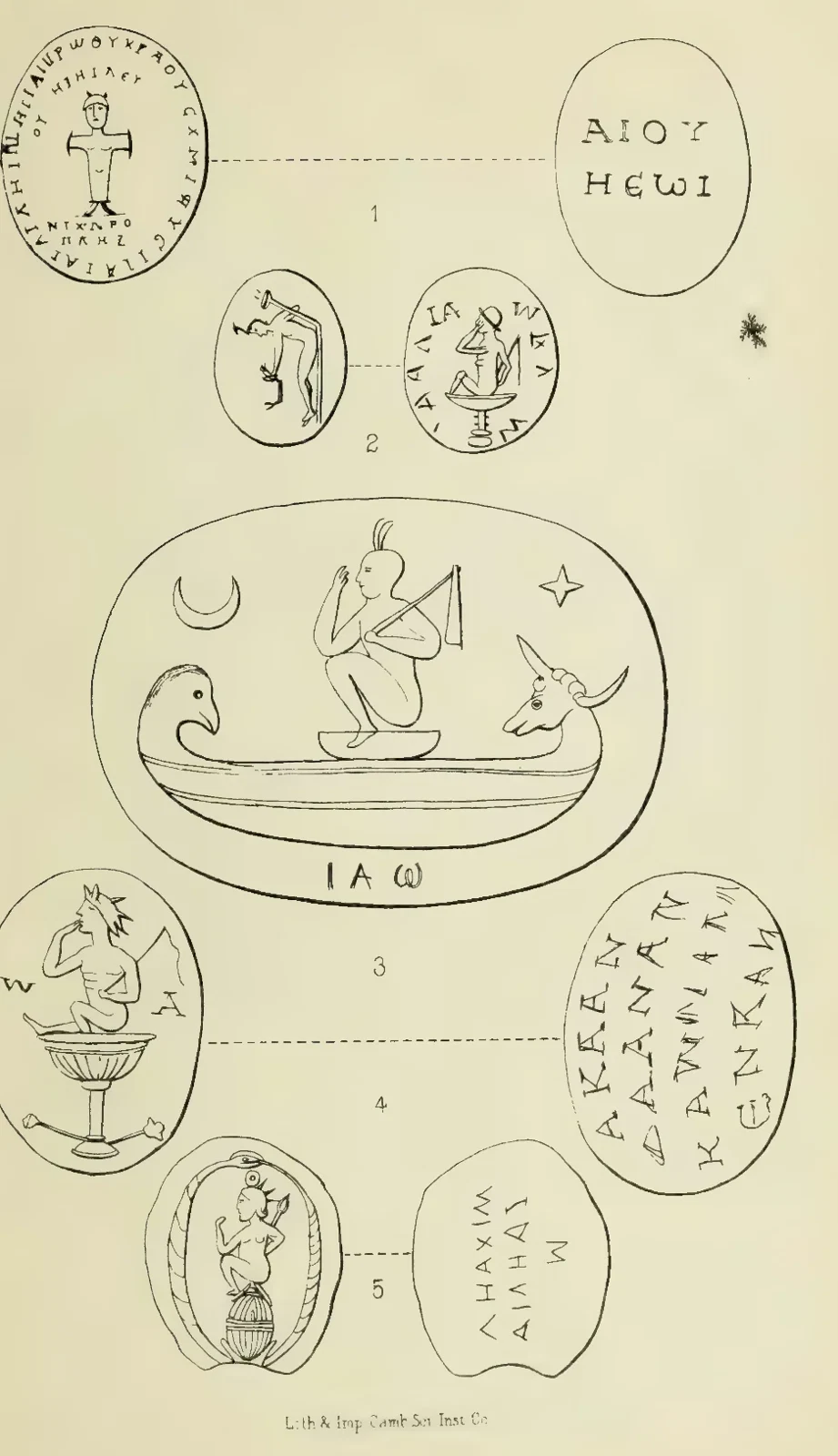
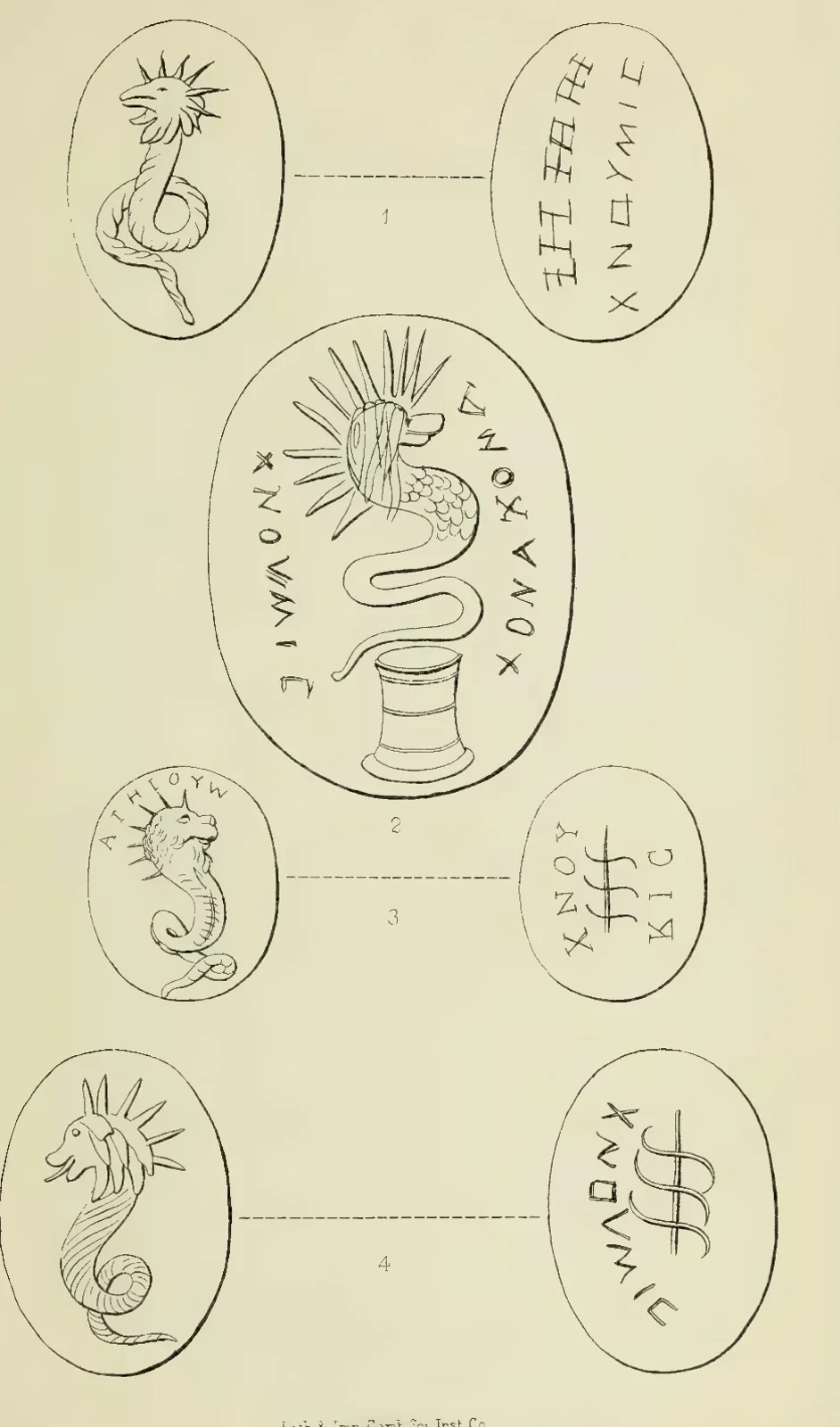
The plates preserve small, densely worked forms that can be difficult to describe in words. Their figures and inscriptions are historical objects interpreted by King, rather than direct records of supernatural beings. The distinction matters because his confident explanations do not always have the same standing as the evidence he reproduces. The volume records both a collector’s close attention to gems and the ambitions of a nineteenth-century antiquarian synthesis.