Clinical work and an independent psychology
Jung was born in Kesswil and studied medicine in Basel. Work at Zurich’s Burghölzli psychiatric hospital included experiments in word association, which helped him develop his ideas about emotionally charged complexes. He became closely associated with Sigmund Freud after their meeting in 1907, but differences over psychological theory brought their relationship to an end in 1913.
Jung’s subsequent investigation of his own dreams and imaginative experiences informed the development of analytical psychology. He proposed a collective unconscious and archetypal patterns shared across individual lives, and used individuation to describe a process of psychological development. Religious and mythological images became central to this work. His later career included teaching at ETH Zurich; his manuscripts and extensive correspondence are preserved there.
A commentary within a collaborative book
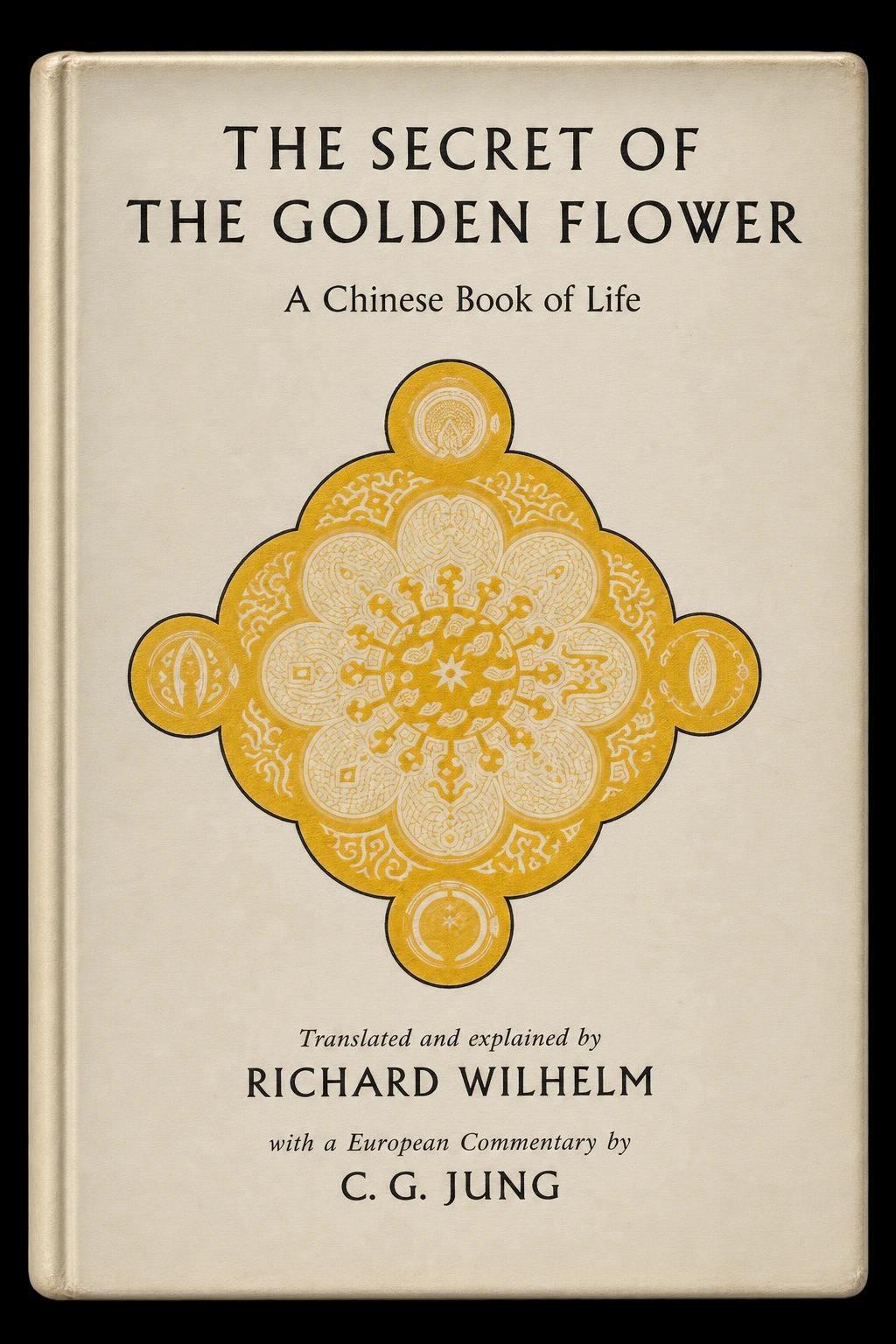
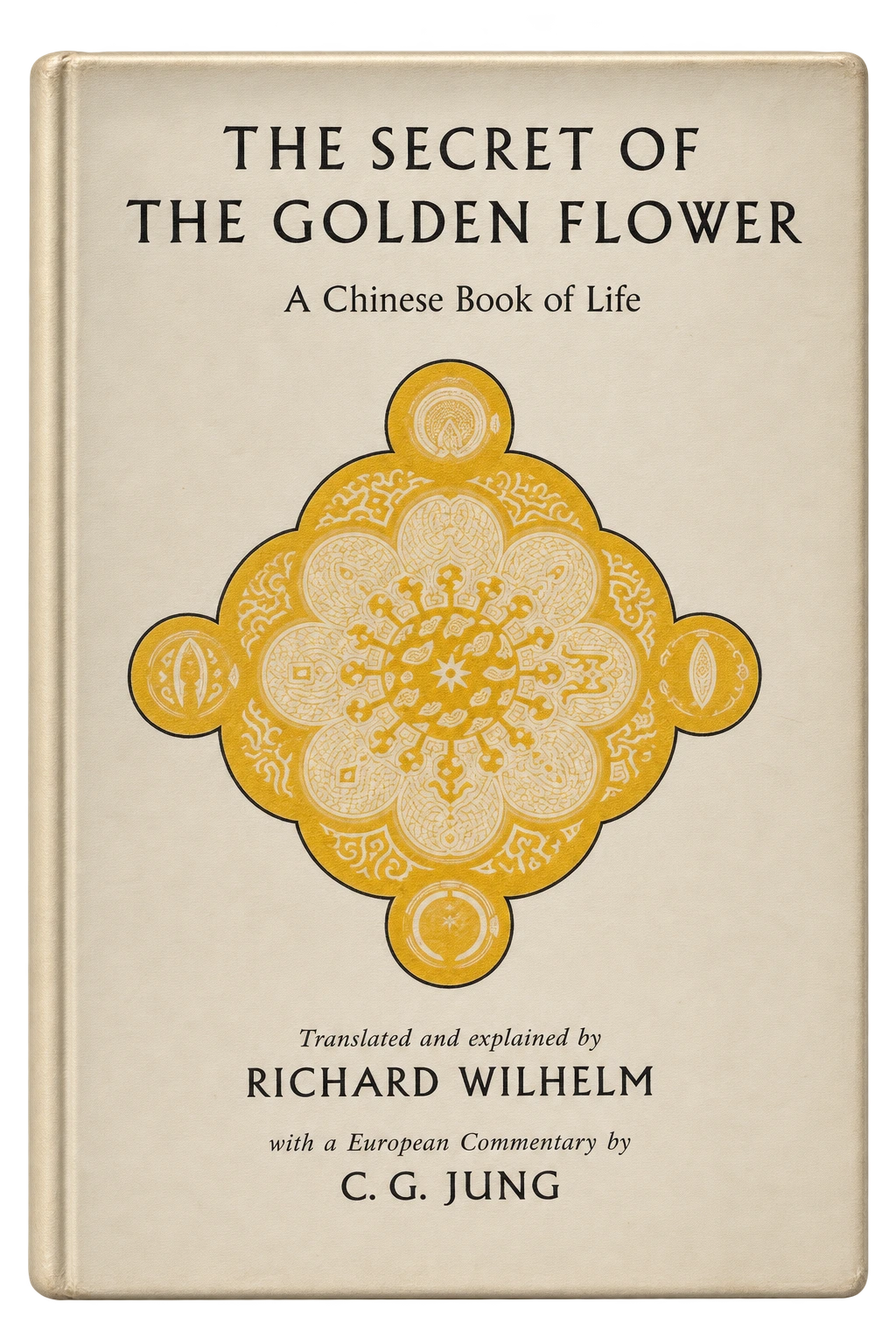
The Secret of the Golden Flower reached English through several contributors. Richard Wilhelm translated the Chinese material into German; Cary F. Baynes produced the English translation. Jung supplied a psychological commentary. The book therefore brings together a religious text, linguistic interpretation and a distinct account of its images through analytical psychology.
Jung connects the imagery of the flower and circular forms with the development of consciousness. The mandala frontispiece gives visual prominence to this concern. His interpretation belongs to the history of his psychological ideas: it does not replace the translated text or constitute a complete account of the Chinese tradition from which it emerged. Keeping those contributions distinct makes the volume’s collaboration clearer.