Travel, journalism and German literature
Taylor grew up near Kennett Square, Pennsylvania, and trained in printing before making his first journey to Europe. Views Afoot, published in 1846, helped establish him as a travel writer. Newspaper work, further journeys and public lectures supported an unusually varied literary career that included poetry and novels.
German literature became a lasting interest. He began sustained work on his Faust translation in 1863 and completed it eight years later. Diplomatic service also took him abroad: he worked at the American legation in Russia during the Civil War and was appointed United States minister to Germany in 1878. He died in Berlin later that year. His translation remained one of the substantial undertakings of a career otherwise spread across many forms.
Translating the shape of the verse
In his preface Taylor explains his ambition to preserve the original metres of Faust. For him, accuracy required attention to rhythm and dramatic effect as well as to the literal meaning of individual words. The task changes as Goethe moves between lyric passages, comic exchanges and sustained reflection.
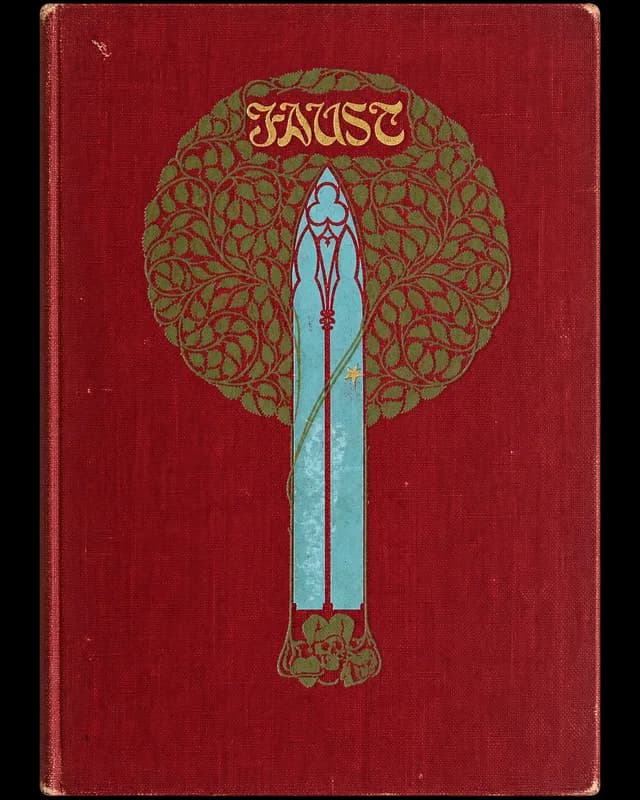
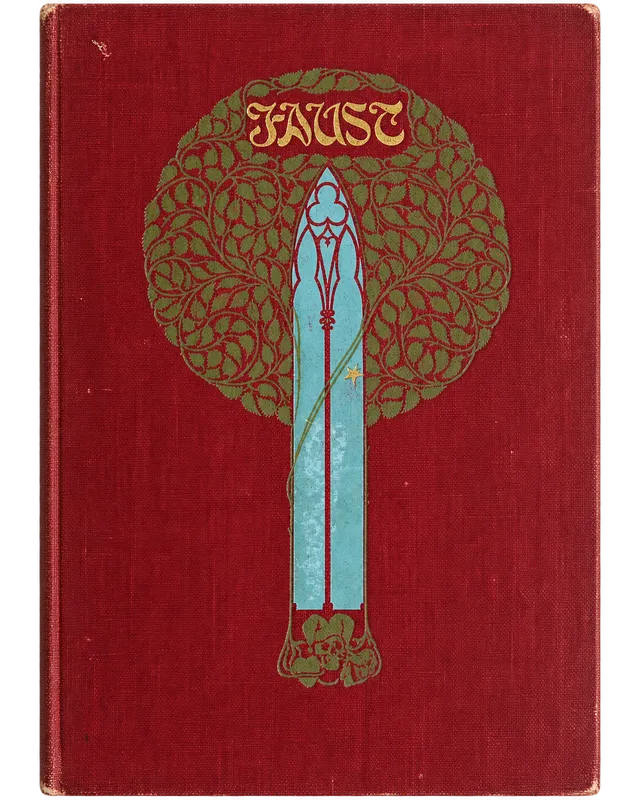
The edition held here presents Part One in Taylor’s English with illustrations by Harry Clarke. Its Arden Book Company printing is undated. The dedication and the opening theatrical conversation already place different kinds of speech side by side: memory and loss give way to competing ideas about poetry, performance and an audience. Taylor’s verse and Clarke’s later pictures are separate responses to Goethe’s play, brought together by this edition.