From Leeds to revolutionary Russia
Ransome grew up in Leeds and began studying science at Yorkshire College, where his father taught history. He left his studies for London and worked in publishing while learning to write. Bohemia in London, published in 1907, grew out of his early experience among the city’s writers and artists.
In 1913 he went to Russia to collect folk tales and learn the language. The First World War brought work as a newspaper correspondent, placing him in Russia during the revolution. He knew leading Bolsheviks and formed a relationship with Evgenia Shelepina, who worked as Trotsky’s secretary. They married in 1924. Back in Britain, Ransome continued journalism before concentrating on the children’s novels that began with Swallows and Amazons in 1930. Sailing and fishing, long-standing interests, became part of his fictional world.
Traditional stories in a new voice
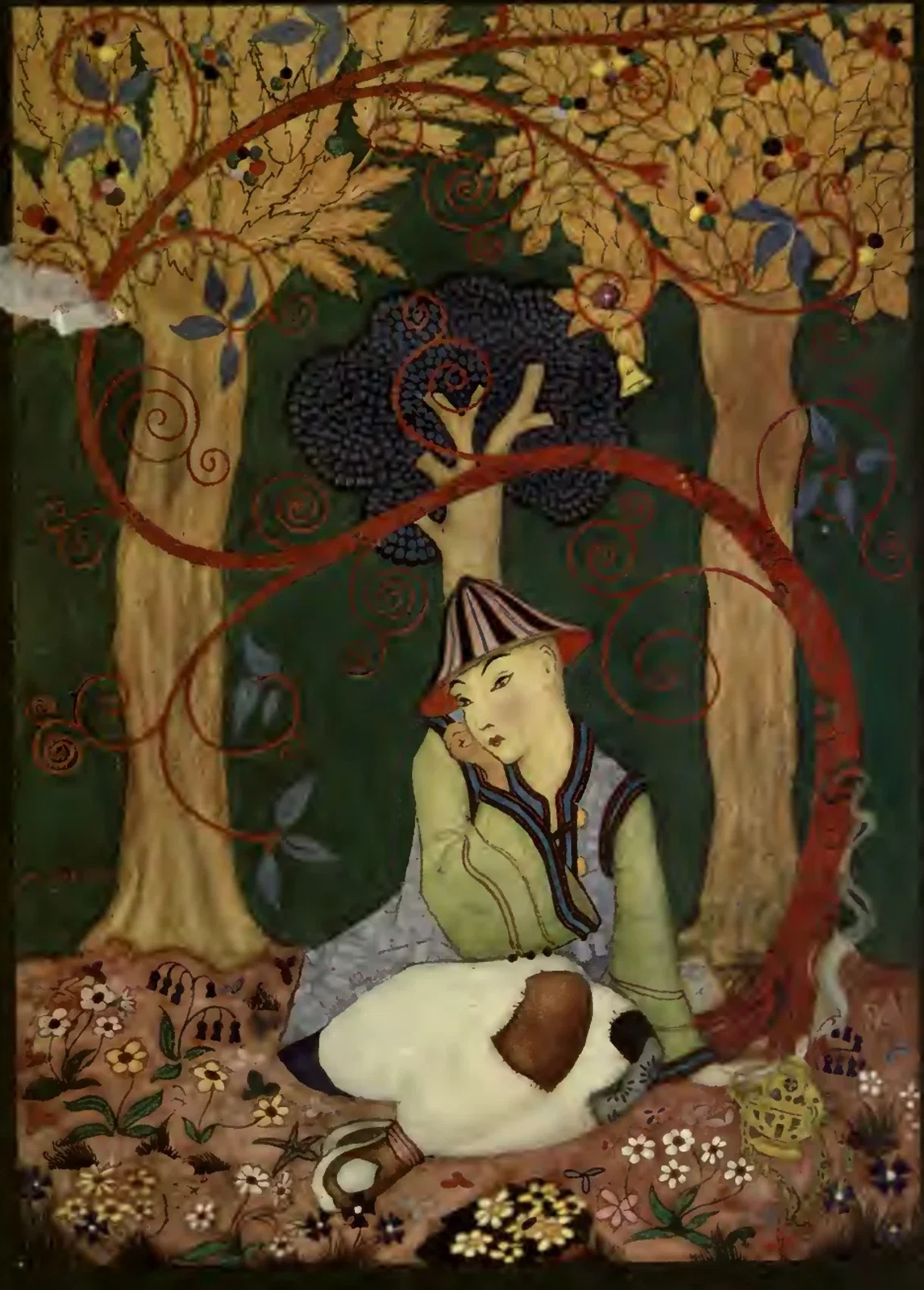
Old Peter’s Russian Tales brought stories gathered through his Russian interests into English. Aladdin and His Wonderful Lamp in Rhyme takes a different traditional narrative and gives its adventures a conspicuous rhythm. Ransome’s boy begins with a kite that carries him away from the city: play turns into danger before the familiar lamp becomes the centre of the story. The narrator’s imagined China also carries the stereotypes of the period.
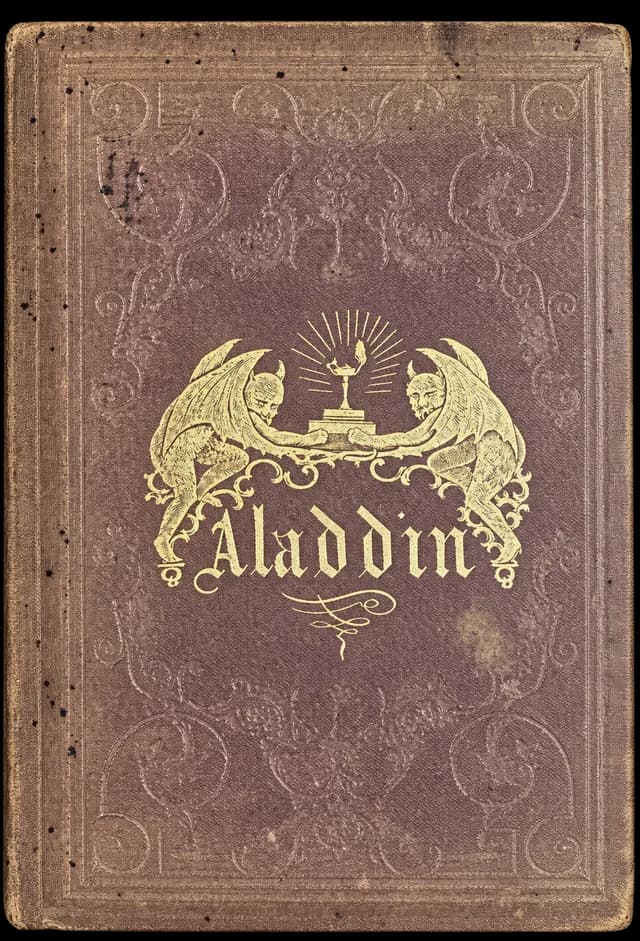
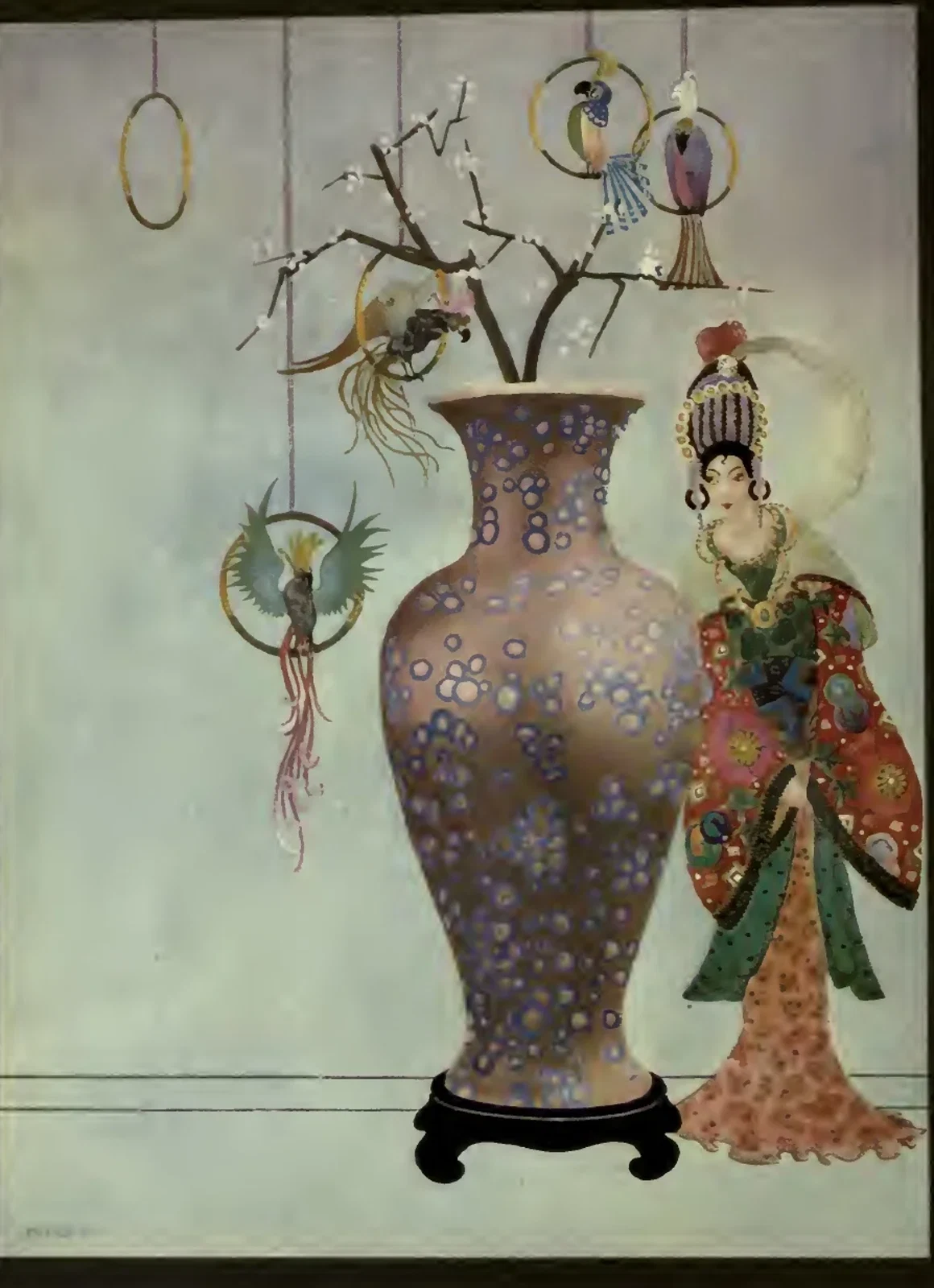
The illustrated work first appeared in December 1919. The Brentano’s printing held here is undated and credits Mackenzie separately as illustrator. Its elaborate colour pictures give visual form to a tale that Ransome had already reshaped through rhyme, pacing and a playful narrator. The book belongs to the broader storytelling career that preceded his best-known sailing adventures.