Industry, reform and religious questioning
Smedley grew up in a Wesleyan family, the third of eight children. He recalled being troubled by teachings about eternal punishment, even while serving as a Sunday-school teacher and choir member. Apprenticed as an iron moulder at Alfreton, he later worked elsewhere before joining his brothers Frederick and James to establish the Eagle Iron Works at Belper in 1855. The firm made steam engines, boilers and construction ironwork. His public commitments included temperance, the Band of Hope and Liberal politics.
He married Sarah Annie Bingham and later joined the Methodist Free Church, where he became a Sunday-school superintendent. His memoir describes an increasingly independent search through reading and discussion, followed by an interest in séances. Family bereavement became central to his conviction that the dead remained accessible. Sarah Annie died in 1876; he later married Selina, previously Mrs Ford. His son Henry Urban also worked for the Spiritualist Lyceum movement. Smedley died on 24 January 1905.
Memoir and the evidence of the séance room
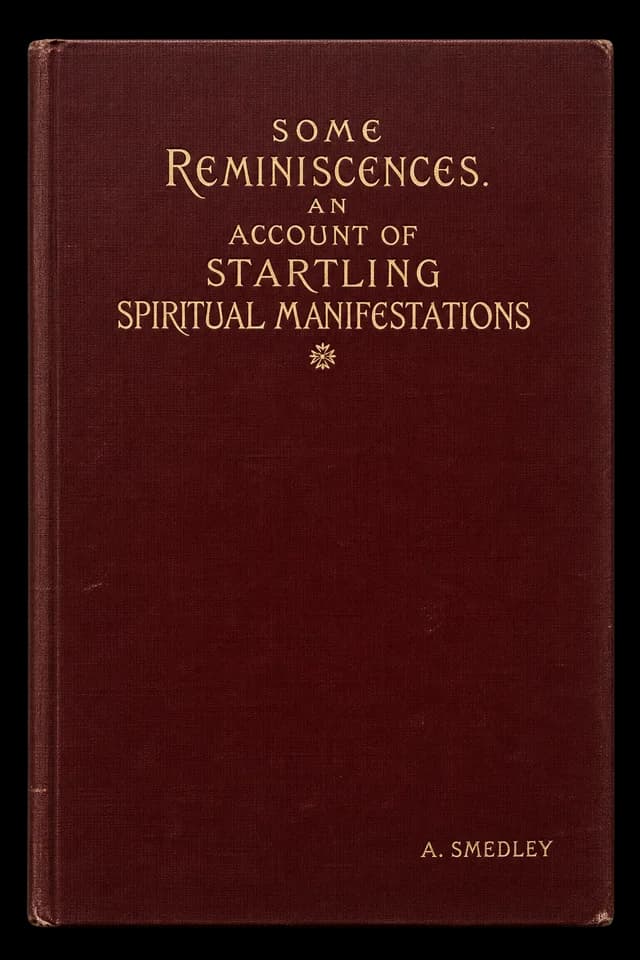
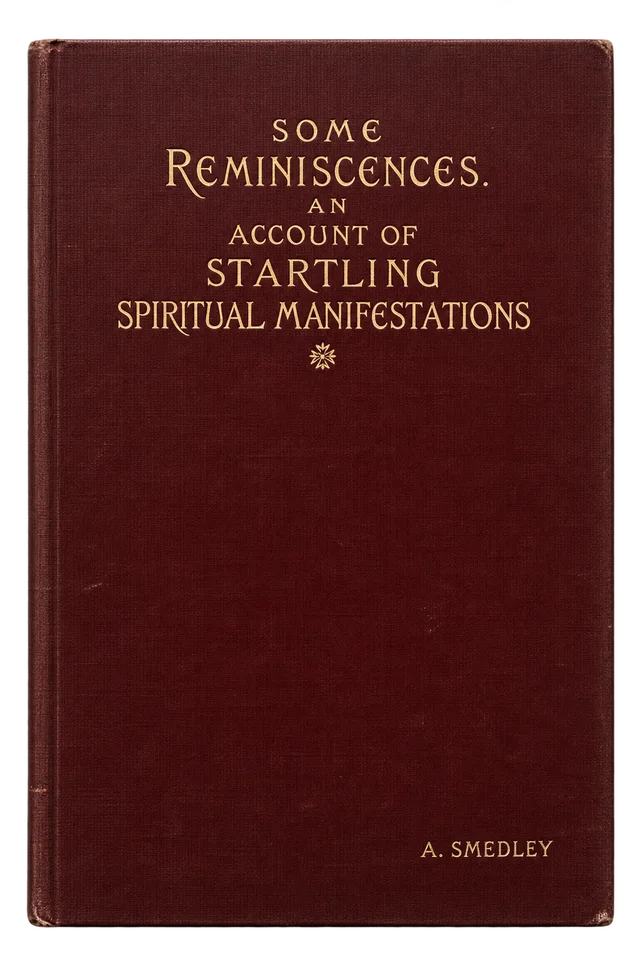
Some Reminiscences appeared in 1900 through the office of Light and the British Lyceum Union Depot. Smedley’s dedication records his gift of five thousand copies to the Union, made at Henry Urban’s suggestion. The volume combines his personal recollections with W. P. Adshead’s reports of Catherine Elizabeth Wood’s Derbyshire séances and an account by T. P. Barkas. Plans, portraits and illustrations of wax moulds were intended to strengthen the witnesses’ testimony.