An artist with several audiences
King worked as a commercial artist and painter before becoming known more widely through memoirs and television appearances. The Library of Congress preserves correspondence, manuscripts and other material from these different parts of his career. Museums also hold examples of his graphic work. In the 1950s he became a familiar guest on Jack Paar’s television programme, where his blunt and witty commentary reached a national audience.
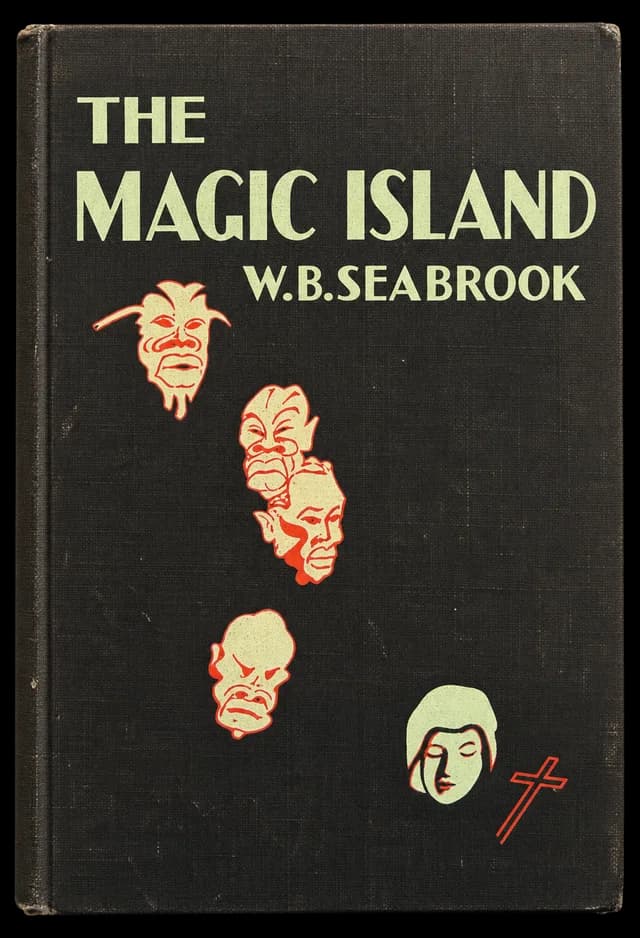
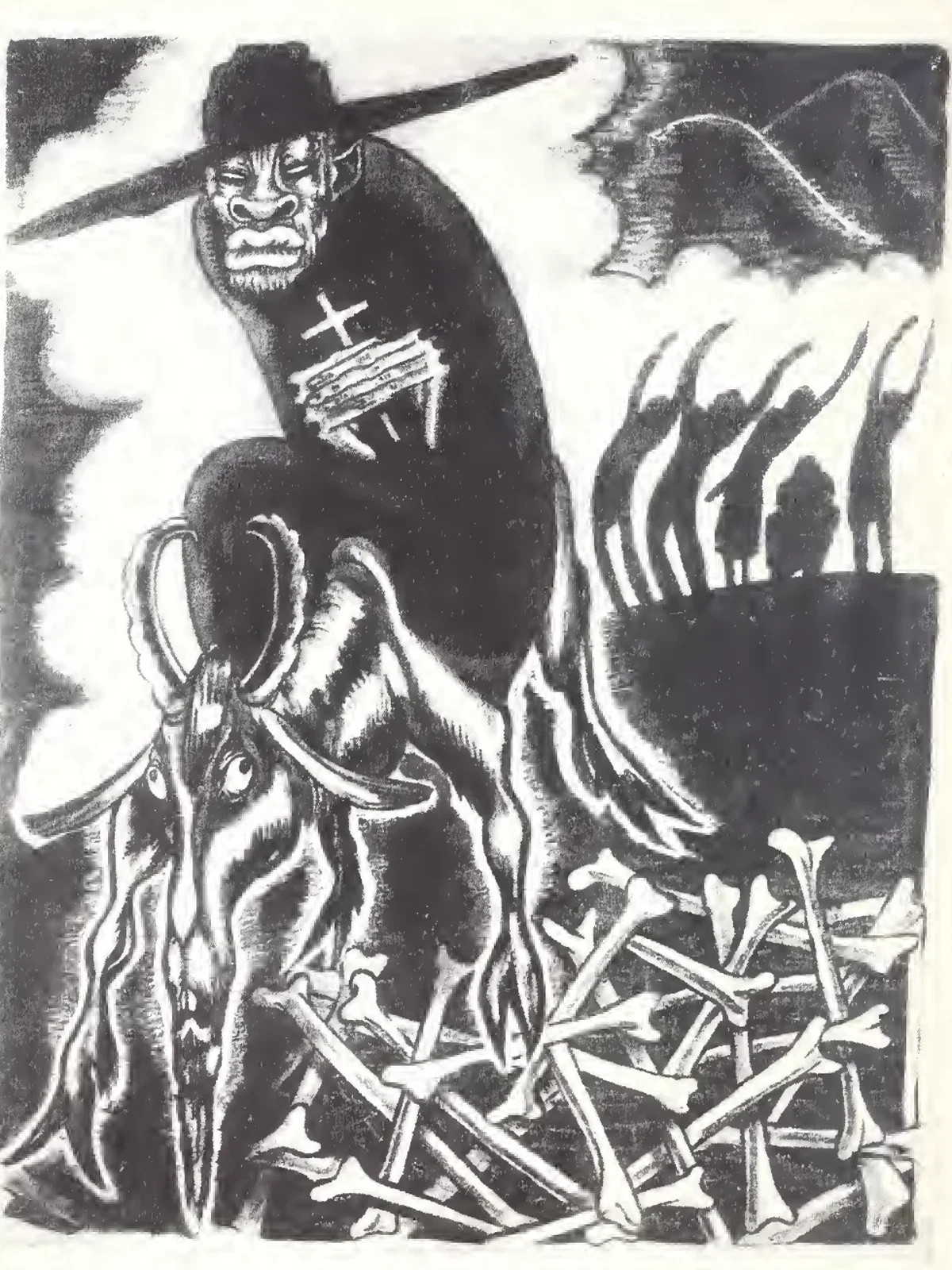
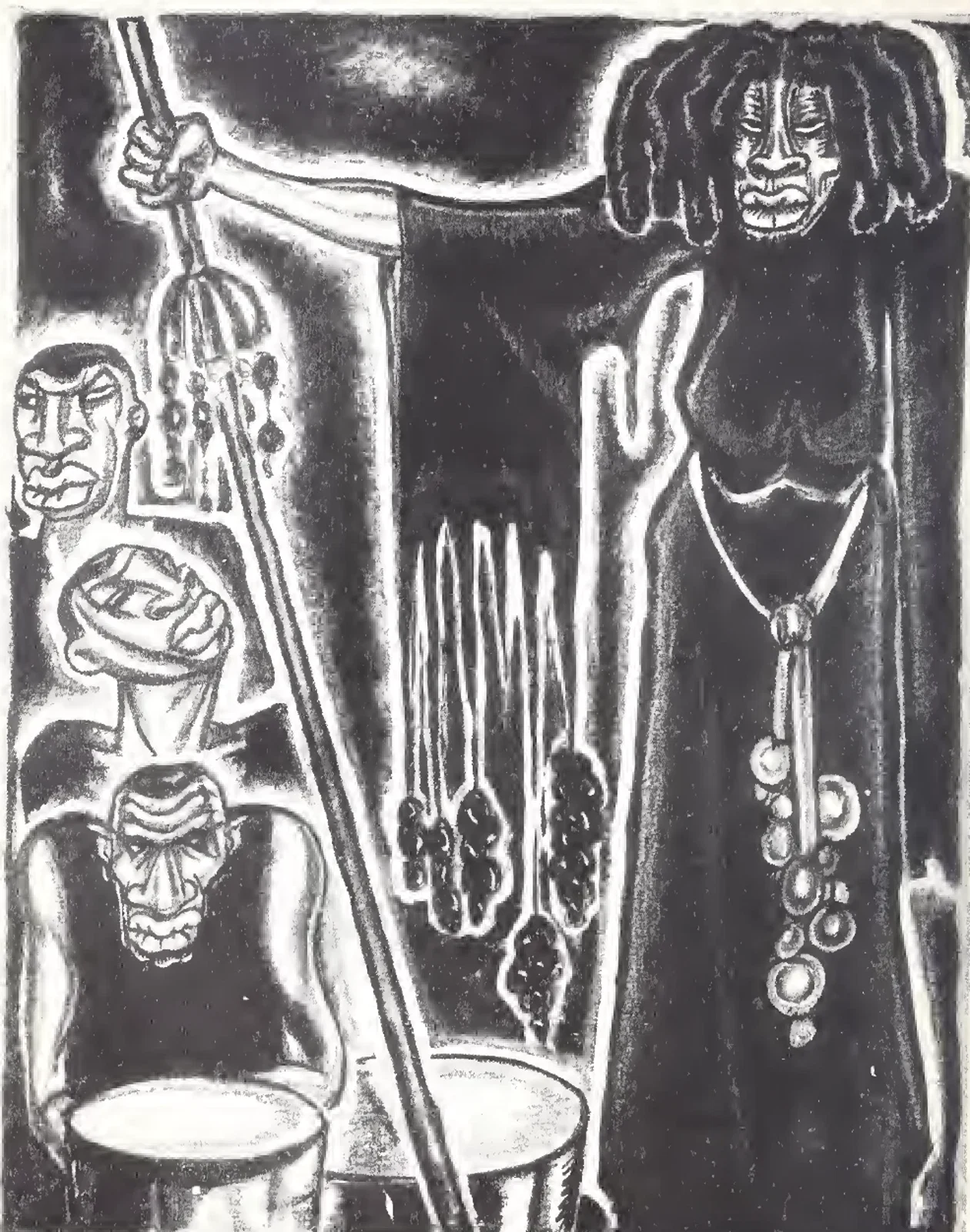
His illustrations for The Magic Island appeared in 1929, well before his later public prominence as a storyteller. The book credits Seabrook with the travel narrative and King with the drawings. Their collaboration gave readers both a verbal and a visual interpretation of Haiti, with each contributor shaping the encounter in a different medium.
Drawing a traveller’s account
The Magic Island’s illustration list links King’s drawings with episodes and ritual scenes in Seabrook’s account. The volume also contains a separately credited photographic section. King’s use of figures, dark areas and theatrical groupings gives the narrated moments an additional dramatic form. The pictures accompany a book whose sensational treatment of Haiti carries the racial and cultural assumptions of its period. Reading a caption beside the surrounding prose helps show how the drawing participates in that published interpretation.