A Boston literary life
Brown was born in Boston in 1871 and remained based in her family’s Beacon Hill home. Writing began within a creative household: her mother and the children produced a small literary magazine, The Catkin. At the Girls’ Latin School she helped establish and edit The Jabberwock. She later attended Radcliffe College and was already publishing poems and stories while still a student.
A European journey in 1899 helped inspire The Book of Saints and Friendly Beasts, published the following year. Children’s stories and poetry became central to her career, alongside plays and song lyrics. Her manuscripts include a children’s opera, The May Queen, with music by Helen A. Clarke. She lectured about writing for children and took part in New England literary circles, serving as president of the New England Poetry Club. Her papers preserve travel diaries, drawings, poems and records of royalties. She died in 1927.
Retelling the northern legends
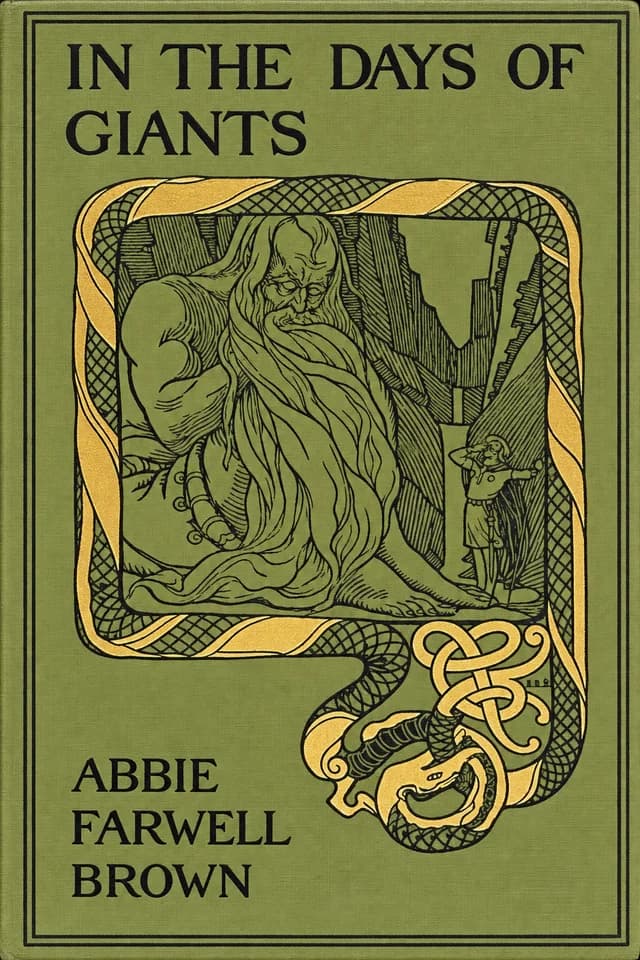
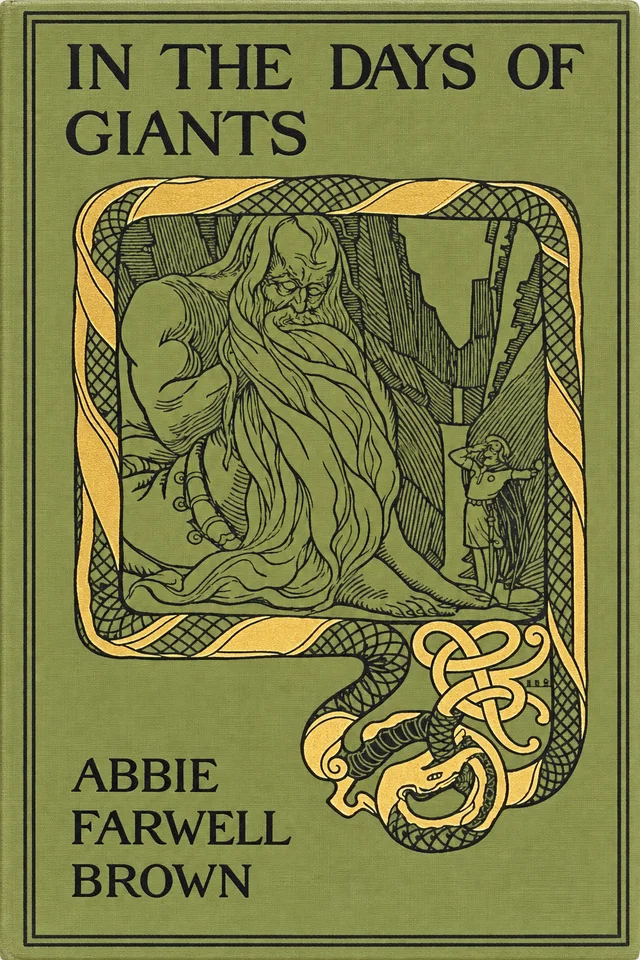
In the Days of Giants first appeared in 1902. The held Houghton Mifflin volume credits E. Boyd Smith with the illustrations and acknowledges that six stories had previously appeared in The Churchman. Its sixteen tales move from the creation of the world to Odin’s search for wisdom, Thor’s encounters with giants and the consequences of Loki’s actions.
Brown explains unfamiliar places and beings directly, then lets dialogue and action carry the story. In How Odin Lost His Eye, Mimer’s guarded well becomes the setting for a difficult bargain, with the narrator pausing to weigh what each participant gains and loses. Familiar touches of gossip, impatience and pride sit beside the violence and strangeness of myth. The result is a literary retelling for children, shaped by Brown’s voice and choices, rather than a translation of a single medieval source. Smith’s illustrations supply their own dramatic interpretation of the gods and giants.