Languages, inscriptions and travel
Archibald Henry Sayce was born near Bristol in 1845. An early interest in languages developed into a career at Oxford, where he became professor of Assyriology in 1891. His work extended across cuneiform studies, comparative philology and attempts to understand other ancient scripts.
He travelled widely and spent many winters in Egypt, copying inscriptions and maintaining friendships with researchers working there. His correspondence and papers preserve that network of scholarship. He left books to The Queen’s College and collections of antiquities and ceramics to the Ashmolean Museum. His research and collecting belonged to a period when European institutions were rapidly expanding their holdings from the ancient Near East.
New discoveries and a stated religious purpose
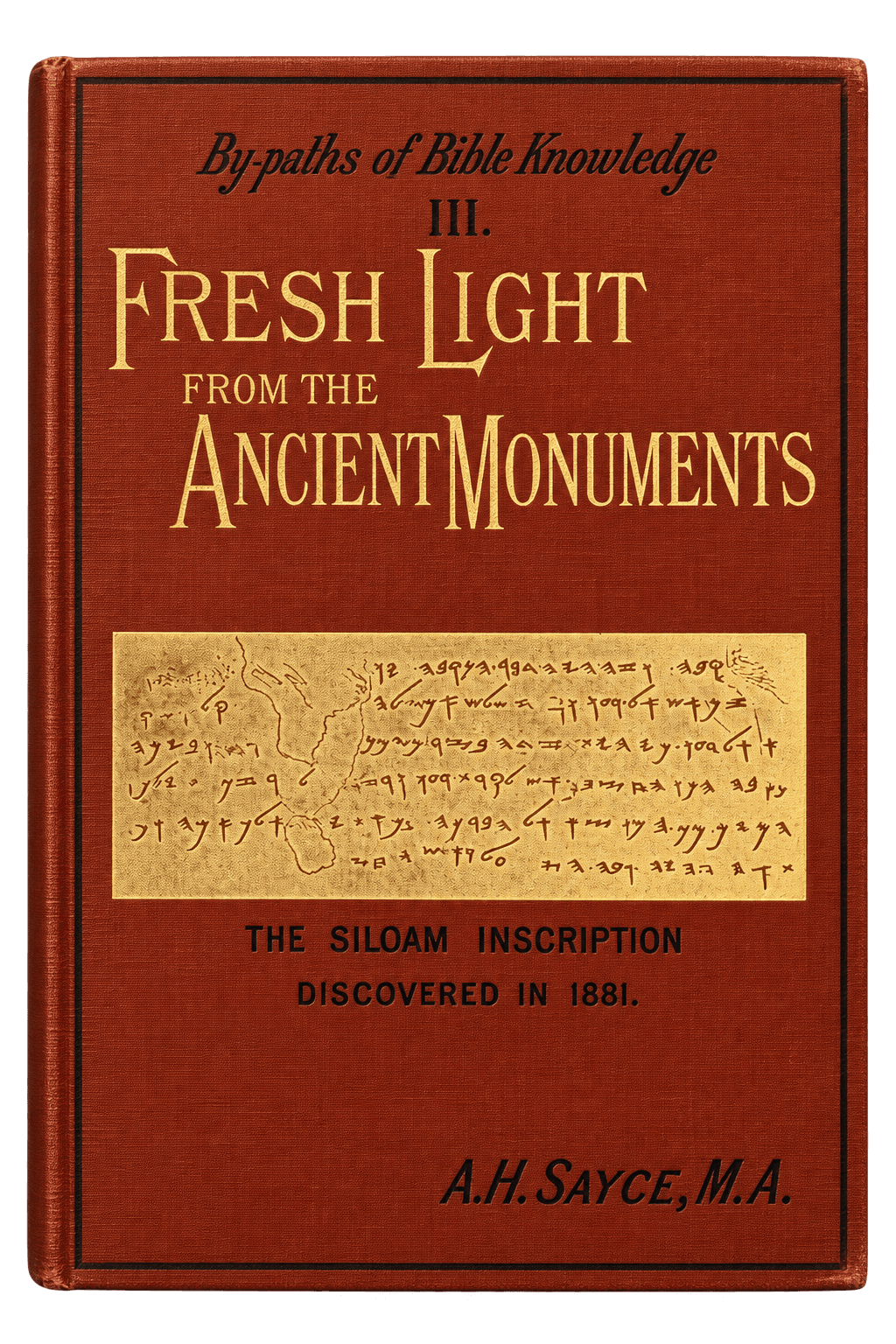
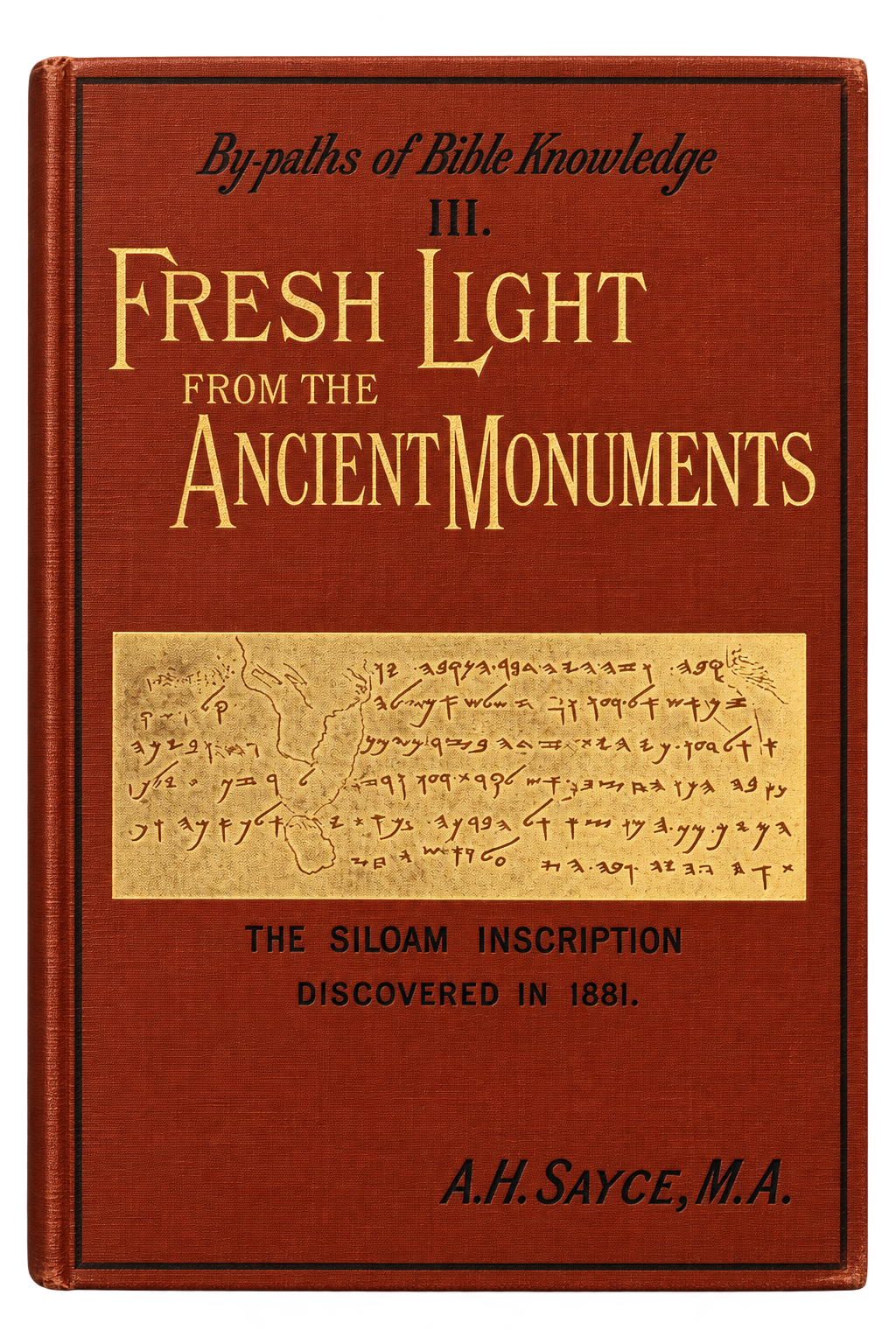
Fresh Light from the Ancient Monuments promises confirmations of biblical accounts from discoveries in Egypt and Western Asia. Sayce also acknowledges that new evidence can require earlier interpretations to change. His introduction explains how repeated names and parallel inscriptions help test a proposed decipherment. The movement from reading signs to making historical comparisons gives the book its structure. Lumitheca holds the Religious Tract Society’s seventh edition, preserving both his scholarship and the religious purpose that directed its presentation.