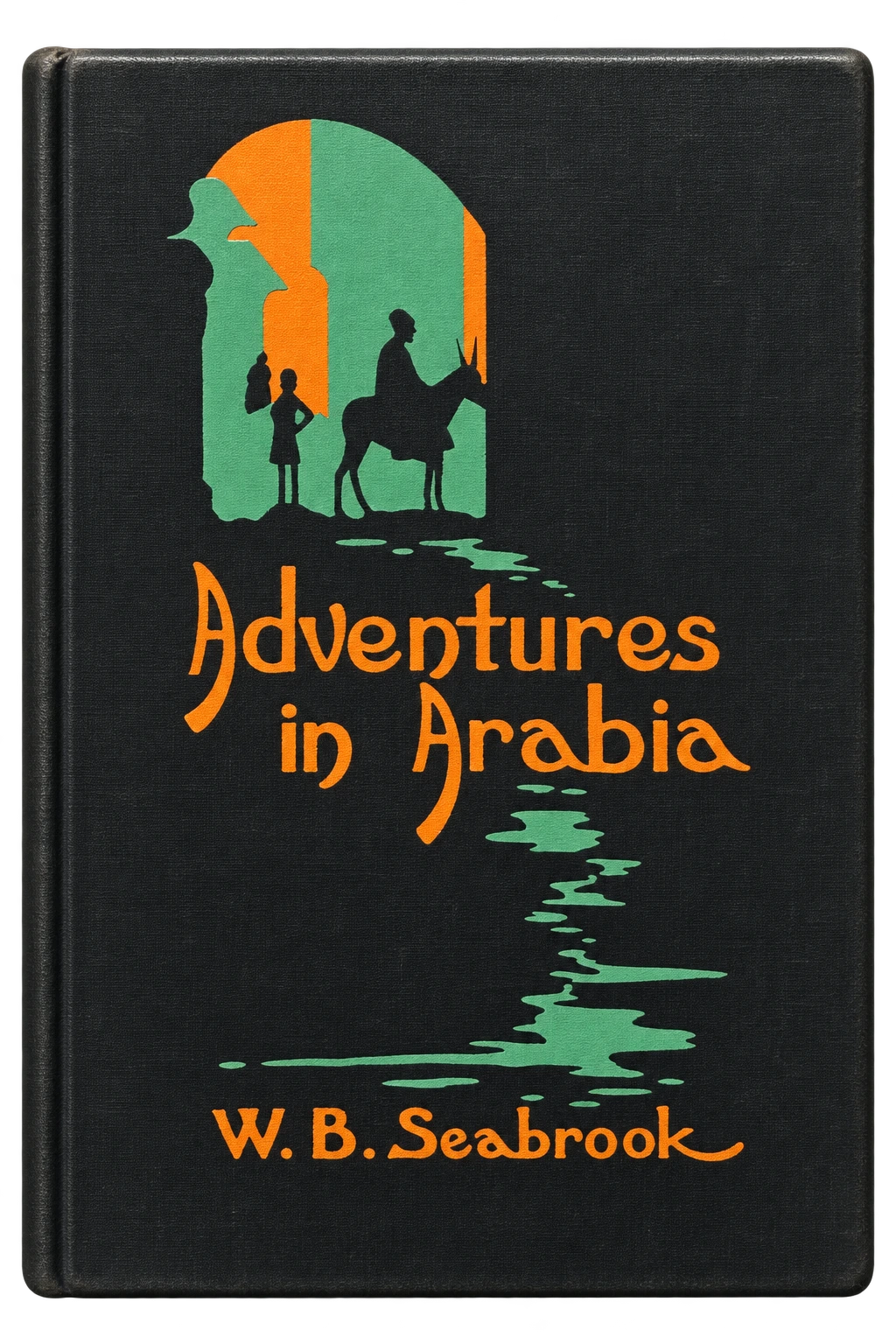
A name preserved in an illustrated book
The held New York title page identifies the illustrator as Miss A. G. Peck. A reliable expansion of those initials, life dates and a personal history have not been established. Her place in this library rests on a specific artistic contribution rather than authorship of Seabrook’s travel narrative.
A contemporary 1928 review in the Otago Daily Times also names Peck as the maker of the pen drawings. The book distinguishes those drawings from its photographs in both the title-page credit and the illustration list. That distinction matters: neither the photographic work nor the journey described by Seabrook can simply be assigned to Peck.
Architecture, figures and the printed page
The illustration list places Peck’s subjects across the regions Seabrook describes. There are portraits and scenes of Bedouin life, classical remains at Baalbek, buildings in Damascus and Baghdad, and gateways, bridges and courtyards. The drawings extend beyond direct illustration of an incident to establish the settings through which the narrative moves.
In the Baghdad mosque drawing, closely worked lines model the entrance and minaret, while small people and animals establish scale. The Damascus bazaar combines a tall minaret with deep shadow under the shopfronts. A gateway at Tripoli becomes a study of masonry, a heavy wooden door and a seated figure. These images show the value of Peck’s contribution even where the artist’s biography remains obscure. Peck’s attention to architecture and the scale of figures gives these settings a substantial place in the book’s visual narrative.